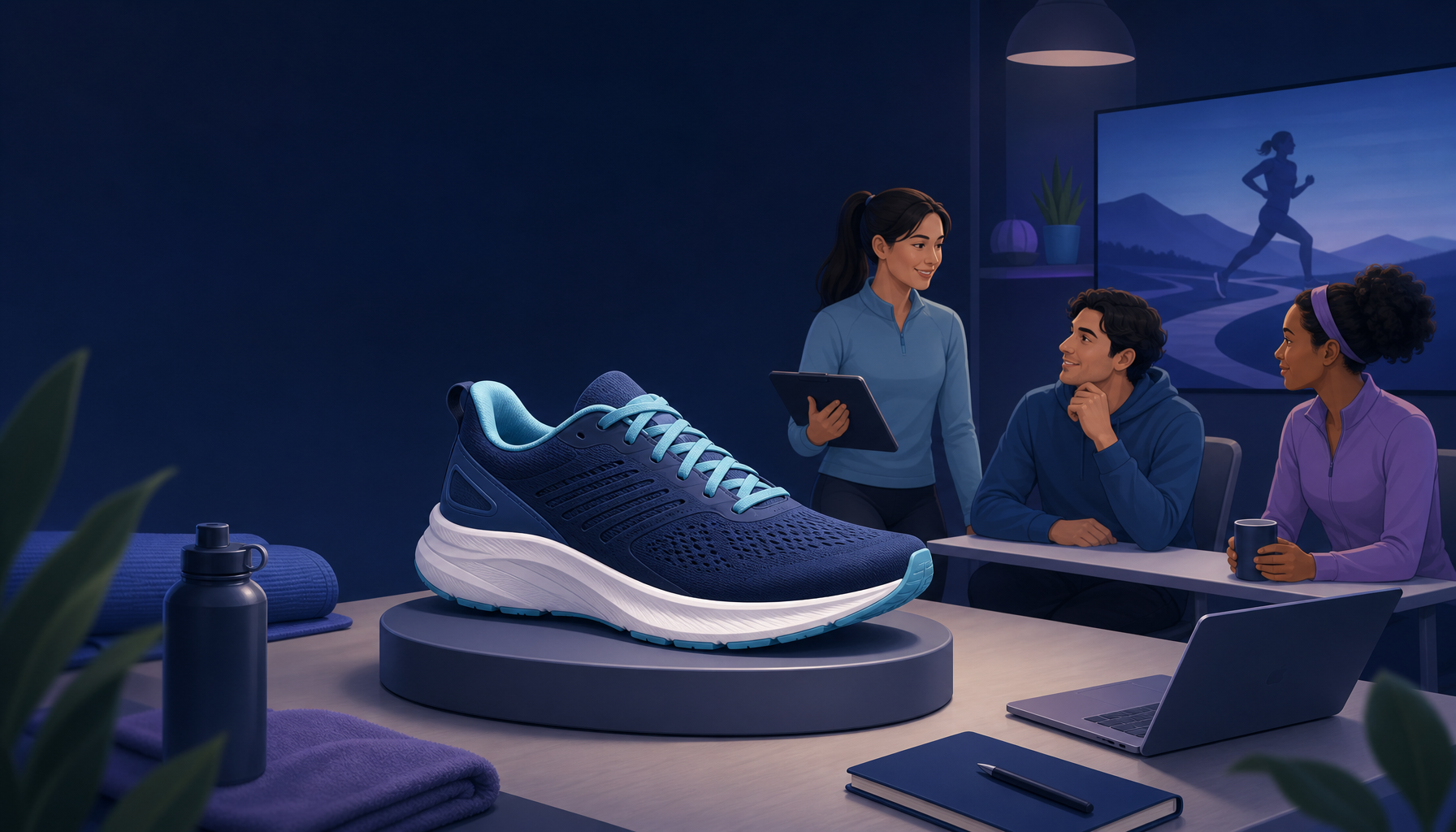
Discover how to select the perfect running shoes tailored to your individual needs for optimal comfort and performance. Shop online running shoes today!
How to Choose the Right Running Shoes for Your Feet
Selecting the ideal running shoes comes down to a few variables you can actually control: fit, cushioning, arch support, and the terrain you run on. Get those aligned and you’ll usually avoid the classic issues—numb toes, heel slip, arch ache, and that “why do my shins hate me?” feeling.
Fit is Paramount
Fit beats brand. Fit beats price. Fit even beats “this model worked for my friend.” Here’s how I size shoes in a way that holds up once you’re sweaty and a few miles in:
- Try them on at the end of the day when your feet are a bit swollen (because they will swell on runs too).
- Wear the socks you plan to run in—thin racing socks vs cushioned socks changes volume more than people think.
- Leave toe room: aim for about a thumb’s width from your longest toe to the front.
- Lock the heel in: if your heel lifts while walking, it’ll rub while running.
- Test movement: walk briskly, then jog in place, then do a few quick steps. If it pinches now, it’ll hurt later.
A common mistake: buying a “perfect” fit in the store, then discovering on the first long run that your toes slam the front on downhills. If you do any hill work, that extra toe-box space matters.
Cushioning Matters
Cushioning is impact management, but it’s also feel. Too much and some runners get sloppy; too little and your calves and feet may take a beating.
- Maximum cushioning: plush and protective, often great for easy miles or recovery days.
- Minimalist shoes: low cushion, more ground feel—use cautiously if you’re not adapted.
- Responsive cushioning: a middle ground that feels snappy without being harsh.
One thing people skip: matching cushioning to your foot strike and your weekly load. If you’re a heavy heel striker doing 25–40 miles/week on roads, you’ll usually appreciate more cushioning. Meanwhile, if you’re a midfoot striker doing shorter, faster runs, you might prefer something more responsive.
Arch Support and Stability
Arch support isn’t a moral choice. It’s just matching the shoe to how your foot behaves under load.
- Identify your arch type. Flat arches often do better in stability or motion control shoes, while high arches often like more cushioning and flexibility.
- Consider your gait. If you overpronate (foot rolls inward), stability features can keep you from collapsing inward late in a run.
If you’re not sure, do a quick wet-foot test at home (step on cardboard) and compare shapes, then confirm at a running shop. Also, pay attention to where your old shoes wear down—uneven outsole wear is a clue.
Terrain Considerations
Terrain dictates traction, protection, and even how stiff the shoe should be.
- Road running shoes: lighter, smoother outsole, cushioning tuned for pavement.
- Trail running shoes: lugs for grip, rock protection, tougher uppers.
- Cross-training shoes: versatile for gym work, but usually not ideal for long runs.
I’ve seen runners take soft road shoes onto rocky trails and come back with bruised soles and rolled ankles. The reverse happens too—trail shoes on roads can feel clunky and beat up your legs because the lugs slap and the ride is stiffer.
Shop Running Shoes Online
Buying online is fine—as long as you treat returns like part of the process, not a failure. I typically shortlist two sizes (or two models), keep my runs short at first, and then decide.
Here are a few places people reliably shop:
- Running Warehouse: big selection, and their clearance page can be solid for last-season models. If you want deals, start with running warehouse clearance.
- Road Runner Sports: strong customer service, and they’re known for a 90-day return window (check the current terms before you buy).
- Nike’s official site: easy filtering and frequent new releases—browse women buy online running shoes or men buy online running shoes depending on what you’re shopping for.
If you just want a straightforward starting point, you can also shop running shoes and then narrow by terrain and support.
Best Place to Buy Online Running Shoes
The “best” shop is usually the one that lets you correct mistakes cheaply.
So, when you’re comparing retailers, focus on:
- Clear return windows (30 days is common, longer is better).
- Low-friction exchanges (prepaid labels or easy in-store returns if available).
- Useful sizing info: size guides, width options, and real customer notes.
Step-by-step, this is how I recommend buying online without getting burned:
- Pick one shoe that matches your terrain (road vs trail).
- Choose support (neutral vs stability) based on your gait.
- Order your likely size and a half size up if you’re between sizes.
- Test on a short run (10–20 minutes). Keep it easy.
- Decide quickly and return what doesn’t work—don’t “hope” it breaks in.
Understanding Women’s and Men’s Running Shoes
Women’s and men’s running shoes aren’t just different colors—sometimes they’re built on different lasts (foot-shaped molds), and that changes fit in very real ways.
- Women’s shoes are often designed with a narrower heel and different volume through the midfoot. Many models also tweak cushioning or geometry because average body mass and loading patterns differ.
- Men’s shoes tend to run wider with more overall volume, and some lines assume a heavier runner on average.
Here’s the practical part: don’t treat the label as a hard rule. I’ve coached and run with plenty of women who prefer a men’s model for the wider forefoot, and plenty of men who do better in a “women’s” version because the heel actually locks down.
A real example: a runner I know kept getting blisters on the inside of her heel in a unisex-feeling daily trainer. We tried the women’s equivalent in the same model line, used a runner’s loop lacing, and the heel slip stopped immediately—same shoe “family,” totally different experience.
For a deeper breakdown of design differences, RunRepeat has a solid overview: RunRepeat.
Return Policies: What to Know
Return policies are your safety net, especially because sizing and fit vary wildly by brand and model.
- 30-day return policy is common, and it’s usually enough to do a few short runs.
- Some retailers (including specialty shops) may allow returns after light use, while others only accept unworn shoes—read the fine print before you take them outside.
One mistake I see: people wait too long because they want the shoe to “break in.” If a shoe causes rubbing or numbness in the first couple of runs, it rarely turns into magic at week three. Return it while you still can.
Summary of Key Considerations
It’s vital to remember that not every shoe is right for every runner. Your best pick is the one that fits your foot shape, matches your gait, and feels good at the pace you actually run.
My Experience With This
I’ve watched the wrong shoes quietly wreck training blocks—usually not with a dramatic injury, but with little pains that chip away at consistency.
One personal lesson: I once bought a “great deal” pair online in my usual size, skipped a real test run, and took them straight into a longer session. By mile 5 my toes were tingling, and by that evening I had a nasty hot spot under my big toe. The shoe wasn’t bad; the sizing and toe-box shape were wrong for me.
So now I use a simple checklist before committing:
- First run is short (10–20 minutes) and on flat ground.
- I check pressure points immediately—tongue bite, lace pinch, pinky toe rub.
- I look at post-run signals: numbness, calf tightness, or arch strain.
- Only then do I take them longer or faster.
If you’re new, a fitting session at a specialty running store is honestly worth the time. They’ll watch you jog, check width, and catch issues you won’t notice standing still.
Also, for customized solutions around team or individual training setups, companies like Revnix can support tailored engineering services—useful when you’re building something more specific than “buy shoe, go run.”
FAQs
- What should I consider when buying running shoes? Look for fit, padding, arch support, and the type of terrain you’ll be running on.
- How often should I replace my running shoes? Typically every 300-500 miles, depending on your running style and shoe quality.
- Can I return shoes if they don’t fit? Yes, we offer a 30-day return policy for all shoes purchased.
- Are there specific shoes for women and men? Yes, many brands customize shoes for different foot shapes and running needs based on gender.
- Do running shoes differ based on running surface? Absolutely, you’ll need different shoes for road running versus trail running.
- How can I tell if I need stability shoes? If you tend to over-pronate, stability shoes can provide the extra support you need.
Leave a Reply