Category: WordPress

  • How to Set Up WordPress as a CMS in 2026

    How to Set Up WordPress as a CMS in 2026

    Learn how to effectively set up WordPress as a CMS in 2026 with this comprehensive guide. Perfect for developers and marketers alike!

    How to Integrate WordPress as a CMS in 2026

    Integrating WordPress as a CMS isn’t hard. Keeping it fast, maintainable, and predictable is the part that usually goes sideways.

    What I aim for is boring success: clear content types, minimal plugin overlap, and integrations that don’t break every time you update PHP or swap themes.

    Understanding WordPress Integration

    WordPress integration is simply connecting WordPress to other tools—CRMs, email platforms, analytics, eCommerce, internal APIs—so content and data move where they should.

    The mistake I keep seeing is teams “integrating” by stacking plugins until the admin panel looks like a junk drawer. Instead, start by writing down what must be true (lead goes to CRM, newsletter signup tags correctly, product inventory syncs daily) and then choose the simplest path.

    In fact, a study showed that WordPress powers approximately 41.2% of all websites in 2026, highlighting its widespread adoption and trust in the market (WPZOOM). That number isn’t magic, but it does explain why integrations are plentiful—and why you still have to pick carefully.

    Steps to Set Up WordPress as a CMS

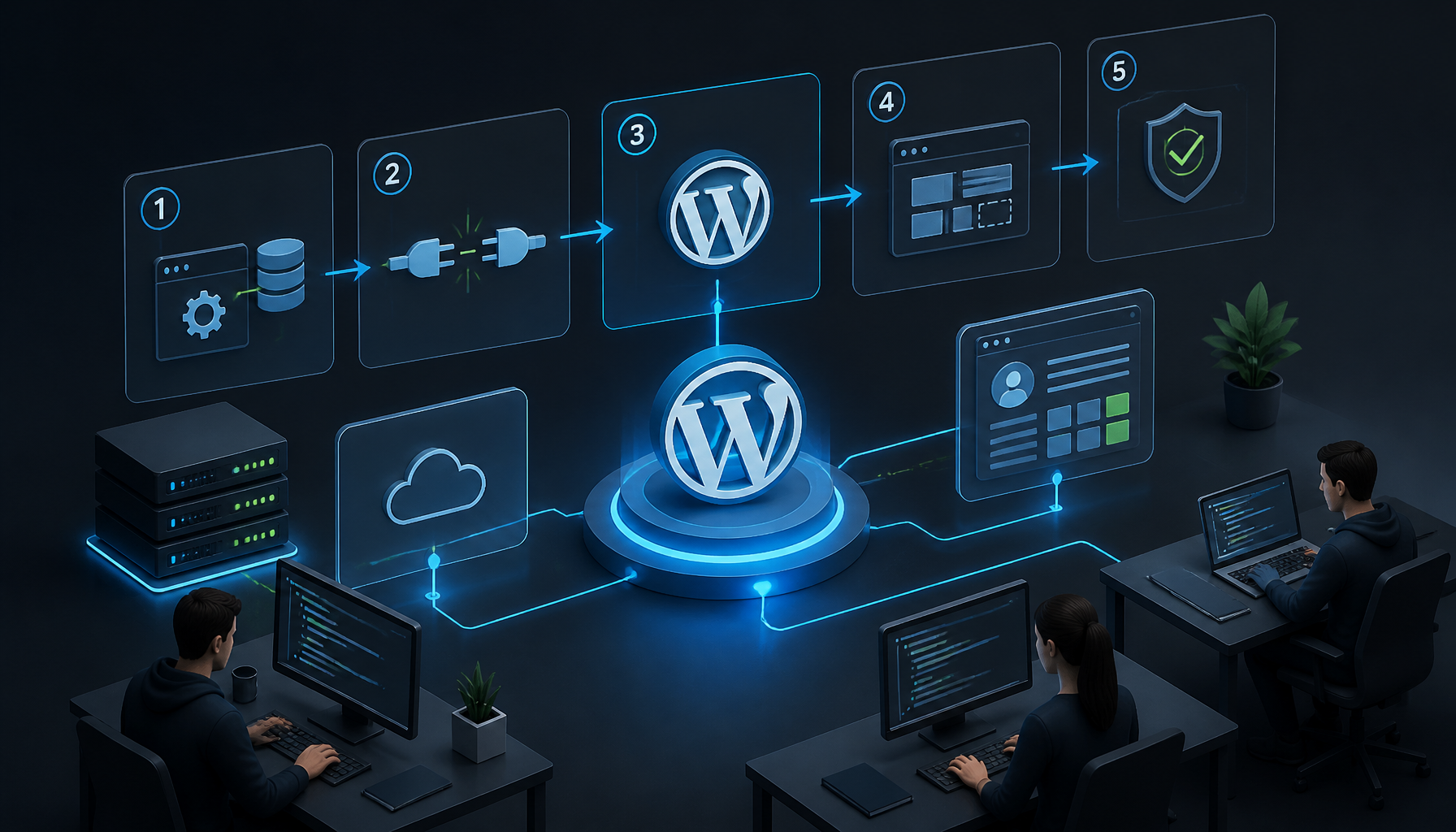
    Below is the setup flow I use when I want WordPress to behave like a real CMS (not just “a blog that grew up”).

    1) Select hosting you won’t regret

    Pick hosting that matches your actual traffic and your tolerance for ops work.

    • If you want managed guardrails, providers like WP Engine can reduce footguns, but you pay for it.
    • If you want value and decent performance, SiteGround is often fine for small-to-mid sites.
    • If you’re running WooCommerce or heavy traffic, prioritize CPU/RAM and object caching support.

    Common mistake: buying the cheapest plan, then installing five performance plugins to compensate. You’ll still lose—just more slowly.

    2) Install WordPress the clean way

    One-click installers are okay, but I still like to verify the basics after install.

    • Download core from WordPress.org if you need a manual setup.
    • Set strong admin credentials (and don’t use admin as the username—still happens).
    • Confirm permalinks early (I default to “Post name”) so you don’t create URL churn later.

    If you’re doing this for a client, set up a staging site now. It saves you later when a “small plugin change” breaks the header on production.

    3) Choose a theme with restraint

    Your theme is not just design—it’s also performance and editor experience.

    I look for:

    • Clean block editor support (so editors aren’t trapped in shortcodes)
    • Accessibility basics (skip links, readable contrast)
    • Minimal bundled page-builder baggage

    If you need pixel-perfect layouts, you can still do it with blocks + a lightweight theme. But if you install a builder, commit to it—mixing builders is how content becomes uneditable.

    4) Add only essential plugins

    This is where most WordPress builds either stay healthy or become a maintenance job.

    My baseline stack usually includes:

    • SEO: Yoast SEO (fine for most sites)
    • Caching/performance: W3 Total Cache or a host-level solution (don’t double-cache)
    • Security: Wordfence (useful, but configure it—defaults aren’t a strategy)
    • eCommerce (if needed): WooCommerce

    Common mistakes I’ve personally had to unwind:

    • Two SEO plugins fighting over metadata
    • Three form plugins because “this one does popups”
    • A backup plugin writing gigs of zip files to disk until the server runs out of space

    If a plugin overlaps 70% with another, I delete one. Every extra plugin is another update cycle and another potential incident.

    5) Set up your CMS structure first

    Before you publish content, decide how you want to model it.

    • Use Pages for evergreen, hierarchical stuff (About, Contact, Services)
    • Use Posts for time-based content (blog, news)
    • Use Categories for broad grouping; Tags for cross-cutting labels (don’t treat them as the same thing)

    If you have “things” that aren’t posts—case studies, team members, podcasts—use custom post types. That’s where WordPress starts to feel like a real CMS.

    A quick rule I use: if an editor asks, “Where do I add a new one of these?” more than once, it probably deserves its own content type.

    6) Integrate third-party services deliberately

    Integrations are where you can either simplify work—or create silent data loss.

    A clean approach:

    1. List required flows (e.g., form submission → CRM → email nurture)
    2. Decide plugin vs API (plugins are faster; APIs are usually more reliable long-term)
    3. Add logging so you can tell when something fails

    For example, integrating HubSpot with WordPress can streamline marketing, but only if you standardize field mapping (name, email, lifecycle stage) and test edge cases.

    If you want a guided walkthrough, here’s a deeper internal guide: Step-by-Step Guide to WordPress and CRM Integration.

    7) Content migration without breaking SEO

    Migrations are never “copy/paste.” They’re URL strategy + redirects + media sanity.

    What I do:

    • Export content from the old system and audit slugs
    • Create a redirect map (old URL → new URL)
    • Migrate in batches, then spot-check the top 20 landing pages

    Plugins like All-in-One WP Migration can help, but don’t trust them blindly. I’ve seen image URLs migrate while the actual media files didn’t—so the site looked fine on staging and then broke on production.

    8) Test like you mean it

    Before launch, I test three layers:

    • Editor workflow: can a non-technical person publish without breaking layout?
    • Integrations: do form leads arrive? are tags correct? do webhooks fire?
    • Performance: check core pages on mobile, not just your dev laptop

    If you only test “the homepage loads,” you’re basically betting your launch on luck.

    9) Launch, then monitor

    After launch:

    • Watch error logs for 48 hours
    • Track performance baselines (TTFB, LCP, page weight)
    • Set update cadence (weekly for plugins, monthly for bigger changes)

    The win isn’t “site is live.” The win is “site stays healthy while content and campaigns change.”

    WordPress Integration CMS Features

    Once you treat WordPress as a CMS (not a theme demo), you get a few features that matter a lot in real teams.

    Roles, permissions, and approvals

    Role-based access control is one of WordPress’s quiet superpowers.

    I typically set it up like this:

    • Authors can write and upload media, but can’t publish
    • Editors can publish and manage categories
    • Admins handle plugins/themes/users

    If you’re in a regulated org, you’ll probably add an editorial workflow plugin. But even without one, you can enforce basic governance by keeping admin accounts rare and audited.

    Content versioning and rollback

    Revisions save projects. Still, they don’t replace backups.

    A real incident I’ve dealt with: an editor “cleaned up” a page and deleted three pricing tables. Revisions got the content back in minutes. Without them, you’d be reconstructing from memory (or Slack screenshots, which is grim).

    Headless vs traditional (pick the right fight)

    Some teams jump straight to headless because it sounds modern. Sometimes it’s the right move—often it’s not.

    • Traditional WordPress is faster to ship and easier to staff.
    • Headless can be great for performance and multi-channel publishing, but it adds complexity fast (auth, previews, caching, deployments).

    If your main goal is marketing pages + blog + a few integrations, classic WordPress still wins.

    Why WordPress Continues to Thrive

    WordPress survives because it’s adaptable, and because the ecosystem is deep enough to solve weird real-world problems.

    The community advantage (and the downside)

    The community means there’s a plugin for everything. But, since anyone can publish a plugin, quality varies wildly.

    My filter before I install anything:

    • Has it been updated recently?
    • Does it have support activity?
    • Is the author reputable?
    • Can I remove it later without wrecking content?

    That last one matters more than people admit.

    Hybrid builds are now normal

    A lot of teams run WordPress in a hybrid setup: WordPress for editing and content, plus modern front-end tooling for delivery.

    Reports indicate that WordPress is being utilized in a hybrid capacity, combining traditional CMS features with headless integration for enhanced performance (Itineris). I’ve seen this work well when the team already has strong front-end chops and a real need for it.

    Integrating solutions such as Nextly can further enhance your development capabilities, allowing for TypeScript integration and a visual schema builder that makes managing content more intuitive.

    A practical performance checkpoint

    Here’s a quick checkpoint I use after a build is “done”:

    • Homepage under ~2MB transfer on first load
    • No more than 1–2 caching layers (plugin + CDN is fine; three plugins is not)
    • Admin dashboard stays responsive with 10+ users and a decent media library

    If you miss these by a mile, you don’t need a redesign—you need to remove weight.

    Conclusion

    If you want WordPress to feel like a dependable CMS in 2026, build the content model early, integrate with intention, and keep plugins on a short leash.

    Start with one concrete next step: outline your content types (Posts, Pages, and any custom post types) on paper, then set up WordPress to match that structure before you migrate or publish.

    FAQ

    Q: Does WordPress have a CMS?

    A: Yes—WordPress is a CMS, and a pretty capable one once you stop treating it like “just a blog.”

    Here’s how I explain it to clients: if you can create content, structure it (categories/tags/custom types), manage users, and publish with permissions, you’re working inside a CMS.

    A quick setup path that makes it feel “CMS-first”:

    1. Create the main Pages (About, Services, Contact)
    2. Define Categories for your blog (3–6 max to start)
    3. Add a custom post type for anything repeatable (case studies, testimonials)
    4. Assign roles so not everyone can install plugins

    Common mistake: people dump everything into Posts, then wonder why navigation, SEO, and editing become chaotic.

    Q: Why are people moving away from WordPress?

    A: Usually because they hit one of these walls: plugin bloat, security anxiety, or a dev team that prefers code-driven content pipelines.

    I once inherited a site where a previous agency installed 48 plugins. It “worked,” but updates were scary, and the admin panel was painfully slow. The business didn’t need a new CMS—they needed a cleanup: remove duplicates, replace three page-builder add-ons with native blocks, and move analytics/scripts into a proper tag manager.

    If you’re considering switching, sanity-check this first:

    1. List what’s actually broken (speed? workflow? preview? security?)
    2. Identify whether WordPress caused it—or whether bad implementation did
    3. Prototype the alternative with one real content type, not a demo homepage

    Common mistake: migrating because it feels trendy, then rebuilding the same mess somewhere else with fewer plugins but more custom code.

    Q: Is WordPress outdated in 2026?

    A: No, but it can look outdated if you use outdated practices.

    What makes WordPress feel modern in 2026:

    • Block editor patterns instead of shortcodes everywhere
    • Clean theme architecture (no massive “kitchen sink” theme)
    • Clear content types and template hierarchy
    • A performance budget (page size, script limits)

    What makes it feel old:

    • Hard-coded layouts editors can’t change
    • Builders stacked on builders
    • “We’ll fix it later” security and updates

    If your team complains WordPress is outdated, ask them what they mean. Half the time they’re reacting to a neglected build, not the platform.

    Q: Which CMS is better than WordPress?

    A: Depends on the job.

    • Drupal can be great for complex permissions and structured content at enterprise scale.
    • Joomla can work for certain portal-style sites, though it’s less common in my day-to-day.
    • A dedicated headless CMS can be excellent when you must distribute content to apps, kiosks, and multiple front-ends.

    But, if you need to hire quickly, ship marketing pages fast, and hand editing to non-technical teams, WordPress is hard to beat.

    A practical way to decide:

    1. Count the content types you truly need
    2. Map editorial workflow (draft → review → publish)
    3. List integrations (CRM, email, payments)
    4. Estimate who maintains it for 2 years

    Common mistake: choosing a CMS for what you might build, then paying the complexity tax forever.

    Q: How can I integrate third-party services with WordPress?

    A: Use plugins when the integration is standard, and use APIs/webhooks when reliability and control matter.

    A step-by-step approach I’ve used on business sites:

    1. Start with one integration (say, forms → CRM)
    2. Define the data contract (fields, required vs optional)
    3. Implement with a reputable plugin or a small custom connector
    4. Add logging (even simple email alerts on failure)
    5. Test edge cases: duplicate emails, missing last name, non-Latin characters

    Common mistake: assuming “connected” means “correct.” I’ve seen leads arrive in CRMs without consent flags or with broken attribution, which then wrecks reporting.

    If CRM is your main pain point, use this internal reference to go deeper: Step-by-Step Guide to WordPress and CRM Integration.

    Q: Can I migrate my existing website to WordPress?

    A: Yes, and you can do it safely—but you need a plan for URLs, media, and redirects.

    A migration checklist I trust:

    1. Crawl the old site and export all URLs
    2. Identify top traffic pages (keep slugs the same if you can)
    3. Migrate content into staging
    4. Validate internal links and media library integrity
    5. Create 301 redirects for anything that changes
    6. Launch during a low-traffic window
    7. Monitor Search Console and logs for 2–4 weeks

    Common mistake: launching without redirects because “Google will figure it out.” Sometimes it does. Often it doesn’t, and you spend months clawing back rankings.

    If you’re pairing WordPress with a modern front end, this internal piece can help you think through the build side too: How to Get Started with Next.js in 2026.
  • How to Set Up WordPress as a CMS in 2026

    How to Set Up WordPress as a CMS in 2026

    Learn how to effectively set up WordPress as a CMS in 2026 with this comprehensive guide. Perfect for developers and marketers alike!

    How to Integrate WordPress as a CMS in 2026

    Integrating WordPress as a CMS isn’t hard. Keeping it fast, maintainable, and predictable is the part that usually goes sideways.

    What I aim for is boring success: clear content types, minimal plugin overlap, and integrations that don’t break every time you update PHP or swap themes.

    Understanding WordPress Integration

    WordPress integration is simply connecting WordPress to other tools—CRMs, email platforms, analytics, eCommerce, internal APIs—so content and data move where they should.

    The mistake I keep seeing is teams “integrating” by stacking plugins until the admin panel looks like a junk drawer. Instead, start by writing down what must be true (lead goes to CRM, newsletter signup tags correctly, product inventory syncs daily) and then choose the simplest path.

    In fact, a study showed that WordPress powers approximately 41.2% of all websites in 2026, highlighting its widespread adoption and trust in the market (WPZOOM). That number isn’t magic, but it does explain why integrations are plentiful—and why you still have to pick carefully.

    Steps to Set Up WordPress as a CMS

    Below is the setup flow I use when I want WordPress to behave like a real CMS (not just “a blog that grew up”).

    1) Select hosting you won’t regret

    Pick hosting that matches your actual traffic and your tolerance for ops work.

    • If you want managed guardrails, providers like WP Engine can reduce footguns, but you pay for it.
    • If you want value and decent performance, SiteGround is often fine for small-to-mid sites.
    • If you’re running WooCommerce or heavy traffic, prioritize CPU/RAM and object caching support.

    Common mistake: buying the cheapest plan, then installing five performance plugins to compensate. You’ll still lose—just more slowly.

    2) Install WordPress the clean way

    One-click installers are okay, but I still like to verify the basics after install.

    • Download core from WordPress.org if you need a manual setup.
    • Set strong admin credentials (and don’t use admin as the username—still happens).
    • Confirm permalinks early (I default to “Post name”) so you don’t create URL churn later.

    If you’re doing this for a client, set up a staging site now. It saves you later when a “small plugin change” breaks the header on production.

    3) Choose a theme with restraint

    Your theme is not just design—it’s also performance and editor experience.

    I look for:

    • Clean block editor support (so editors aren’t trapped in shortcodes)
    • Accessibility basics (skip links, readable contrast)
    • Minimal bundled page-builder baggage

    If you need pixel-perfect layouts, you can still do it with blocks + a lightweight theme. But if you install a builder, commit to it—mixing builders is how content becomes uneditable.

    4) Add only essential plugins

    This is where most WordPress builds either stay healthy or become a maintenance job.

    My baseline stack usually includes:

    • SEO: Yoast SEO (fine for most sites)
    • Caching/performance: W3 Total Cache or a host-level solution (don’t double-cache)
    • Security: Wordfence (useful, but configure it—defaults aren’t a strategy)
    • eCommerce (if needed): WooCommerce

    Common mistakes I’ve personally had to unwind:

    • Two SEO plugins fighting over metadata
    • Three form plugins because “this one does popups”
    • A backup plugin writing gigs of zip files to disk until the server runs out of space

    If a plugin overlaps 70% with another, I delete one. Every extra plugin is another update cycle and another potential incident.

    5) Set up your CMS structure first

    Before you publish content, decide how you want to model it.

    • Use Pages for evergreen, hierarchical stuff (About, Contact, Services)
    • Use Posts for time-based content (blog, news)
    • Use Categories for broad grouping; Tags for cross-cutting labels (don’t treat them as the same thing)

    If you have “things” that aren’t posts—case studies, team members, podcasts—use custom post types. That’s where WordPress starts to feel like a real CMS.

    A quick rule I use: if an editor asks, “Where do I add a new one of these?” more than once, it probably deserves its own content type.

    6) Integrate third-party services deliberately

    Integrations are where you can either simplify work—or create silent data loss.

    A clean approach:

    1. List required flows (e.g., form submission → CRM → email nurture)
    2. Decide plugin vs API (plugins are faster; APIs are usually more reliable long-term)
    3. Add logging so you can tell when something fails

    For example, integrating HubSpot with WordPress can streamline marketing, but only if you standardize field mapping (name, email, lifecycle stage) and test edge cases.

    If you want a guided walkthrough, here’s a deeper internal guide: Step-by-Step Guide to WordPress and CRM Integration.

    7) Content migration without breaking SEO

    Migrations are never “copy/paste.” They’re URL strategy + redirects + media sanity.

    What I do:

    • Export content from the old system and audit slugs
    • Create a redirect map (old URL → new URL)
    • Migrate in batches, then spot-check the top 20 landing pages

    Plugins like All-in-One WP Migration can help, but don’t trust them blindly. I’ve seen image URLs migrate while the actual media files didn’t—so the site looked fine on staging and then broke on production.

    8) Test like you mean it

    Before launch, I test three layers:

    • Editor workflow: can a non-technical person publish without breaking layout?
    • Integrations: do form leads arrive? are tags correct? do webhooks fire?
    • Performance: check core pages on mobile, not just your dev laptop

    If you only test “the homepage loads,” you’re basically betting your launch on luck.

    9) Launch, then monitor

    After launch:

    • Watch error logs for 48 hours
    • Track performance baselines (TTFB, LCP, page weight)
    • Set update cadence (weekly for plugins, monthly for bigger changes)

    The win isn’t “site is live.” The win is “site stays healthy while content and campaigns change.”

    WordPress Integration CMS Features

    Once you treat WordPress as a CMS (not a theme demo), you get a few features that matter a lot in real teams.

    Roles, permissions, and approvals

    Role-based access control is one of WordPress’s quiet superpowers.

    I typically set it up like this:

    • Authors can write and upload media, but can’t publish
    • Editors can publish and manage categories
    • Admins handle plugins/themes/users

    If you’re in a regulated org, you’ll probably add an editorial workflow plugin. But even without one, you can enforce basic governance by keeping admin accounts rare and audited.

    Content versioning and rollback

    Revisions save projects. Still, they don’t replace backups.

    A real incident I’ve dealt with: an editor “cleaned up” a page and deleted three pricing tables. Revisions got the content back in minutes. Without them, you’d be reconstructing from memory (or Slack screenshots, which is grim).

    Headless vs traditional (pick the right fight)

    Some teams jump straight to headless because it sounds modern. Sometimes it’s the right move—often it’s not.

    • Traditional WordPress is faster to ship and easier to staff.
    • Headless can be great for performance and multi-channel publishing, but it adds complexity fast (auth, previews, caching, deployments).

    If your main goal is marketing pages + blog + a few integrations, classic WordPress still wins.

    Why WordPress Continues to Thrive

    WordPress survives because it’s adaptable, and because the ecosystem is deep enough to solve weird real-world problems.

    The community advantage (and the downside)

    The community means there’s a plugin for everything. But, since anyone can publish a plugin, quality varies wildly.

    My filter before I install anything:

    • Has it been updated recently?
    • Does it have support activity?
    • Is the author reputable?
    • Can I remove it later without wrecking content?

    That last one matters more than people admit.

    Hybrid builds are now normal

    A lot of teams run WordPress in a hybrid setup: WordPress for editing and content, plus modern front-end tooling for delivery.

    Reports indicate that WordPress is being utilized in a hybrid capacity, combining traditional CMS features with headless integration for enhanced performance (Itineris). I’ve seen this work well when the team already has strong front-end chops and a real need for it.

    Integrating solutions such as Nextly can further enhance your development capabilities, allowing for TypeScript integration and a visual schema builder that makes managing content more intuitive.

    A practical performance checkpoint

    Here’s a quick checkpoint I use after a build is “done”:

    • Homepage under ~2MB transfer on first load
    • No more than 1–2 caching layers (plugin + CDN is fine; three plugins is not)
    • Admin dashboard stays responsive with 10+ users and a decent media library

    If you miss these by a mile, you don’t need a redesign—you need to remove weight.

    Conclusion

    If you want WordPress to feel like a dependable CMS in 2026, build the content model early, integrate with intention, and keep plugins on a short leash.

    Start with one concrete next step: outline your content types (Posts, Pages, and any custom post types) on paper, then set up WordPress to match that structure before you migrate or publish.

    FAQ

    Q: Does WordPress have a CMS?

    A: Yes—WordPress is a CMS, and a pretty capable one once you stop treating it like “just a blog.”

    Here’s how I explain it to clients: if you can create content, structure it (categories/tags/custom types), manage users, and publish with permissions, you’re working inside a CMS.

    A quick setup path that makes it feel “CMS-first”:

    1. Create the main Pages (About, Services, Contact)
    2. Define Categories for your blog (3–6 max to start)
    3. Add a custom post type for anything repeatable (case studies, testimonials)
    4. Assign roles so not everyone can install plugins

    Common mistake: people dump everything into Posts, then wonder why navigation, SEO, and editing become chaotic.

    Q: Why are people moving away from WordPress?

    A: Usually because they hit one of these walls: plugin bloat, security anxiety, or a dev team that prefers code-driven content pipelines.

    I once inherited a site where a previous agency installed 48 plugins. It “worked,” but updates were scary, and the admin panel was painfully slow. The business didn’t need a new CMS—they needed a cleanup: remove duplicates, replace three page-builder add-ons with native blocks, and move analytics/scripts into a proper tag manager.

    If you’re considering switching, sanity-check this first:

    1. List what’s actually broken (speed? workflow? preview? security?)
    2. Identify whether WordPress caused it—or whether bad implementation did
    3. Prototype the alternative with one real content type, not a demo homepage

    Common mistake: migrating because it feels trendy, then rebuilding the same mess somewhere else with fewer plugins but more custom code.

    Q: Is WordPress outdated in 2026?

    A: No, but it can look outdated if you use outdated practices.

    What makes WordPress feel modern in 2026:

    • Block editor patterns instead of shortcodes everywhere
    • Clean theme architecture (no massive “kitchen sink” theme)
    • Clear content types and template hierarchy
    • A performance budget (page size, script limits)

    What makes it feel old:

    • Hard-coded layouts editors can’t change
    • Builders stacked on builders
    • “We’ll fix it later” security and updates

    If your team complains WordPress is outdated, ask them what they mean. Half the time they’re reacting to a neglected build, not the platform.

    Q: Which CMS is better than WordPress?

    A: Depends on the job.

    • Drupal can be great for complex permissions and structured content at enterprise scale.
    • Joomla can work for certain portal-style sites, though it’s less common in my day-to-day.
    • A dedicated headless CMS can be excellent when you must distribute content to apps, kiosks, and multiple front-ends.

    But, if you need to hire quickly, ship marketing pages fast, and hand editing to non-technical teams, WordPress is hard to beat.

    A practical way to decide:

    1. Count the content types you truly need
    2. Map editorial workflow (draft → review → publish)
    3. List integrations (CRM, email, payments)
    4. Estimate who maintains it for 2 years

    Common mistake: choosing a CMS for what you might build, then paying the complexity tax forever.

    Q: How can I integrate third-party services with WordPress?

    A: Use plugins when the integration is standard, and use APIs/webhooks when reliability and control matter.

    A step-by-step approach I’ve used on business sites:

    1. Start with one integration (say, forms → CRM)
    2. Define the data contract (fields, required vs optional)
    3. Implement with a reputable plugin or a small custom connector
    4. Add logging (even simple email alerts on failure)
    5. Test edge cases: duplicate emails, missing last name, non-Latin characters

    Common mistake: assuming “connected” means “correct.” I’ve seen leads arrive in CRMs without consent flags or with broken attribution, which then wrecks reporting.

    If CRM is your main pain point, use this internal reference to go deeper: Step-by-Step Guide to WordPress and CRM Integration.

    Q: Can I migrate my existing website to WordPress?

    A: Yes, and you can do it safely—but you need a plan for URLs, media, and redirects.

    A migration checklist I trust:

    1. Crawl the old site and export all URLs
    2. Identify top traffic pages (keep slugs the same if you can)
    3. Migrate content into staging
    4. Validate internal links and media library integrity
    5. Create 301 redirects for anything that changes
    6. Launch during a low-traffic window
    7. Monitor Search Console and logs for 2–4 weeks

    Common mistake: launching without redirects because “Google will figure it out.” Sometimes it does. Often it doesn’t, and you spend months clawing back rankings.

    If you’re pairing WordPress with a modern front end, this internal piece can help you think through the build side too: How to Get Started with Next.js in 2026.
  • Step-by-Step Guide to WordPress and CRM Integration

    Step-by-Step Guide to WordPress and CRM Integration

    Learn how to integrate a CRM with WordPress in this step-by-step guide for beginners. Discover CRM integration tips and best practices.

    Understanding CRM and WordPress Integration

    A Customer Relationship Management (CRM) system helps you track people and conversations—who they are, what they asked for, what you sent them, and what happens next. When you integrate a CRM with your WordPress site, you stop treating your website like a brochure and start treating it like an intake desk.

    The point isn’t “more software.” It’s fewer handoffs. Your form submits, the contact gets created (or updated), tags get applied, and an email sequence or task kicks off. Then you can spend time selling or helping customers instead of reconciling data.

    Benefits of CRM Integration with WordPress

    • Streamlined Processes: When customer data lives in one place, you can automate follow-ups, assign owners, and track touchpoints without digging through inbox threads. But the real win is consistency—every lead gets the same first response, even when you’re busy.

    • Enhanced Customer Insights: A CRM makes it obvious what’s working. You can see which forms create the best leads, which emails get replies, and where people drop off. So instead of guessing, you tweak the actual bottleneck.

    • Improved Lead Management: Form-to-CRM automation cuts manual entry (and typos). It also reduces the “ghost lead” problem—those inquiries that sit in your WordPress admin or email and never get followed up.

    Here’s a tiny example I’ve seen a bunch: a site gets 10–20 leads/week. If even 2 of those don’t get a reply within a day, that’s real money left on the table. A CRM integration doesn’t magically sell for you, but it stops the quiet leaks.

    Steps to Integrate a CRM with WordPress

    Step 1: Choose the Right CRM

    Pick the CRM based on how you actually work, not on feature checklists. Before you install anything, answer three questions:

    1. Do you want the CRM inside WordPress (self-hosted), or do you want a hosted platform you log into separately?
    2. Do you mainly need email automation (nurture sequences), sales pipeline tracking, or both?
    3. What’s your “source of truth”—your CRM, or your email tool?

    A few beginner-friendly options:

    • FluentCRM: A WordPress-native CRM focused on email marketing and automation. It’s great if you want everything in one dashboard and you’re okay owning the data and the deliverability setup. I’ve used setups like this where the business wanted fewer monthly SaaS subscriptions. (Gravity Forms)

    • HubSpot: Strong lead management and marketing tools, plus a big ecosystem. It’s usually the smoothest path when you want “it just works,” but you’ll live in HubSpot’s UI—not WordPress.

    • Jetpack CRM: Another WordPress-centric option. Solid if your workflow is more relationship and invoicing oriented, and you want something that feels like a WordPress admin experience.

    • Nutshell: A sales-focused platform that gives you a full view of interactions and helps automate follow-ups. I like it when a team is already thinking in pipelines and stages. (Nutshell)

    Tradeoff I’ll say out loud: WordPress-native CRMs can be awesome, but they also mean your site becomes “mission critical.” So if your hosting is shaky, fix that first, because your CRM data depends on it.

    Step 2: Install the CRM Plugin

    Once you’ve picked a CRM, install the plugin like you would any other—but do it carefully.

    1. Go to your WordPress admin dashboard.
    2. Navigate to Plugins > Add New.
    3. Search for your chosen CRM plugin (e.g., FluentCRM, Jetpack CRM).
    4. Click Install Now and then Activate.

    Now, a couple real-world checks people skip:

    • Backup before you activate. Even “good” plugins can conflict with caching, SMTP, or form plugins. If you can’t restore quickly, you’re gambling with downtime.
    • Use a staging site if you have one. If you don’t, at least do the install during a low-traffic window.
    • Confirm plugin legitimacy. Make sure you’re installing the official plugin, not a random lookalike. I’ve seen beginners install the wrong thing because the names were similar.

    If you’re using a hosted CRM (like HubSpot), the plugin often acts like a connector: it embeds forms, injects tracking, or syncs submissions. That’s normal—just pay attention to what permissions it asks for.

    Step 3: Configure the Plugin Settings

    After activation, configuration is where integrations either become reliable… or become “kinda works most of the time.” Take it slow.

    Typical setup tasks:

    • Set up your user account: Create an admin user in the CRM that isn’t tied to one employee’s personal email. Otherwise, when that person leaves, your automations break and nobody knows why.

    • Connect email correctly: If your CRM sends emails, you’ll want to confirm deliverability. For WordPress-native CRMs, this often means configuring SMTP (or a transactional email service) rather than relying on default PHP mail.

    • Define fields and lifecycle stages: Decide what a “Lead” is versus a “Customer.” Also, map key fields you care about (name, email, phone, company, service interest). If you don’t define this upfront, you’ll end up with 12 versions of the same idea.

    • Set basic automation rules: Start small. For example: “If form = Consultation Request, tag = consult, assign to = sales owner, send email = consult-confirmation.” Then build from there.

    One messy detail: duplicates. Most CRMs use email as the unique key, but some forms let people submit different emails or typos. So if your CRM has a “merge duplicates” setting, learn it early—future you will be grateful.

    Step 4: Integrate Forms and Capture Leads

    This is the make-or-break step, because your CRM is only as good as what you feed it.

    • If using FluentCRM, you can use its built-in forms, but I still like to think about UX: fewer fields usually means more submissions.

    • If using HubSpot (or another hosted CRM), you’ll typically embed their forms with a shortcode or HTML snippet. That approach is reliable, but it can affect styling—so test it on mobile.

    • If you’re already using a WordPress form builder, your goal is simple: every submission should create or update a contact in your CRM with the right tags.

    Here’s a step-by-step test I run every time (even on small sites):

    1. Submit the form with a real email you control (not a fake domain).
    2. Confirm the contact appears in the CRM within 1–2 minutes.
    3. Check that the right fields mapped correctly (name split, phone format, dropdown values).
    4. Verify tags/lists got applied.
    5. Trigger the follow-up email or task, then confirm it actually happened.
    6. Submit the same form again with the same email and a different name—make sure it updates instead of duplicating.

    If you only do one thing from this guide, do that checklist. It catches 90% of beginner integration failures.

    Step 5: Monitor and Analyze the Data

    Once your integration is live, the job shifts from “set it up” to “keep it honest.” CRMs drift over time—new forms get created, someone edits a field, a plugin updates, and suddenly the pipeline is filling with junk.

    What I watch in the first 2–4 weeks:

    • Lead volume by source: Which pages/forms produce contacts that actually convert?
    • Time-to-first-response: Even a basic automated confirmation email can improve this.
    • Email performance: open rates, click-through rates, replies.
    • Pipeline health (if you use deals): how long leads sit in each stage.

    Then I do a quick monthly hygiene pass: archive dead tags, standardize dropdown values (no more “Web design” vs “webdesign”), and remove spammy contacts. It’s boring, but it prevents the CRM from becoming a landfill.

    Common Mistakes to Avoid

    • Skipping the Testing Phase: This is the classic. People install the plugin, see “Connected,” and assume it’s fine. But “connected” doesn’t mean the form field mapping works.

    A real example: I once audited a setup where leads were syncing, but the “message” field was dropping because it exceeded a character limit in the CRM. So sales got a contact record with zero context. The team blamed lead quality for weeks, but the issue was the integration.

    Fix: run the end-to-end checklist from Step 4, and include a long message to test limits.

    • Neglecting Customer Data Management: CRMs get messy fast—duplicates, inconsistent capitalization, random notes in the wrong field. Then automations misfire because tags don’t match.

    Fix: pick naming conventions early (tags, lifecycle stages, interest categories). Also, decide what counts as a duplicate (usually email), and enforce it.

    • Ignoring User Training: Even if you’re solo today, you might not be in six months. I’ve seen teams sabotage a good CRM because nobody agreed on “how we use it.”

    Fix: write a one-page internal doc: how to create a deal, how to log a note, when to move stages, and what not to touch. Simple, but it prevents chaos.

    • Over-automating on day one: Beginners love building 14-step workflows immediately. Then one field changes and everything breaks.

    Fix: start with one automation per form. When it’s stable for a week, add the next.

    FAQ Section

    • Q: What are the benefits of integrating a CRM with WordPress?
      A: You get automatic data flow from your site into your contact database, so follow-ups happen on time and with context. But the sneaky benefit is accountability—once leads are in a CRM, you can see if they were contacted, when, and by whom.

    • Q: How do I choose the right CRM for my needs?
      A: Start with your primary workflow. If you mostly need newsletters and sequences, a WordPress-native tool like FluentCRM can be a clean fit (and it keeps things in one place). If you need a full sales pipeline with multiple reps, a hosted CRM like HubSpot or Nutshell tends to be easier to scale. Also, check integration points you already rely on—forms, booking tools, and email sending.

    • Q: Can I integrate multiple CRMs with WordPress?
      A: You can, but it usually turns into a data ownership fight. Two CRMs means two “truths,” duplicate contacts, and confused automations. If you must do it (say marketing vs sales), pick one system as the master contact record and push data one-way.

    • Q: What if I encounter issues during integration?
      A: Debug in this order: (1) confirm the form submission is being received, (2) confirm the plugin is firing the webhook/sync, (3) check field mapping errors, then (4) check email sending (SMTP/API). Support docs help, but screenshots of the exact form settings and a test contact record will get you a faster answer from support.

    • Q: Will integrating a CRM affect site performance?
      A: It shouldn’t be noticeable if the plugin is well-built, but you can accidentally slow things down with heavy tracking scripts or too many on-page embeds. I usually test key pages with and without the integration enabled, and I keep an eye on admin performance too—some CRMs add large database tables.

    • Q: Do I need double opt-in for leads?
      A: It depends on your region and what you’re sending. If you’re adding people to marketing emails, double opt-in is often the safer route. If it’s purely transactional (like replying to a request), it’s a different story. When in doubt, separate “contact request follow-up” from “newsletter subscription.”

    Conclusion

    If you set up WordPress and CRM integration properly, you stop treating every inquiry like a one-off email and start running a repeatable system. That’s the whole game—especially for beginners who don’t have time to babysit a pipeline.

    One practical next step: pick a single form (your highest-intent one, like “Request a Quote”), connect it to your CRM, and make the automation dead simple—tag the lead, assign an owner, send a confirmation. Let it run for a week, then review the data quality and response times.

    A quick story from the trenches: a small service business I worked with thought they needed “more traffic.” After we integrated their form into a CRM and added a basic 2-email follow-up, they discovered they were already getting leads—they just weren’t replying fast enough, and half the inquiries got buried. Traffic wasn’t the issue. Process was.

    Keep it boring. Keep it tested. Your future self will thank you.


    My Experience With This

    I’m Mobeen Abdullah, and I’ve spent years building and shipping software where integrations are the part everyone underestimates. The UI is the easy part. The messy part is what happens after launch—field changes, plugin updates, staff habits, spam spikes, and “why did this contact not sync?” mysteries.

    One pattern I’m biased toward: start with the simplest reliable flow, then iterate. For example, I’ll often begin with one WordPress form → one CRM list/tag → one automation → one measurable goal (reply within 1 business day). Once that’s stable, I’ll add segmentation, pipeline stages, and smarter sequences.

    If you want this to actually stick, treat it like a mini engineering project: define what success looks like, test it end-to-end, and re-check it after updates. That’s how you avoid the common fate of CRMs—installed with excitement, ignored two months later.

  • Step-by-Step Guide to WordPress and CRM Integration

    Step-by-Step Guide to WordPress and CRM Integration

    Learn how to integrate a CRM with WordPress in this step-by-step guide for beginners. Discover CRM integration tips and best practices.

    Understanding CRM and WordPress Integration

    A Customer Relationship Management (CRM) system helps you track people and conversations—who they are, what they asked for, what you sent them, and what happens next. When you integrate a CRM with your WordPress site, you stop treating your website like a brochure and start treating it like an intake desk.

    The point isn’t “more software.” It’s fewer handoffs. Your form submits, the contact gets created (or updated), tags get applied, and an email sequence or task kicks off. Then you can spend time selling or helping customers instead of reconciling data.

    Benefits of CRM Integration with WordPress

    • Streamlined Processes: When customer data lives in one place, you can automate follow-ups, assign owners, and track touchpoints without digging through inbox threads. But the real win is consistency—every lead gets the same first response, even when you’re busy.

    • Enhanced Customer Insights: A CRM makes it obvious what’s working. You can see which forms create the best leads, which emails get replies, and where people drop off. So instead of guessing, you tweak the actual bottleneck.

    • Improved Lead Management: Form-to-CRM automation cuts manual entry (and typos). It also reduces the “ghost lead” problem—those inquiries that sit in your WordPress admin or email and never get followed up.

    Here’s a tiny example I’ve seen a bunch: a site gets 10–20 leads/week. If even 2 of those don’t get a reply within a day, that’s real money left on the table. A CRM integration doesn’t magically sell for you, but it stops the quiet leaks.

    Steps to Integrate a CRM with WordPress

    Step 1: Choose the Right CRM

    Pick the CRM based on how you actually work, not on feature checklists. Before you install anything, answer three questions:

    1. Do you want the CRM inside WordPress (self-hosted), or do you want a hosted platform you log into separately?
    2. Do you mainly need email automation (nurture sequences), sales pipeline tracking, or both?
    3. What’s your “source of truth”—your CRM, or your email tool?

    A few beginner-friendly options:

    • FluentCRM: A WordPress-native CRM focused on email marketing and automation. It’s great if you want everything in one dashboard and you’re okay owning the data and the deliverability setup. I’ve used setups like this where the business wanted fewer monthly SaaS subscriptions. (Gravity Forms)

    • HubSpot: Strong lead management and marketing tools, plus a big ecosystem. It’s usually the smoothest path when you want “it just works,” but you’ll live in HubSpot’s UI—not WordPress.

    • Jetpack CRM: Another WordPress-centric option. Solid if your workflow is more relationship and invoicing oriented, and you want something that feels like a WordPress admin experience.

    • Nutshell: A sales-focused platform that gives you a full view of interactions and helps automate follow-ups. I like it when a team is already thinking in pipelines and stages. (Nutshell)

    Tradeoff I’ll say out loud: WordPress-native CRMs can be awesome, but they also mean your site becomes “mission critical.” So if your hosting is shaky, fix that first, because your CRM data depends on it.

    Step 2: Install the CRM Plugin

    Once you’ve picked a CRM, install the plugin like you would any other—but do it carefully.

    1. Go to your WordPress admin dashboard.
    2. Navigate to Plugins > Add New.
    3. Search for your chosen CRM plugin (e.g., FluentCRM, Jetpack CRM).
    4. Click Install Now and then Activate.

    Now, a couple real-world checks people skip:

    • Backup before you activate. Even “good” plugins can conflict with caching, SMTP, or form plugins. If you can’t restore quickly, you’re gambling with downtime.
    • Use a staging site if you have one. If you don’t, at least do the install during a low-traffic window.
    • Confirm plugin legitimacy. Make sure you’re installing the official plugin, not a random lookalike. I’ve seen beginners install the wrong thing because the names were similar.

    If you’re using a hosted CRM (like HubSpot), the plugin often acts like a connector: it embeds forms, injects tracking, or syncs submissions. That’s normal—just pay attention to what permissions it asks for.

    Step 3: Configure the Plugin Settings

    After activation, configuration is where integrations either become reliable… or become “kinda works most of the time.” Take it slow.

    Typical setup tasks:

    • Set up your user account: Create an admin user in the CRM that isn’t tied to one employee’s personal email. Otherwise, when that person leaves, your automations break and nobody knows why.

    • Connect email correctly: If your CRM sends emails, you’ll want to confirm deliverability. For WordPress-native CRMs, this often means configuring SMTP (or a transactional email service) rather than relying on default PHP mail.

    • Define fields and lifecycle stages: Decide what a “Lead” is versus a “Customer.” Also, map key fields you care about (name, email, phone, company, service interest). If you don’t define this upfront, you’ll end up with 12 versions of the same idea.

    • Set basic automation rules: Start small. For example: “If form = Consultation Request, tag = consult, assign to = sales owner, send email = consult-confirmation.” Then build from there.

    One messy detail: duplicates. Most CRMs use email as the unique key, but some forms let people submit different emails or typos. So if your CRM has a “merge duplicates” setting, learn it early—future you will be grateful.

    Step 4: Integrate Forms and Capture Leads

    This is the make-or-break step, because your CRM is only as good as what you feed it.

    • If using FluentCRM, you can use its built-in forms, but I still like to think about UX: fewer fields usually means more submissions.

    • If using HubSpot (or another hosted CRM), you’ll typically embed their forms with a shortcode or HTML snippet. That approach is reliable, but it can affect styling—so test it on mobile.

    • If you’re already using a WordPress form builder, your goal is simple: every submission should create or update a contact in your CRM with the right tags.

    Here’s a step-by-step test I run every time (even on small sites):

    1. Submit the form with a real email you control (not a fake domain).
    2. Confirm the contact appears in the CRM within 1–2 minutes.
    3. Check that the right fields mapped correctly (name split, phone format, dropdown values).
    4. Verify tags/lists got applied.
    5. Trigger the follow-up email or task, then confirm it actually happened.
    6. Submit the same form again with the same email and a different name—make sure it updates instead of duplicating.

    If you only do one thing from this guide, do that checklist. It catches 90% of beginner integration failures.

    Step 5: Monitor and Analyze the Data

    Once your integration is live, the job shifts from “set it up” to “keep it honest.” CRMs drift over time—new forms get created, someone edits a field, a plugin updates, and suddenly the pipeline is filling with junk.

    What I watch in the first 2–4 weeks:

    • Lead volume by source: Which pages/forms produce contacts that actually convert?
    • Time-to-first-response: Even a basic automated confirmation email can improve this.
    • Email performance: open rates, click-through rates, replies.
    • Pipeline health (if you use deals): how long leads sit in each stage.

    Then I do a quick monthly hygiene pass: archive dead tags, standardize dropdown values (no more “Web design” vs “webdesign”), and remove spammy contacts. It’s boring, but it prevents the CRM from becoming a landfill.

    Common Mistakes to Avoid

    • Skipping the Testing Phase: This is the classic. People install the plugin, see “Connected,” and assume it’s fine. But “connected” doesn’t mean the form field mapping works.

    A real example: I once audited a setup where leads were syncing, but the “message” field was dropping because it exceeded a character limit in the CRM. So sales got a contact record with zero context. The team blamed lead quality for weeks, but the issue was the integration.

    Fix: run the end-to-end checklist from Step 4, and include a long message to test limits.

    • Neglecting Customer Data Management: CRMs get messy fast—duplicates, inconsistent capitalization, random notes in the wrong field. Then automations misfire because tags don’t match.

    Fix: pick naming conventions early (tags, lifecycle stages, interest categories). Also, decide what counts as a duplicate (usually email), and enforce it.

    • Ignoring User Training: Even if you’re solo today, you might not be in six months. I’ve seen teams sabotage a good CRM because nobody agreed on “how we use it.”

    Fix: write a one-page internal doc: how to create a deal, how to log a note, when to move stages, and what not to touch. Simple, but it prevents chaos.

    • Over-automating on day one: Beginners love building 14-step workflows immediately. Then one field changes and everything breaks.

    Fix: start with one automation per form. When it’s stable for a week, add the next.

    FAQ Section

    • Q: What are the benefits of integrating a CRM with WordPress?
      A: You get automatic data flow from your site into your contact database, so follow-ups happen on time and with context. But the sneaky benefit is accountability—once leads are in a CRM, you can see if they were contacted, when, and by whom.

    • Q: How do I choose the right CRM for my needs?
      A: Start with your primary workflow. If you mostly need newsletters and sequences, a WordPress-native tool like FluentCRM can be a clean fit (and it keeps things in one place). If you need a full sales pipeline with multiple reps, a hosted CRM like HubSpot or Nutshell tends to be easier to scale. Also, check integration points you already rely on—forms, booking tools, and email sending.

    • Q: Can I integrate multiple CRMs with WordPress?
      A: You can, but it usually turns into a data ownership fight. Two CRMs means two “truths,” duplicate contacts, and confused automations. If you must do it (say marketing vs sales), pick one system as the master contact record and push data one-way.

    • Q: What if I encounter issues during integration?
      A: Debug in this order: (1) confirm the form submission is being received, (2) confirm the plugin is firing the webhook/sync, (3) check field mapping errors, then (4) check email sending (SMTP/API). Support docs help, but screenshots of the exact form settings and a test contact record will get you a faster answer from support.

    • Q: Will integrating a CRM affect site performance?
      A: It shouldn’t be noticeable if the plugin is well-built, but you can accidentally slow things down with heavy tracking scripts or too many on-page embeds. I usually test key pages with and without the integration enabled, and I keep an eye on admin performance too—some CRMs add large database tables.

    • Q: Do I need double opt-in for leads?
      A: It depends on your region and what you’re sending. If you’re adding people to marketing emails, double opt-in is often the safer route. If it’s purely transactional (like replying to a request), it’s a different story. When in doubt, separate “contact request follow-up” from “newsletter subscription.”

    Conclusion

    If you set up WordPress and CRM integration properly, you stop treating every inquiry like a one-off email and start running a repeatable system. That’s the whole game—especially for beginners who don’t have time to babysit a pipeline.

    One practical next step: pick a single form (your highest-intent one, like “Request a Quote”), connect it to your CRM, and make the automation dead simple—tag the lead, assign an owner, send a confirmation. Let it run for a week, then review the data quality and response times.

    A quick story from the trenches: a small service business I worked with thought they needed “more traffic.” After we integrated their form into a CRM and added a basic 2-email follow-up, they discovered they were already getting leads—they just weren’t replying fast enough, and half the inquiries got buried. Traffic wasn’t the issue. Process was.

    Keep it boring. Keep it tested. Your future self will thank you.


    My Experience With This

    I’m Mobeen Abdullah, and I’ve spent years building and shipping software where integrations are the part everyone underestimates. The UI is the easy part. The messy part is what happens after launch—field changes, plugin updates, staff habits, spam spikes, and “why did this contact not sync?” mysteries.

    One pattern I’m biased toward: start with the simplest reliable flow, then iterate. For example, I’ll often begin with one WordPress form → one CRM list/tag → one automation → one measurable goal (reply within 1 business day). Once that’s stable, I’ll add segmentation, pipeline stages, and smarter sequences.

    If you want this to actually stick, treat it like a mini engineering project: define what success looks like, test it end-to-end, and re-check it after updates. That’s how you avoid the common fate of CRMs—installed with excitement, ignored two months later.

  • How to Integrate WordPress with Your CMS in 2026

    How to Integrate WordPress with Your CMS in 2026

    Learn how to integrate WordPress with your CMS in 2026 for enhanced content management. Follow this guide for effective setups and plugin recommendations.

    How to Integrate WordPress with Your CMS

    Integrating WordPress with a content management system (CMS) can give you tighter workflows, cleaner publishing, and fewer “where did that content come from?” surprises. As of 2026, WordPress powers 41.2% of all websites and dominates the CMS market with 59.1% share, so it’s usually already in the mix somewhere (WPZoom). The trick is picking an integration style you can actually operate.

    Understanding WordPress Site Integration

    “WordPress site integration” sounds like one thing, but it’s really a few different patterns. The right one depends on what you’re trying to centralize—editing, storage, rendering, or analytics.

    Here are the three setups I see most often:

    • WordPress as the editor, other CMS as the source of truth: WordPress pulls content via API and renders pages. This works when marketing needs WordPress, but product docs or catalog data lives elsewhere.
    • WordPress as the source of truth, other CMS consumes it: You publish in WordPress, then push content outward (mobile app, kiosk, partner portal). This is common when WordPress is your “newsroom.”
    • Split-brain with synchronization rules: Some content lives in WordPress, some lives in the other CMS, and you sync specific fields. This is where projects get messy, because someone has to own conflicts.

    Before you pick tools, write down two blunt answers:

    1) Which system is authoritative for each content type? (Blog posts, landing pages, product pages, authors, categories.)

    2) What’s the failure mode you can tolerate? For example, if the sync fails at 2 a.m., is it acceptable that yesterday’s pricing table shows up for six hours? If not, you want “fetch live via API,” not “sync nightly.”

    One more reality check: integrations aren’t only about content. Auth, redirects, image handling, and preview links become the real work.

    Common CMS Plugins for WordPress

    Most integrations end up using one of two APIs: GraphQL or REST. I’m biased toward whatever is simplest for your team to debug at 11 p.m.—because you will debug it at 11 p.m.

    • WPGraphQL: Open-source plugin that exposes WordPress data through GraphQL. I like it when you’re building a modern front end (Next.js, Remix, etc.) or when consumers need flexible queries.
    • Rest API Plugins: WordPress already has a REST API, but plugins can extend endpoints, add auth helpers, or map custom fields. REST stays easier for many teams because curl + JSON is straightforward.

    A common mistake: installing three “integration” plugins that overlap (GraphQL + REST extender + some sync tool) and then blaming WordPress when endpoints behave inconsistently. Pick one primary contract first—GraphQL or REST—and only layer extras when you can explain why.

    If you want a broader scan of plugin options and what they’re good at, this guide on essential CMS plugins for WordPress is a decent starting point.

    Setting Up CMS Plugins for WordPress

    You can absolutely install a plugin and “make it work,” but a stable integration needs a bit more discipline. The steps below are the same ones I follow on client builds, just written in plain English.

    1) Identify your integration contract

    Start by defining what moves between systems:

    • Content types: posts, pages, products, people, FAQs
    • Fields: title, slug, body, excerpt, tags, SEO meta, canonical URL
    • Media: where images live, who resizes them, who owns alt text
    • Taxonomy rules: categories vs. tags vs. custom taxonomies

    Then decide how the other CMS will talk to WordPress:

    • Read-only (fetch from WP)
    • Write-only (push to WP)
    • Read/write (rarely worth the complexity unless you have strong governance)

    If you skip this and jump straight to plugin configuration, you’ll end up “syncing everything” and paying for it in performance and confusion.

    2) Choose the right plugins (and keep the list short)

    Based on your contract, choose one path:

    • Headless / API-first: WPGraphQL (or REST enhancements) + proper auth (application passwords, OAuth, or a gateway).
    • SEO + governance: you may also need tooling that checks content quality and consistency.

    For teams who need content quality reporting inside WordPress, Siteimprove is one example of a CMS plugin approach that adds analytics and checks. Whether you use that or something else, the key is this: don’t bolt on “monitoring” after launch. Put it in early, so content issues get caught during publishing.

    3) Install and configure without breaking production

    I don’t like doing integration setup directly on a live site. Even if it’s “just a plugin,” integrations can change routing, caching behavior, and user permissions.

    My baseline workflow:

    • Clone production into staging.
    • Install the plugin(s) in staging.
    • Configure auth keys and environment variables.
    • Add one test content type first (like posts) before touching complex ones (like products).

    Then I test with real payloads, not lorem ipsum. Drafts, scheduled posts, password-protected pages—those are the things that expose edge cases.

    4) Test the integration like you mean it

    Most teams test “does it work once?” and stop. I test “does it fail safely?” because that’s what keeps support tickets down.

    Here’s a quick checklist I reuse:

    • Pagination: does page 2 return results consistently?
    • Drafts and previews: can editors preview changes without publishing?
    • Rate limits: what happens when the other CMS requests 1,000 items?
    • Caching: are you caching API responses, and where?
    • Images: do you get broken URLs, hotlinking, or missing sizes?

    If you’re already using a cache layer (object cache, page cache, CDN), test with caching on. Otherwise you’ll ship something that works in staging and flakes out in production.

    5) Document what you did (future-you will thank you)

    Write down:

    • Which plugins you installed and why
    • Endpoint URLs or GraphQL schema notes
    • Auth method and key rotation process
    • Any “do not change this setting” landmines

    This isn’t paperwork for the sake of it. It’s how you avoid a junior dev “cleaning up plugins” and quietly deleting the one piece holding your integration together.

    Troubleshooting Integration Issues

    Integration issues are normal. The difference between a good build and a painful one is how fast you can isolate the problem.

    The fast isolation routine I use

    When something breaks, I run the same sequence every time because it avoids guesswork:

    1) Reproduce the issue with a single request. If the other CMS says “content is missing,” I hit the endpoint directly (browser, Postman, curl) and confirm what WordPress returns.

    2) Check auth first. Expired tokens, wrong scopes, or blocked application passwords cause a ton of “it randomly fails” reports. If you see 401/403 anywhere, stop and fix auth before touching plugins.

    3) Disable caching temporarily (or bypass it). CDN and object caching can make you chase ghosts. I’ll add a cache-busting header or hit origin directly.

    4) Confirm data shape. Half of “integration bugs” are actually mapping bugs: the other CMS expects slug, WordPress returns post_name; one system uses arrays for tags, the other uses comma-separated strings.

    5) Only then I look at plugin conflicts.

    Common problems (and what actually fixes them)

    • Plugin conflicts: Yes, they happen, but “disable everything” is a blunt tool. I start by disabling anything that touches routing, caching, or security headers. Those are the usual culprits.

    • Configuration errors: This is the classic. A base URL with a missing trailing slash, wrong content type selection, or an endpoint set to “drafts included” when it shouldn’t be.

    • Compatibility checks: If the integration plugin hasn’t been updated in a long time, don’t gamble. I’d rather swap plugins than maintain a brittle fork.

    A real-world example: the preview link trap

    I once worked on an integration where everything looked fine—until the marketing team tried previews. Published pages rendered perfectly, but preview URLs returned 404s.

    The cause wasn’t “WordPress being WordPress.” The other CMS generated preview URLs without the right query args, and WordPress had a security plugin stripping unknown parameters.

    Fix was boring but effective:

    • Create a dedicated preview route pattern.
    • Allowlist the preview query args in the security layer.
    • Add a small health check endpoint the other CMS could hit to confirm preview support.

    If you’re stuck in a similar loop, this set of guides on CM integration troubleshooting can help you compare symptoms to known fixes.

    Benefits of Integrating WordPress with a CMS

    The benefits are real, but only if you integrate with intent. Otherwise you just create two systems that can both break.

    Better workflows (less Slack chaos)

    When WordPress and another CMS share a clear contract, editors stop copying/pasting between tools. That means:

    • Fewer “which version is correct?” arguments
    • Cleaner approvals (draft → review → publish)
    • Less accidental overwriting of SEO fields

    One underrated win: predictable roles. I like letting WordPress handle editorial roles and letting the other CMS handle structured content roles (like product managers). It keeps permissions aligned with reality.

    More flexible delivery (web, app, whatever)

    If you expose content through an API cleanly, you can render it anywhere:

    • Marketing site pages in WordPress
    • In-app help center consuming the same articles
    • Partner portal pulling a subset of content

    That said, don’t pretend “multi-channel” is free. You’ll need to standardize components (tables, callouts, embedded media), or else content looks wildly different across channels.

    Scalability you can feel

    A good integration reduces load in the places that matter:

    • Offload heavy queries to the system best suited for them
    • Cache API responses at the right layer
    • Avoid duplicating media libraries

    I’ve seen teams cut publish-related incidents simply by switching from a fragile “sync everything nightly” job to a smaller, event-based sync (only changed content), plus caching. How I know: fewer failed cron jobs, fewer “why is the homepage old?” alerts, and fewer emergency rollbacks.

    A concrete scenario: the ecommerce + editorial split

    If your product catalog lives in a commerce platform or headless CMS, WordPress can still be the editorial front door. You let WordPress handle campaigns, landing pages, and content-led SEO, while the other system remains authoritative for SKUs, inventory, and pricing.

    That split avoids the worst move I still see: forcing WordPress to behave like an ERP. It can, but you’ll hate the maintenance.

    My Experience With This

    I’m Mobeen Abdullah, and I’ve spent 10+ years doing full-stack engineering where “content” is tied to auth, performance, SEO, and governance—so the integration details matter.

    Here’s what I’ve learned the hard way: most WordPress-to-CMS integrations don’t fail because the code is impossible. They fail because nobody agrees on ownership. Two teams, two roadmaps, and then a sync script becomes the battlefield.

    The mistake I see (and fix) the most

    A team will say, “We’ll just mirror everything into WordPress so marketing can edit it.” Then six weeks later:

    • The product team updates specs in the source CMS.
    • Marketing tweaks the same specs in WordPress for a campaign.
    • The nightly sync runs and overwrites someone.

    Now everyone’s angry, and worse, nobody trusts the website.

    So I push for one of two approaches:

    • Strict ownership: WordPress owns editorial content; the other CMS owns structured data. No overlaps.
    • Field-level rules: if overlaps are unavoidable, define write permissions per field (and log changes).

    A step-by-step integration I shipped recently

    This is the pattern that’s been the least dramatic in production:

    1) Define content types and owners in a one-page spec.
    2) Expose WordPress via GraphQL or REST with only the fields consumers need.
    3) Add a staging-to-production promotion flow for plugin/config changes.
    4) Build preview support early (editors will demand it).
    5) Add monitoring around sync lag and API errors.

    At Revnix, I focus on building modern applications with an API-first approach, ensuring clients maintain complete ownership of their systems without vendor lock-in. That experience made me picky: if an integration can’t be explained, tested, and handed off cleanly, it’s not “done.”

    If you’re about to integrate WordPress with a CMS, start by writing down the ownership rules and the failure mode you can tolerate—then pick tools that match that reality.

    essential CMS plugins for WordPress

  • Step-by-Step Guide to WordPress CMS Integration for Beginners

    WordPress CMS integration is easiest when you treat it like plumbing: get the basics right first, then add the fancy fixtures.

    I’m Mobeen Abdullah. I’ve spent the last decade building and shipping full-stack products, and I’ve watched WordPress go from “blog tool” to “default CMS” for teams that just want publishing to work without hiring a platform squad.

    In this guide, you’ll integrate WordPress as your CMS in a way that’s beginner-friendly but not hand-wavy. You’ll set up hosting, install WordPress, pick a theme, lock in the right settings, and add the plugins that actually matter (while avoiding the ones that quietly wreck performance).

    By the end, you’ll have a clean, stable WordPress setup you can maintain without fear—plus you’ll know what usually breaks in the real world, how to spot it early, and what I’d do differently if you’re building for a business instead of a hobby site.

    Featured image for Step-by-Step Guide to WordPress CMS Integration for Beginners

    Comprehensive Guide to WordPress CMS Integration

    Integrating WordPress as your content management system (CMS) can be smooth, but only if you do it in the right order. If you jump straight to themes and plugins, you’ll end up debugging weird stuff later (usually at the worst time).

    What is WordPress?

    WordPress is a content management system that lets you create, edit, and publish content without rebuilding your whole site every time you tweak a headline. It started as a blogging platform, but in practice it’s a full CMS with users, roles, media handling, menus, page templates, and an ecosystem that can cover everything from portfolios to e-commerce.

    As of 2026, approximately 41.2% of all websites are powered by WordPress, making it the most widely used CMS globally (source). That number matters because it explains why you can almost always find a theme, plugin, tutorial, or contractor when you’re stuck.

    Here’s the beginner-friendly mental model I use:

    • WordPress Core = the engine (posts, pages, users, editor)
    • Theme = the skin + layout system
    • Plugins = bolt-on features (forms, SEO, caching, security)
    • Hosting = where the whole thing runs, and where most performance issues actually come from

    Why Choose WordPress as Your CMS?

    WordPress is a solid choice when you need publishing, flexibility, and a reasonable learning curve.

    • Extensive Customization: Thousands of themes and plugins let you shape the site without custom code.
    • SEO Friendly: Out of the box it’s decent, and with the right setup it can rank well.
    • Community Support: You’ll find answers fast because other people have already hit the same wall.
    • Security Updates: Core and reputable plugins ship frequent patches—if you actually apply them.

    That said, the tradeoff is you’re now the “site mechanic.” Even on managed hosting, you’re responsible for updates, plugin choices, and basic hygiene.

    Step-by-Step Guide to WordPress CMS Integration

    This is the sequence I’d use for a beginner build, and it’s the same order I use on client projects because it prevents rework.

    1. Set Up Your Hosting Environment

    Pick hosting before you think about design. If the foundation is shaky, every later step gets more painful.

    Here’s what I look for:

    • One-click WordPress install (saves you from manual DB config)
    • Free SSL (your login should never be on HTTP)
    • Daily backups or at least easy backup hooks
    • Decent support that can explain errors, not just paste KB links

    Many beginners do fine on WordPress-focused hosts like SiteGround or Bluehost because the onboarding is straightforward. But even then, check the plan limits—cheap tiers often throttle CPU, which shows up as random slowness when you add plugins.

    Real example: I once helped a friend whose “brand new” site took 6–8 seconds to load. It wasn’t the theme. It was the host cramming too many accounts onto the same box. Moving hosts fixed 80% of it before we touched a single optimization.

    2. Install WordPress

    Most hosts offer a wizard. Use it.

    • Log into your hosting account.
    • Find the WordPress installer (often under “Website” or “Software”).
    • Follow the prompts to complete the installation.

    While you’re filling the form, slow down on two fields:

    • Admin username: don’t use admin.
    • Admin email: use an inbox you control long-term (not a temporary project email).

    If you get asked about the database, the installer usually creates it automatically. If you’re doing it manually, name your DB and user clearly (wp_site1_db, wp_site1_user). Later, when you’re staring at phpMyAdmin at 2am, you’ll thank yourself.

    3. Choose a Theme

    A theme is your layout system, not just “how it looks.” So, pick for structure first, aesthetics second.

    • Go to Appearance → Themes → Add New.
    • Browse free themes or upload a premium theme.
    • Install and activate.

    My opinionated rule: avoid themes that require 15 companion plugins to look like the demo. That’s how you end up with a site that breaks when one vendor stops updating.

    If you want a fast sanity check, preview these:

    • Does the theme look acceptable without the demo content?
    • Is it updated recently?
    • Are there clear docs for menus, header, and homepage?

    Drop an image into a test post to confirm the typography doesn’t collapse on mobile.

    4. Customize Your Settings

    Settings are boring—until they’re wrong. Lock these in early so you don’t fight them later.

    • Go to Settings → General to set site title, tagline, and timezone.
    • Go to Settings → Permalinks and pick a clean structure (usually “Post name”).
    • Go to Settings → Reading to choose your homepage behavior.

    A common beginner mistake: changing permalinks after you’ve already shared links publicly. It’s not fatal, but it can create 404s unless you add redirects.

    Practical checklist I use on day one:

    • Timezone correct (scheduled posts depend on it)
    • Site language correct (affects date formats and some plugins)
    • Permalinks set before publishing anything

    5. Install Essential Plugins

    Plugins are where beginners either unlock WordPress—or accidentally bury it.

    • Go to Plugins → Add New.
    • Search, install, and activate what you actually need.

    A decent starter set for many sites:

    • Yoast SEO (basic SEO control)
    • WPForms (forms that don’t feel like a science project)
    • WooCommerce (only if you’re selling)

    Now the caution: every plugin is code running on every request. So, if you install 25 plugins “just in case,” you’ll eventually run into conflicts, slow admin pages, or security issues.

    If security is your concern (it should be), don’t guess. I’d read a comparison like choose the right security plugin for your WordPress site and then follow up with a tighter selection process like learn how to select the best security plugin before you install anything.

    6. Add Content

    Content creation is where WordPress finally feels “real.”

    • Go to Posts → Add New for blog content.
    • Go to Pages → Add New for static pages (Home, About, Contact).
    • Use the block editor to add headings, images, and lists.

    Here’s the workflow I teach beginners because it prevents messy navigation:

    1. Create core pages: Home, About, Contact, Privacy Policy.
    2. Create your main menu and add only those pages.
    3. Publish 2–3 starter posts (even short ones) so your blog doesn’t look empty.
    4. Add categories only when you have at least 2–3 posts that belong in each.

    One small but important move: write your About page early. It forces you to clarify what the site is for, which makes every later content decision easier.

    7. Regular Updates

    Updates are non-negotiable. Most WordPress “mystery hacks” I’ve seen came down to ignored updates plus a weak admin password.

    What I recommend:

    • Update WordPress core monthly (or sooner if it’s a security release).
    • Update plugins/themes weekly, but do it with a backup.
    • Keep at least one off-site backup (not just “on the same server”).

    If you’re using UpdraftPlus or a host backup, do a restore test once. Seriously. Backups you can’t restore are just comforting stories.

    Common Challenges and Solutions

    You’ll hit bumps. That’s normal. The trick is recognizing whether it’s a “WordPress issue” or a “you installed three overlapping tools” issue.

    Compatibility issues

    Compatibility problems usually show up as:

    • White screen
    • Broken editor
    • Random layout glitches

    Fix it like a grown-up:

    1. Disable the last plugin you installed.
    2. Switch to a default theme temporarily.
    3. Check PHP version requirements in the plugin docs.

    If you can’t access wp-admin, use your host’s file manager and rename the plugin folder in wp-content/plugins/ to force-disable it.

    Page speed problems

    Most slow sites I’ve fixed had one (or more) of these:

    • Huge images straight from a phone
    • Too many page builder widgets
    • No caching
    • A “free” theme loading five font families

    Start with images: resize them and compress them. Then look at plugin bloat. Only after that should you touch advanced caching.

    If you’re integrating WordPress with other platforms, speed issues can hide in sync jobs too—especially if you’re pulling content from multiple systems. When you get there, a guide like sync content effectively between WordPress and other CMSs helps you avoid the classic mistake of re-importing the same media library over and over.

    Security vulnerabilities

    Security isn’t one plugin. It’s habits.

    • Use a password manager.
    • Limit admin accounts.
    • Turn on 2FA if your security plugin supports it.
    • Remove plugins you’re not using (deactivated isn’t the same as removed).

    And yes, updates matter, but so does exposure. If you install a plugin from a random zip file someone emailed you, you’re gambling.

    Conclusion

    Integrating WordPress as your CMS looks big at first, but it gets manageable once you follow a strict order: hosting, install, theme, settings, plugins, content, then maintenance. The real win is repeatability—when something breaks, you know where to look and what to roll back.

    If you are looking for custom solutions tailored to your business needs, consider Revnix, which specializes in AI agents and open-source web applications for complete ownership and flexibility.

    One last practical next step: block 60 minutes on your calendar this week, do your first update + backup + restore test, and write down what you learned. That’s the difference between “I have a site” and “I can run a site.”

    FAQs

    Q: Does WordPress have a CMS?

    Yes—WordPress is a CMS.

    Where beginners get tripped up is the wording. People sometimes say “WordPress + a CMS” as if WordPress needs a separate CMS layer. It doesn’t. Core WordPress already gives you the CMS basics: a database-backed content model (posts/pages), a media library, user roles, menus, revisions, and an editor.

    Here’s a simple way to confirm you’re using it like a CMS (not just a blog):

    1. Create a Page called “Services” (Pages → Add New).
    2. Create child pages like “Web Design” and “Maintenance.”
    3. Add them to your menu under Services.
    4. Assign a homepage (Settings → Reading).

    That flow—structured pages, navigation, and controlled publishing—is CMS behavior.

    Quick real example: I helped a local clinic site that had everything as blog posts because “posts are what WordPress uses.” The result was messy URLs, broken menus, and no clear hierarchy. We moved core content into pages, left articles as posts, and the site immediately became easier to manage.

    Common mistake: treating categories like “site sections” for static content. Categories are fine for blog organization, but they’re a weird crutch for evergreen pages.

    Q: Why are people moving away from WordPress?

    Some people leave WordPress because they outgrow it. Others leave because they set it up poorly and blame the tool.

    The legit reasons I see:

    • They want a locked-down platform with fewer moving parts (less maintenance).
    • Their team wants a fully hosted drag-and-drop builder with no plugin decisions.
    • They need enterprise workflows (complex approvals, multi-brand governance) and don’t want to build that on top.

    But, honestly, a big chunk of “we’re leaving WordPress” stories start like this: someone installed 40 plugins, used an abandoned theme, never updated, then got hit with a malware redirect.

    If you’re considering a move, do this mini-audit first:

    1. List every plugin and whether you still need it.
    2. Check update frequency (anything stale for 12+ months is a red flag).
    3. Measure performance with a baseline test (before you rip the platform out).
    4. Look at editorial needs—how many people publish, how often, and with what review steps.

    Persona anecdote: one small e-commerce brand I worked with swore WordPress was “too slow.” After we removed two overlapping page builders and fixed image sizes, their product pages loaded in about half the time. They didn’t need a replatform. They needed less clutter.

    Q: Is WordPress outdated in 2026?

    No. It’s not outdated—but it can feel outdated if you’re using it like it’s 2014.

    Modern WordPress in 2026 is about:

    • Block-based editing (cleaner content structure)
    • Better hosting stacks (server-side caching, CDN, modern PHP)
    • Leaner themes that don’t ship a kitchen sink

    Where it still frustrates people is the plugin ecosystem: it’s powerful, but it’s also uneven. So, you have to be picky.

    If you want to “modernize” an existing WordPress setup without rebuilding everything, here’s a practical, low-risk path:

    1. Update core + plugins on a staging site.
    2. Replace abandoned plugins with actively maintained alternatives.
    3. Switch to a lightweight theme if your current one is bloated.
    4. Clean media (compress oversized images).
    5. Add caching (plugin or host-level) after you’ve reduced weight.

    Common mistake: doing performance work before content/media cleanup. Caching can mask problems, but it won’t fix a 6MB hero image.

    Q: Can WordPress be used as a CMS?

    Absolutely. In fact, that’s what it’s best at for a lot of teams: predictable publishing, a huge ecosystem, and control over your data.

    If you’re integrating it into a bigger stack (say, WordPress + another CMS + email platform), the trick is defining a “source of truth.” Decide where each content type lives.

    A practical integration approach looks like this:

    1. Define content ownership: blog posts in WordPress, product data elsewhere, for example.
    2. Decide sync direction: one-way or two-way (two-way is harder than it sounds).
    3. Pick identifiers: slugs, IDs, or custom fields you won’t change later.
    4. Test with 10 items first: don’t sync your whole library as a first run.
    5. Monitor and log: you need visibility when imports fail.

    If email marketing is part of your CMS workflow (it usually is), don’t pick tools blindly. I’d compare options using something like discover effective email marketing software and then narrow it down with a shortlist like explore top email marketing tools so you don’t end up migrating lists a month later.

    Common mistakes I see in CMS integrations:

    • Syncing images repeatedly (media libraries explode in size fast)
    • Not mapping authors properly (everything becomes “admin”)
    • Forgetting redirects when URLs change

    If you fix those three early, your integration will feel boring—in the best way.

    sync content effectively between WordPress and other CMSs
    choose the right security plugin for your WordPress site
    learn how to select the best security plugin
    discover effective email marketing software
    explore top email marketing tools
    check out sustainable living tips for 2026

  • Step-by-Step Guide to WordPress CMS Integration for Beginners

    WordPress CMS integration is easiest when you treat it like plumbing: get the basics right first, then add the fancy fixtures.

    I’m Mobeen Abdullah. I’ve spent the last decade building and shipping full-stack products, and I’ve watched WordPress go from “blog tool” to “default CMS” for teams that just want publishing to work without hiring a platform squad.

    In this guide, you’ll integrate WordPress as your CMS in a way that’s beginner-friendly but not hand-wavy. You’ll set up hosting, install WordPress, pick a theme, lock in the right settings, and add the plugins that actually matter (while avoiding the ones that quietly wreck performance).

    By the end, you’ll have a clean, stable WordPress setup you can maintain without fear—plus you’ll know what usually breaks in the real world, how to spot it early, and what I’d do differently if you’re building for a business instead of a hobby site.

    Featured image for Step-by-Step Guide to WordPress CMS Integration for Beginners

    Comprehensive Guide to WordPress CMS Integration

    Integrating WordPress as your content management system (CMS) can be smooth, but only if you do it in the right order. If you jump straight to themes and plugins, you’ll end up debugging weird stuff later (usually at the worst time).

    What is WordPress?

    WordPress is a content management system that lets you create, edit, and publish content without rebuilding your whole site every time you tweak a headline. It started as a blogging platform, but in practice it’s a full CMS with users, roles, media handling, menus, page templates, and an ecosystem that can cover everything from portfolios to e-commerce.

    As of 2026, approximately 41.2% of all websites are powered by WordPress, making it the most widely used CMS globally (source). That number matters because it explains why you can almost always find a theme, plugin, tutorial, or contractor when you’re stuck.

    Here’s the beginner-friendly mental model I use:

    • WordPress Core = the engine (posts, pages, users, editor)
    • Theme = the skin + layout system
    • Plugins = bolt-on features (forms, SEO, caching, security)
    • Hosting = where the whole thing runs, and where most performance issues actually come from

    Why Choose WordPress as Your CMS?

    WordPress is a solid choice when you need publishing, flexibility, and a reasonable learning curve.

    • Extensive Customization: Thousands of themes and plugins let you shape the site without custom code.
    • SEO Friendly: Out of the box it’s decent, and with the right setup it can rank well.
    • Community Support: You’ll find answers fast because other people have already hit the same wall.
    • Security Updates: Core and reputable plugins ship frequent patches—if you actually apply them.

    That said, the tradeoff is you’re now the “site mechanic.” Even on managed hosting, you’re responsible for updates, plugin choices, and basic hygiene.

    Step-by-Step Guide to WordPress CMS Integration

    This is the sequence I’d use for a beginner build, and it’s the same order I use on client projects because it prevents rework.

    1. Set Up Your Hosting Environment

    Pick hosting before you think about design. If the foundation is shaky, every later step gets more painful.

    Here’s what I look for:

    • One-click WordPress install (saves you from manual DB config)
    • Free SSL (your login should never be on HTTP)
    • Daily backups or at least easy backup hooks
    • Decent support that can explain errors, not just paste KB links

    Many beginners do fine on WordPress-focused hosts like SiteGround or Bluehost because the onboarding is straightforward. But even then, check the plan limits—cheap tiers often throttle CPU, which shows up as random slowness when you add plugins.

    Real example: I once helped a friend whose “brand new” site took 6–8 seconds to load. It wasn’t the theme. It was the host cramming too many accounts onto the same box. Moving hosts fixed 80% of it before we touched a single optimization.

    2. Install WordPress

    Most hosts offer a wizard. Use it.

    • Log into your hosting account.
    • Find the WordPress installer (often under “Website” or “Software”).
    • Follow the prompts to complete the installation.

    While you’re filling the form, slow down on two fields:

    • Admin username: don’t use admin.
    • Admin email: use an inbox you control long-term (not a temporary project email).

    If you get asked about the database, the installer usually creates it automatically. If you’re doing it manually, name your DB and user clearly (wp_site1_db, wp_site1_user). Later, when you’re staring at phpMyAdmin at 2am, you’ll thank yourself.

    3. Choose a Theme

    A theme is your layout system, not just “how it looks.” So, pick for structure first, aesthetics second.

    • Go to Appearance → Themes → Add New.
    • Browse free themes or upload a premium theme.
    • Install and activate.

    My opinionated rule: avoid themes that require 15 companion plugins to look like the demo. That’s how you end up with a site that breaks when one vendor stops updating.

    If you want a fast sanity check, preview these:

    • Does the theme look acceptable without the demo content?
    • Is it updated recently?
    • Are there clear docs for menus, header, and homepage?

    Drop an image into a test post to confirm the typography doesn’t collapse on mobile.

    4. Customize Your Settings

    Settings are boring—until they’re wrong. Lock these in early so you don’t fight them later.

    • Go to Settings → General to set site title, tagline, and timezone.
    • Go to Settings → Permalinks and pick a clean structure (usually “Post name”).
    • Go to Settings → Reading to choose your homepage behavior.

    A common beginner mistake: changing permalinks after you’ve already shared links publicly. It’s not fatal, but it can create 404s unless you add redirects.

    Practical checklist I use on day one:

    • Timezone correct (scheduled posts depend on it)
    • Site language correct (affects date formats and some plugins)
    • Permalinks set before publishing anything

    5. Install Essential Plugins

    Plugins are where beginners either unlock WordPress—or accidentally bury it.

    • Go to Plugins → Add New.
    • Search, install, and activate what you actually need.

    A decent starter set for many sites:

    • Yoast SEO (basic SEO control)
    • WPForms (forms that don’t feel like a science project)
    • WooCommerce (only if you’re selling)

    Now the caution: every plugin is code running on every request. So, if you install 25 plugins “just in case,” you’ll eventually run into conflicts, slow admin pages, or security issues.

    If security is your concern (it should be), don’t guess. I’d read a comparison like choose the right security plugin for your WordPress site and then follow up with a tighter selection process like learn how to select the best security plugin before you install anything.

    6. Add Content

    Content creation is where WordPress finally feels “real.”

    • Go to Posts → Add New for blog content.
    • Go to Pages → Add New for static pages (Home, About, Contact).
    • Use the block editor to add headings, images, and lists.

    Here’s the workflow I teach beginners because it prevents messy navigation:

    1. Create core pages: Home, About, Contact, Privacy Policy.
    2. Create your main menu and add only those pages.
    3. Publish 2–3 starter posts (even short ones) so your blog doesn’t look empty.
    4. Add categories only when you have at least 2–3 posts that belong in each.

    One small but important move: write your About page early. It forces you to clarify what the site is for, which makes every later content decision easier.

    7. Regular Updates

    Updates are non-negotiable. Most WordPress “mystery hacks” I’ve seen came down to ignored updates plus a weak admin password.

    What I recommend:

    • Update WordPress core monthly (or sooner if it’s a security release).
    • Update plugins/themes weekly, but do it with a backup.
    • Keep at least one off-site backup (not just “on the same server”).

    If you’re using UpdraftPlus or a host backup, do a restore test once. Seriously. Backups you can’t restore are just comforting stories.

    Common Challenges and Solutions

    You’ll hit bumps. That’s normal. The trick is recognizing whether it’s a “WordPress issue” or a “you installed three overlapping tools” issue.

    Compatibility issues

    Compatibility problems usually show up as:

    • White screen
    • Broken editor
    • Random layout glitches

    Fix it like a grown-up:

    1. Disable the last plugin you installed.
    2. Switch to a default theme temporarily.
    3. Check PHP version requirements in the plugin docs.

    If you can’t access wp-admin, use your host’s file manager and rename the plugin folder in wp-content/plugins/ to force-disable it.

    Page speed problems

    Most slow sites I’ve fixed had one (or more) of these:

    • Huge images straight from a phone
    • Too many page builder widgets
    • No caching
    • A “free” theme loading five font families

    Start with images: resize them and compress them. Then look at plugin bloat. Only after that should you touch advanced caching.

    If you’re integrating WordPress with other platforms, speed issues can hide in sync jobs too—especially if you’re pulling content from multiple systems. When you get there, a guide like sync content effectively between WordPress and other CMSs helps you avoid the classic mistake of re-importing the same media library over and over.

    Security vulnerabilities

    Security isn’t one plugin. It’s habits.

    • Use a password manager.
    • Limit admin accounts.
    • Turn on 2FA if your security plugin supports it.
    • Remove plugins you’re not using (deactivated isn’t the same as removed).

    And yes, updates matter, but so does exposure. If you install a plugin from a random zip file someone emailed you, you’re gambling.

    Conclusion

    Integrating WordPress as your CMS looks big at first, but it gets manageable once you follow a strict order: hosting, install, theme, settings, plugins, content, then maintenance. The real win is repeatability—when something breaks, you know where to look and what to roll back.

    If you are looking for custom solutions tailored to your business needs, consider Revnix, which specializes in AI agents and open-source web applications for complete ownership and flexibility.

    One last practical next step: block 60 minutes on your calendar this week, do your first update + backup + restore test, and write down what you learned. That’s the difference between “I have a site” and “I can run a site.”

    FAQs

    Q: Does WordPress have a CMS?

    Yes—WordPress is a CMS.

    Where beginners get tripped up is the wording. People sometimes say “WordPress + a CMS” as if WordPress needs a separate CMS layer. It doesn’t. Core WordPress already gives you the CMS basics: a database-backed content model (posts/pages), a media library, user roles, menus, revisions, and an editor.

    Here’s a simple way to confirm you’re using it like a CMS (not just a blog):

    1. Create a Page called “Services” (Pages → Add New).
    2. Create child pages like “Web Design” and “Maintenance.”
    3. Add them to your menu under Services.
    4. Assign a homepage (Settings → Reading).

    That flow—structured pages, navigation, and controlled publishing—is CMS behavior.

    Quick real example: I helped a local clinic site that had everything as blog posts because “posts are what WordPress uses.” The result was messy URLs, broken menus, and no clear hierarchy. We moved core content into pages, left articles as posts, and the site immediately became easier to manage.

    Common mistake: treating categories like “site sections” for static content. Categories are fine for blog organization, but they’re a weird crutch for evergreen pages.

    Q: Why are people moving away from WordPress?

    Some people leave WordPress because they outgrow it. Others leave because they set it up poorly and blame the tool.

    The legit reasons I see:

    • They want a locked-down platform with fewer moving parts (less maintenance).
    • Their team wants a fully hosted drag-and-drop builder with no plugin decisions.
    • They need enterprise workflows (complex approvals, multi-brand governance) and don’t want to build that on top.

    But, honestly, a big chunk of “we’re leaving WordPress” stories start like this: someone installed 40 plugins, used an abandoned theme, never updated, then got hit with a malware redirect.

    If you’re considering a move, do this mini-audit first:

    1. List every plugin and whether you still need it.
    2. Check update frequency (anything stale for 12+ months is a red flag).
    3. Measure performance with a baseline test (before you rip the platform out).
    4. Look at editorial needs—how many people publish, how often, and with what review steps.

    Persona anecdote: one small e-commerce brand I worked with swore WordPress was “too slow.” After we removed two overlapping page builders and fixed image sizes, their product pages loaded in about half the time. They didn’t need a replatform. They needed less clutter.

    Q: Is WordPress outdated in 2026?

    No. It’s not outdated—but it can feel outdated if you’re using it like it’s 2014.

    Modern WordPress in 2026 is about:

    • Block-based editing (cleaner content structure)
    • Better hosting stacks (server-side caching, CDN, modern PHP)
    • Leaner themes that don’t ship a kitchen sink

    Where it still frustrates people is the plugin ecosystem: it’s powerful, but it’s also uneven. So, you have to be picky.

    If you want to “modernize” an existing WordPress setup without rebuilding everything, here’s a practical, low-risk path:

    1. Update core + plugins on a staging site.
    2. Replace abandoned plugins with actively maintained alternatives.
    3. Switch to a lightweight theme if your current one is bloated.
    4. Clean media (compress oversized images).
    5. Add caching (plugin or host-level) after you’ve reduced weight.

    Common mistake: doing performance work before content/media cleanup. Caching can mask problems, but it won’t fix a 6MB hero image.

    Q: Can WordPress be used as a CMS?

    Absolutely. In fact, that’s what it’s best at for a lot of teams: predictable publishing, a huge ecosystem, and control over your data.

    If you’re integrating it into a bigger stack (say, WordPress + another CMS + email platform), the trick is defining a “source of truth.” Decide where each content type lives.

    A practical integration approach looks like this:

    1. Define content ownership: blog posts in WordPress, product data elsewhere, for example.
    2. Decide sync direction: one-way or two-way (two-way is harder than it sounds).
    3. Pick identifiers: slugs, IDs, or custom fields you won’t change later.
    4. Test with 10 items first: don’t sync your whole library as a first run.
    5. Monitor and log: you need visibility when imports fail.

    If email marketing is part of your CMS workflow (it usually is), don’t pick tools blindly. I’d compare options using something like discover effective email marketing software and then narrow it down with a shortlist like explore top email marketing tools so you don’t end up migrating lists a month later.

    Common mistakes I see in CMS integrations:

    • Syncing images repeatedly (media libraries explode in size fast)
    • Not mapping authors properly (everything becomes “admin”)
    • Forgetting redirects when URLs change

    If you fix those three early, your integration will feel boring—in the best way.

    sync content effectively between WordPress and other CMSs
    choose the right security plugin for your WordPress site
    learn how to select the best security plugin
    discover effective email marketing software
    explore top email marketing tools
    check out sustainable living tips for 2026

  • Ultimate Guide to Choosing a WordPress Security Plugin in 2026

    Ultimate Guide to Choosing a WordPress Security Plugin in 2026

    Explore the best WordPress security plugins of 2026, their features, comparisons, and best practices to secure your website effectively.

    Ultimate Guide to Choosing a WordPress Security Plugin in 2026

    Understanding WordPress Security

    In 2026, WordPress security is less about “one scary hacker” and more about automated attacks that never sleep. Bots crawl the internet looking for outdated plugins, weak credentials, exposed XML-RPC endpoints, sloppy file permissions, and hosting setups that give attackers easy wins.

    The numbers are ugly: it is estimated that over 13,000 WordPress sites are hacked every day, which works out to about 4.7 million hacks annually (Dev Community). I don’t quote that to sell fear. I quote it because the default WordPress site — especially the “set it and forget it” kind — is usually one neglected update away from trouble.

    WordPress core is generally secure, but most compromises I see don’t start with “core got owned.” They start with:

    • An old plugin that nobody wants to remove because “the site might break.”
    • A reusable admin password that leaked in some unrelated breach.
    • A dev environment accidentally indexed by Google.
    • File edits via wp-admin left enabled forever.

    Here’s a real pattern I’ve dealt with more than once: a small business site runs fine for months, then the owner installs a random free plugin to add a slider or a popup. Two quarters later, traffic drops. Meanwhile, the homepage quietly starts redirecting mobile users to spam. Nobody notices until a customer calls.

    A security plugin won’t fix bad decisions by itself, but it can do three very helpful things: block common attacks, alert you quickly when something changes, and reduce the time-to-recovery when you need to clean up.

    Key Features of Effective WordPress Security Plugins

    If you only remember one thing: security plugins aren’t interchangeable. Some are better at prevention (WAF, login hardening), others at detection (file integrity, malware scans), and a few are decent at cleanup.

    Below are the features I actually look for when I’m choosing a plugin for a client site.

    • Malware Scanning: Regular scanning for malware helps identify threats before they can do significant damage.
    • Firewalls: A robust web application firewall (WAF) like Wordfence protects your website from malicious traffic and attempts to exploit vulnerabilities.
    • Brute Force Protection: Features that limit login attempts and utilize two-factor authentication (2FA) help secure user account access.
    • Real-Time Monitoring: This helps detect and respond to threats as they occur, reducing potential damage.
    • Backup Solutions: Regular backups ensure that your site can be restored swiftly in case of a breach.

    Now, the messy part: lots of plugins claim these features, but the implementation varies a lot. So before you install anything, I’d pressure-test the plugin with a few questions.

    What I check before I commit:

    1) Does the plugin slow the site down? Some security scanning is heavy. If it hits CPU limits on cheap hosting, you’ll disable it… and then you’re back where you started.

    2) Can I export logs? When something goes sideways, you want evidence. If you can’t see blocked requests, login attempts, changed files, and admin actions, you’re blind.

    3) Does it play nicely with caching/CDN? A WAF at the plugin layer is helpful, but if you’re using Cloudflare or a host WAF too, you can end up troubleshooting false positives.

    4) Is the UI honest? This is opinionated, but I don’t like dashboards that scream “CRITICAL” for basic hygiene items just to upsell. A good tool tells you what’s real.

    Recommended Plugins for 2026

    These aren’t the only choices, but they’re common enough that you’ll run into them, and they cover different styles of site ownership.

    1. Wordfence: With over 4 million active installations, Wordfence remains a leader in WordPress security. It offers a comprehensive suite of tools including a firewall, malware scanner, and login security features (BeoHosting). It also provides real-time analytics and an easy-to-use dashboard.

    Where Wordfence shines, in my experience: you can lock down logins fast. If a site is actively getting brute-forced, you can tighten rate limits, add 2FA, and get breathing room.

    Tradeoff: on underpowered hosting, aggressive settings can feel “heavy.” So I usually start with sane defaults, then crank up only what the site can handle.

    1. Sucuri Security: Known for its effectiveness in malware detection and removal, Sucuri offers features like security activity auditing, file integrity monitoring, and a blacklist monitor (Sucuri). Its robust firewall adds an essential layer of protection.

    Practical note: activity auditing is underrated. When a new admin user appears and nobody on the team admits to it, logs are the difference between guessing and knowing.

    1. iThemes Security: This plugin focuses on locking down WordPress sites by adding an extra layer of security. It offers features like brute force protection and strong password enforcement, making it an excellent choice for comprehensive site security (WPKube).

    I tend to like iThemes Security for teams that need guardrails. If you run a site with multiple editors, contributors, and a marketing team that installs plugins impulsively, those “boring” controls matter.

    1. MalCare: A relatively newer player, MalCare is known for its one-click malware removal feature and real-time protection, making it a user-friendly option for non-technical users (Atomic Edge).

    Why I’ve seen it work well: small site owners don’t want a security project. They want a button that says “fix it.” One-click cleanup can be the difference between a same-day recovery and a week of lost leads.

    One quick caution about “recommended plugin lists”: they rarely mention context. A WooCommerce store processing orders all day has different needs than a brochure site. So treat these options like a shortlist, not an answer key.

    Choosing the Right Plugin

    Picking a WordPress security plugin is basically choosing what you want to optimize for: prevention, detection, recovery, or “I don’t touch code and I need it simple.” You can’t maximize everything on every budget.

    Here’s how I’d decide, step by step.

    Step 1: Write down what you’re protecting.

    • If you take payments, the risk is higher.
    • If you run membership logins, brute force and credential stuffing are constant.
    • If the site is “marketing only,” reputation and SEO damage are usually the biggest losses.

    Step 2: Identify how you’ll respond when something happens.

    This is where people lie to themselves. If you’re never going to read logs, don’t pick a plugin whose main value is detailed logging. If you can’t handle a manual cleanup, prioritize recovery features and offsite backups.

    Step 3: Match features to your reality:

    • Site Size and Traffic: Larger sites may need more advanced security features and real-time monitoring.
    • Technical Expertise: Some plugins require more technical knowledge to set up and operate effectively than others.
    • Budget: Many effective solutions are available for free, but premium options often provide additional features that can enhance security significantly.

    Now the part that’s not fun: test it.

    A simple “weekend test” I actually do:

    1) Install the plugin on staging (or at least during a low-traffic window).
    2) Enable login rate limiting + 2FA.
    3) Run a full scan.
    4) Check server load and page speed before/after.
    5) Trigger a few controlled events (failed logins, plugin update, theme file change) and confirm alerts arrive.

    If alerts don’t reach you, or if the plugin breaks legitimate logins, you’ll disable it later. That’s how security fails in real life — slowly, through annoyance.

    Common mistake I see: people stack plugins. They install two security plugins, a login limiter, and a “WAF plugin,” then wonder why wp-admin randomly throws 403 errors. You don’t get “double secure.” You get conflicting rules and false positives.

    Best Practices for Securing Your WordPress Site

    A plugin helps, but the boring basics do most of the work. Every time I’ve investigated a hacked WordPress site, the root cause is almost always something simple that got ignored.

    Here’s the checklist I push, even when people roll their eyes.

    • Keep Everything Updated: Regularly update WordPress, themes, and plugins to protect against newly discovered vulnerabilities.
    • Use Strong Passwords: Encourage users to create complex passwords and update them regularly; consider employing a password manager.
    • Limit Login Attempts: This reduces the risk of brute-force attacks significantly.
    • Perform Regular Backups: Ensure backups are consistent and stored securely, so recovery is quick in the event of an attack.

    Let me add the “how to do it without hating your life” version.

    Updates: do fewer, but do them on purpose.

    I’d rather see 12 well-maintained plugins than 35 random ones. Before updating, I check the plugin’s changelog, last update date, and support forum vibe. If it looks abandoned, I replace it.

    Anecdote: I once inherited a site with 60+ plugins. The owner insisted “they’re all needed.” After an hour, we found three separate plugins doing the same SMTP job, two doing caching, and one old page builder addon that hadn’t been updated in years. That addon was the entry point. Cleaning it up wasn’t glamorous, but it stopped the bleeding.

    Passwords: stop sharing admin accounts.

    If multiple people need access, create separate accounts with the least permissions they need. Then add 2FA. It’s annoying for a day, but it saves you when a contractor’s laptop gets compromised.

    Login protection: don’t just limit attempts — reduce the surface.

    • Change the default admin username if it’s still “admin.”
    • Disable XML-RPC if you don’t need it (or restrict it).
    • Add 2FA for admins and editors.

    Backups: “stored on the same server” isn’t a backup.

    I’ve seen hosts wipe infected accounts, including local backups. So keep at least one offsite copy. Also, test restores. A backup you’ve never restored is basically a wish.

    If you do those things plus a decent security plugin, you’ll avoid a huge chunk of real-world compromises.

    By following these practices and utilizing one of the recommended plugins, you can significantly enhance the security of your WordPress site. As Mobeen Abdullah, I have seen countless sites compromised due to neglecting these essential steps. Don’t let your site be the next statistic.

    Conclusion

    In 2026, protecting your WordPress site is more critical than ever, but it doesn’t have to become a full-time job. Choose one solid security plugin, configure it deliberately, and then back it up with disciplined updates, access control, and offsite backups.

    If you want a practical next step, do this: open your Plugins page, sort by “Last Updated,” and remove anything that looks abandoned or unnecessary. Then run your security plugin’s scan again. Most sites get safer in under an hour just by cutting dead weight.

    FAQs

    Q: Which security plugin is best for WordPress?

    A: The best WordPress security plugin varies, but options like Wordfence and Sucuri are highly recommended.

    Q: What is the best security plugin for WordPress in 2026?

    A: In 2026, top choices include Wordfence, Sucuri, and iThemes Security, known for their robust features.

    Q: What is the best free security plugin for WordPress?

    A: Wordfence and Sucuri offer powerful free versions, ideal for basic website protection.

    Q: How do I protect my WordPress site from hackers?

    A: Use a reliable security plugin, keep plugins updated, and employ strong passwords.

    Q: Are premium WordPress security plugins worth it?

    A: Premium plugins often include advanced features not available in free versions, making them valuable.

    Q: Can I rely solely on a security plugin for WordPress?

    A: While security plugins provide significant help, comprehensive security also involves good practices and regular maintenance.

    My Experience With This

    I’ve been on both sides of this: building sites that need to stay fast, and then cleaning up the aftermath when security got treated like an optional extra. The painful lesson is that “security” usually fails in process, not technology.

    For example, I’ve watched teams install a security plugin, feel safe, and then keep shipping risky stuff — shared admin logins, no staging site, random plugins added on Fridays. Then, when something breaks, nobody knows what changed.

    As someone who has worked in software engineering and open-source development, I advocate for utilizing tools like Nextly that not only streamline development processes but also incorporate robust security measures directly into the framework.

    That said, tools don’t absolve you. I still keep a simple routine: monthly plugin audit, weekly updates (after checking changelogs), and a restore test at least once per quarter. It’s not exciting, but it’s why my “surprise hack” rate stays low.

    If you’re stuck, start small: turn on 2FA for admins today, and remove one abandoned plugin this week. Momentum matters.

    Best Affordable Email Marketing Services in 2026