Blog

  • Step-by-Step Guide to WordPress and CRM Integration

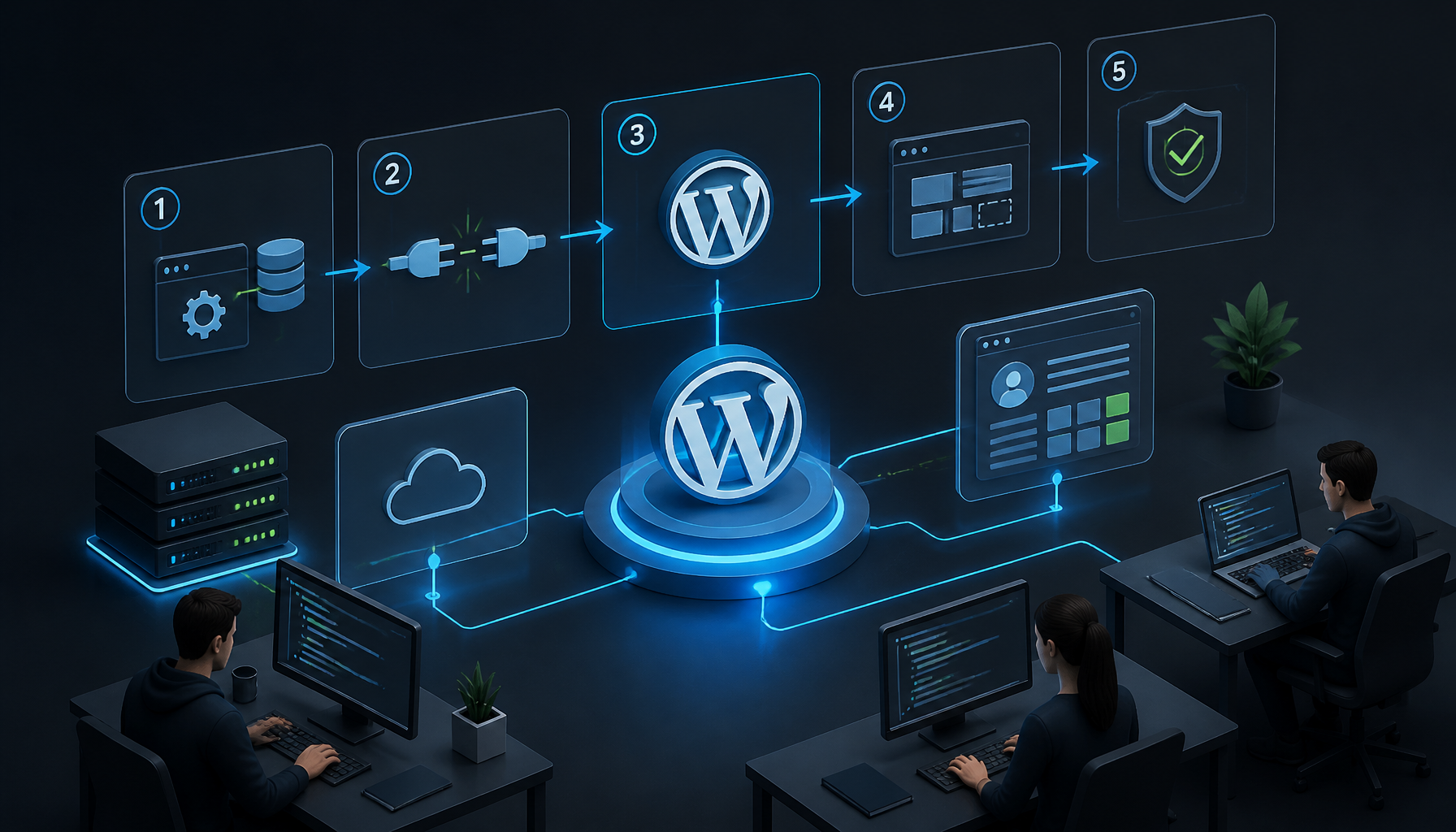
    Step-by-Step Guide to WordPress and CRM Integration

    Learn how to integrate a CRM with WordPress in this step-by-step guide for beginners. Discover CRM integration tips and best practices.

    Understanding CRM and WordPress Integration

    A Customer Relationship Management (CRM) system helps you track people and conversations—who they are, what they asked for, what you sent them, and what happens next. When you integrate a CRM with your WordPress site, you stop treating your website like a brochure and start treating it like an intake desk.

    The point isn’t “more software.” It’s fewer handoffs. Your form submits, the contact gets created (or updated), tags get applied, and an email sequence or task kicks off. Then you can spend time selling or helping customers instead of reconciling data.

    Benefits of CRM Integration with WordPress

    • Streamlined Processes: When customer data lives in one place, you can automate follow-ups, assign owners, and track touchpoints without digging through inbox threads. But the real win is consistency—every lead gets the same first response, even when you’re busy.

    • Enhanced Customer Insights: A CRM makes it obvious what’s working. You can see which forms create the best leads, which emails get replies, and where people drop off. So instead of guessing, you tweak the actual bottleneck.

    • Improved Lead Management: Form-to-CRM automation cuts manual entry (and typos). It also reduces the “ghost lead” problem—those inquiries that sit in your WordPress admin or email and never get followed up.

    Here’s a tiny example I’ve seen a bunch: a site gets 10–20 leads/week. If even 2 of those don’t get a reply within a day, that’s real money left on the table. A CRM integration doesn’t magically sell for you, but it stops the quiet leaks.

    Steps to Integrate a CRM with WordPress

    Step 1: Choose the Right CRM

    Pick the CRM based on how you actually work, not on feature checklists. Before you install anything, answer three questions:

    1. Do you want the CRM inside WordPress (self-hosted), or do you want a hosted platform you log into separately?
    2. Do you mainly need email automation (nurture sequences), sales pipeline tracking, or both?
    3. What’s your “source of truth”—your CRM, or your email tool?

    A few beginner-friendly options:

    • FluentCRM: A WordPress-native CRM focused on email marketing and automation. It’s great if you want everything in one dashboard and you’re okay owning the data and the deliverability setup. I’ve used setups like this where the business wanted fewer monthly SaaS subscriptions. (Gravity Forms)

    • HubSpot: Strong lead management and marketing tools, plus a big ecosystem. It’s usually the smoothest path when you want “it just works,” but you’ll live in HubSpot’s UI—not WordPress.

    • Jetpack CRM: Another WordPress-centric option. Solid if your workflow is more relationship and invoicing oriented, and you want something that feels like a WordPress admin experience.

    • Nutshell: A sales-focused platform that gives you a full view of interactions and helps automate follow-ups. I like it when a team is already thinking in pipelines and stages. (Nutshell)

    Tradeoff I’ll say out loud: WordPress-native CRMs can be awesome, but they also mean your site becomes “mission critical.” So if your hosting is shaky, fix that first, because your CRM data depends on it.

    Step 2: Install the CRM Plugin

    Once you’ve picked a CRM, install the plugin like you would any other—but do it carefully.

    1. Go to your WordPress admin dashboard.
    2. Navigate to Plugins > Add New.
    3. Search for your chosen CRM plugin (e.g., FluentCRM, Jetpack CRM).
    4. Click Install Now and then Activate.

    Now, a couple real-world checks people skip:

    • Backup before you activate. Even “good” plugins can conflict with caching, SMTP, or form plugins. If you can’t restore quickly, you’re gambling with downtime.
    • Use a staging site if you have one. If you don’t, at least do the install during a low-traffic window.
    • Confirm plugin legitimacy. Make sure you’re installing the official plugin, not a random lookalike. I’ve seen beginners install the wrong thing because the names were similar.

    If you’re using a hosted CRM (like HubSpot), the plugin often acts like a connector: it embeds forms, injects tracking, or syncs submissions. That’s normal—just pay attention to what permissions it asks for.

    Step 3: Configure the Plugin Settings

    After activation, configuration is where integrations either become reliable… or become “kinda works most of the time.” Take it slow.

    Typical setup tasks:

    • Set up your user account: Create an admin user in the CRM that isn’t tied to one employee’s personal email. Otherwise, when that person leaves, your automations break and nobody knows why.

    • Connect email correctly: If your CRM sends emails, you’ll want to confirm deliverability. For WordPress-native CRMs, this often means configuring SMTP (or a transactional email service) rather than relying on default PHP mail.

    • Define fields and lifecycle stages: Decide what a “Lead” is versus a “Customer.” Also, map key fields you care about (name, email, phone, company, service interest). If you don’t define this upfront, you’ll end up with 12 versions of the same idea.

    • Set basic automation rules: Start small. For example: “If form = Consultation Request, tag = consult, assign to = sales owner, send email = consult-confirmation.” Then build from there.

    One messy detail: duplicates. Most CRMs use email as the unique key, but some forms let people submit different emails or typos. So if your CRM has a “merge duplicates” setting, learn it early—future you will be grateful.

    Step 4: Integrate Forms and Capture Leads

    This is the make-or-break step, because your CRM is only as good as what you feed it.

    • If using FluentCRM, you can use its built-in forms, but I still like to think about UX: fewer fields usually means more submissions.

    • If using HubSpot (or another hosted CRM), you’ll typically embed their forms with a shortcode or HTML snippet. That approach is reliable, but it can affect styling—so test it on mobile.

    • If you’re already using a WordPress form builder, your goal is simple: every submission should create or update a contact in your CRM with the right tags.

    Here’s a step-by-step test I run every time (even on small sites):

    1. Submit the form with a real email you control (not a fake domain).
    2. Confirm the contact appears in the CRM within 1–2 minutes.
    3. Check that the right fields mapped correctly (name split, phone format, dropdown values).
    4. Verify tags/lists got applied.
    5. Trigger the follow-up email or task, then confirm it actually happened.
    6. Submit the same form again with the same email and a different name—make sure it updates instead of duplicating.

    If you only do one thing from this guide, do that checklist. It catches 90% of beginner integration failures.

    Step 5: Monitor and Analyze the Data

    Once your integration is live, the job shifts from “set it up” to “keep it honest.” CRMs drift over time—new forms get created, someone edits a field, a plugin updates, and suddenly the pipeline is filling with junk.

    What I watch in the first 2–4 weeks:

    • Lead volume by source: Which pages/forms produce contacts that actually convert?
    • Time-to-first-response: Even a basic automated confirmation email can improve this.
    • Email performance: open rates, click-through rates, replies.
    • Pipeline health (if you use deals): how long leads sit in each stage.

    Then I do a quick monthly hygiene pass: archive dead tags, standardize dropdown values (no more “Web design” vs “webdesign”), and remove spammy contacts. It’s boring, but it prevents the CRM from becoming a landfill.

    Common Mistakes to Avoid

    • Skipping the Testing Phase: This is the classic. People install the plugin, see “Connected,” and assume it’s fine. But “connected” doesn’t mean the form field mapping works.

    A real example: I once audited a setup where leads were syncing, but the “message” field was dropping because it exceeded a character limit in the CRM. So sales got a contact record with zero context. The team blamed lead quality for weeks, but the issue was the integration.

    Fix: run the end-to-end checklist from Step 4, and include a long message to test limits.

    • Neglecting Customer Data Management: CRMs get messy fast—duplicates, inconsistent capitalization, random notes in the wrong field. Then automations misfire because tags don’t match.

    Fix: pick naming conventions early (tags, lifecycle stages, interest categories). Also, decide what counts as a duplicate (usually email), and enforce it.

    • Ignoring User Training: Even if you’re solo today, you might not be in six months. I’ve seen teams sabotage a good CRM because nobody agreed on “how we use it.”

    Fix: write a one-page internal doc: how to create a deal, how to log a note, when to move stages, and what not to touch. Simple, but it prevents chaos.

    • Over-automating on day one: Beginners love building 14-step workflows immediately. Then one field changes and everything breaks.

    Fix: start with one automation per form. When it’s stable for a week, add the next.

    FAQ Section

    • Q: What are the benefits of integrating a CRM with WordPress?
      A: You get automatic data flow from your site into your contact database, so follow-ups happen on time and with context. But the sneaky benefit is accountability—once leads are in a CRM, you can see if they were contacted, when, and by whom.

    • Q: How do I choose the right CRM for my needs?
      A: Start with your primary workflow. If you mostly need newsletters and sequences, a WordPress-native tool like FluentCRM can be a clean fit (and it keeps things in one place). If you need a full sales pipeline with multiple reps, a hosted CRM like HubSpot or Nutshell tends to be easier to scale. Also, check integration points you already rely on—forms, booking tools, and email sending.

    • Q: Can I integrate multiple CRMs with WordPress?
      A: You can, but it usually turns into a data ownership fight. Two CRMs means two “truths,” duplicate contacts, and confused automations. If you must do it (say marketing vs sales), pick one system as the master contact record and push data one-way.

    • Q: What if I encounter issues during integration?
      A: Debug in this order: (1) confirm the form submission is being received, (2) confirm the plugin is firing the webhook/sync, (3) check field mapping errors, then (4) check email sending (SMTP/API). Support docs help, but screenshots of the exact form settings and a test contact record will get you a faster answer from support.

    • Q: Will integrating a CRM affect site performance?
      A: It shouldn’t be noticeable if the plugin is well-built, but you can accidentally slow things down with heavy tracking scripts or too many on-page embeds. I usually test key pages with and without the integration enabled, and I keep an eye on admin performance too—some CRMs add large database tables.

    • Q: Do I need double opt-in for leads?
      A: It depends on your region and what you’re sending. If you’re adding people to marketing emails, double opt-in is often the safer route. If it’s purely transactional (like replying to a request), it’s a different story. When in doubt, separate “contact request follow-up” from “newsletter subscription.”

    Conclusion

    If you set up WordPress and CRM integration properly, you stop treating every inquiry like a one-off email and start running a repeatable system. That’s the whole game—especially for beginners who don’t have time to babysit a pipeline.

    One practical next step: pick a single form (your highest-intent one, like “Request a Quote”), connect it to your CRM, and make the automation dead simple—tag the lead, assign an owner, send a confirmation. Let it run for a week, then review the data quality and response times.

    A quick story from the trenches: a small service business I worked with thought they needed “more traffic.” After we integrated their form into a CRM and added a basic 2-email follow-up, they discovered they were already getting leads—they just weren’t replying fast enough, and half the inquiries got buried. Traffic wasn’t the issue. Process was.

    Keep it boring. Keep it tested. Your future self will thank you.


    My Experience With This

    I’m Mobeen Abdullah, and I’ve spent years building and shipping software where integrations are the part everyone underestimates. The UI is the easy part. The messy part is what happens after launch—field changes, plugin updates, staff habits, spam spikes, and “why did this contact not sync?” mysteries.

    One pattern I’m biased toward: start with the simplest reliable flow, then iterate. For example, I’ll often begin with one WordPress form → one CRM list/tag → one automation → one measurable goal (reply within 1 business day). Once that’s stable, I’ll add segmentation, pipeline stages, and smarter sequences.

    If you want this to actually stick, treat it like a mini engineering project: define what success looks like, test it end-to-end, and re-check it after updates. That’s how you avoid the common fate of CRMs—installed with excitement, ignored two months later.

  • Step-by-Step Guide to WordPress and CRM Integration

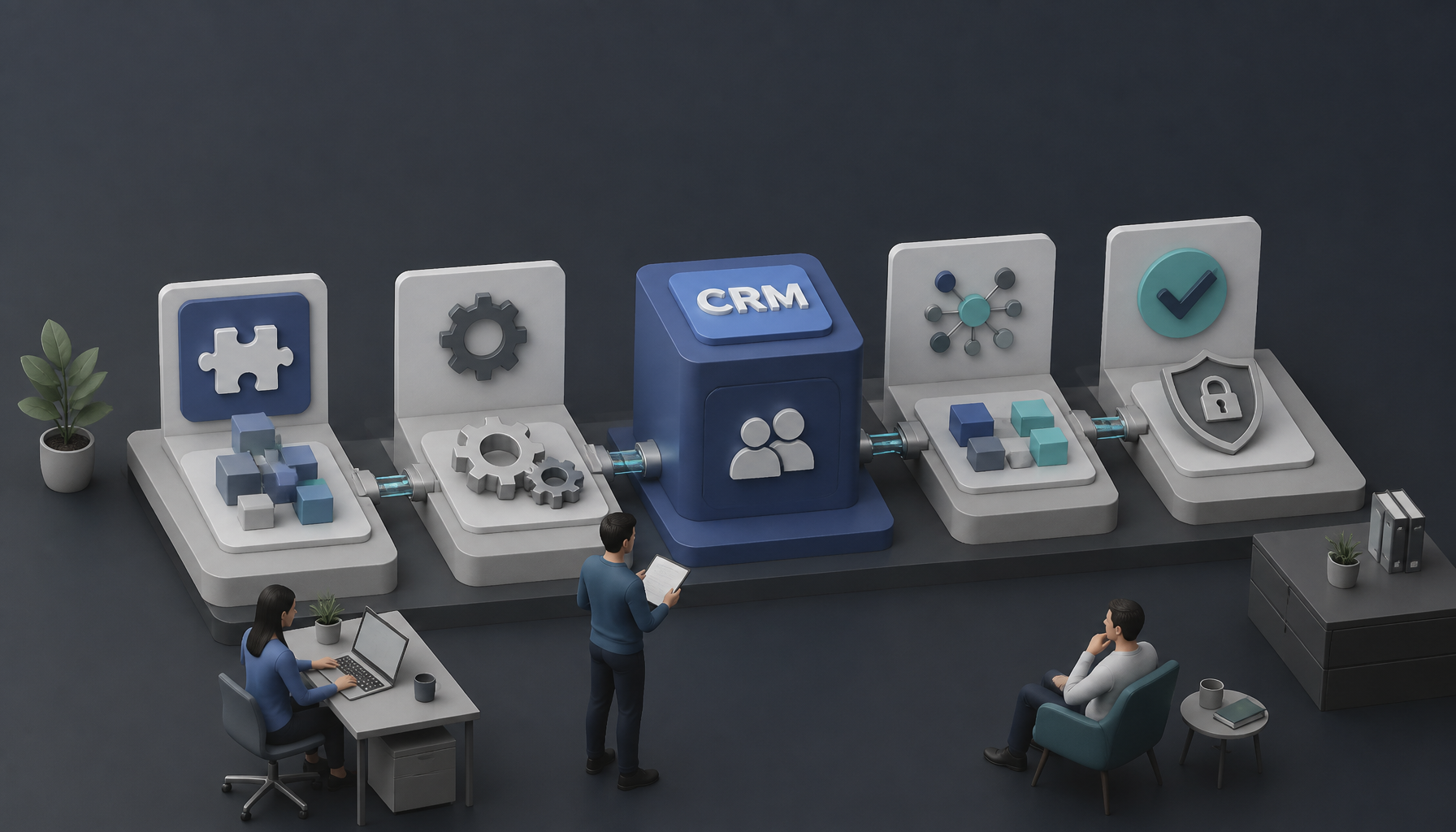
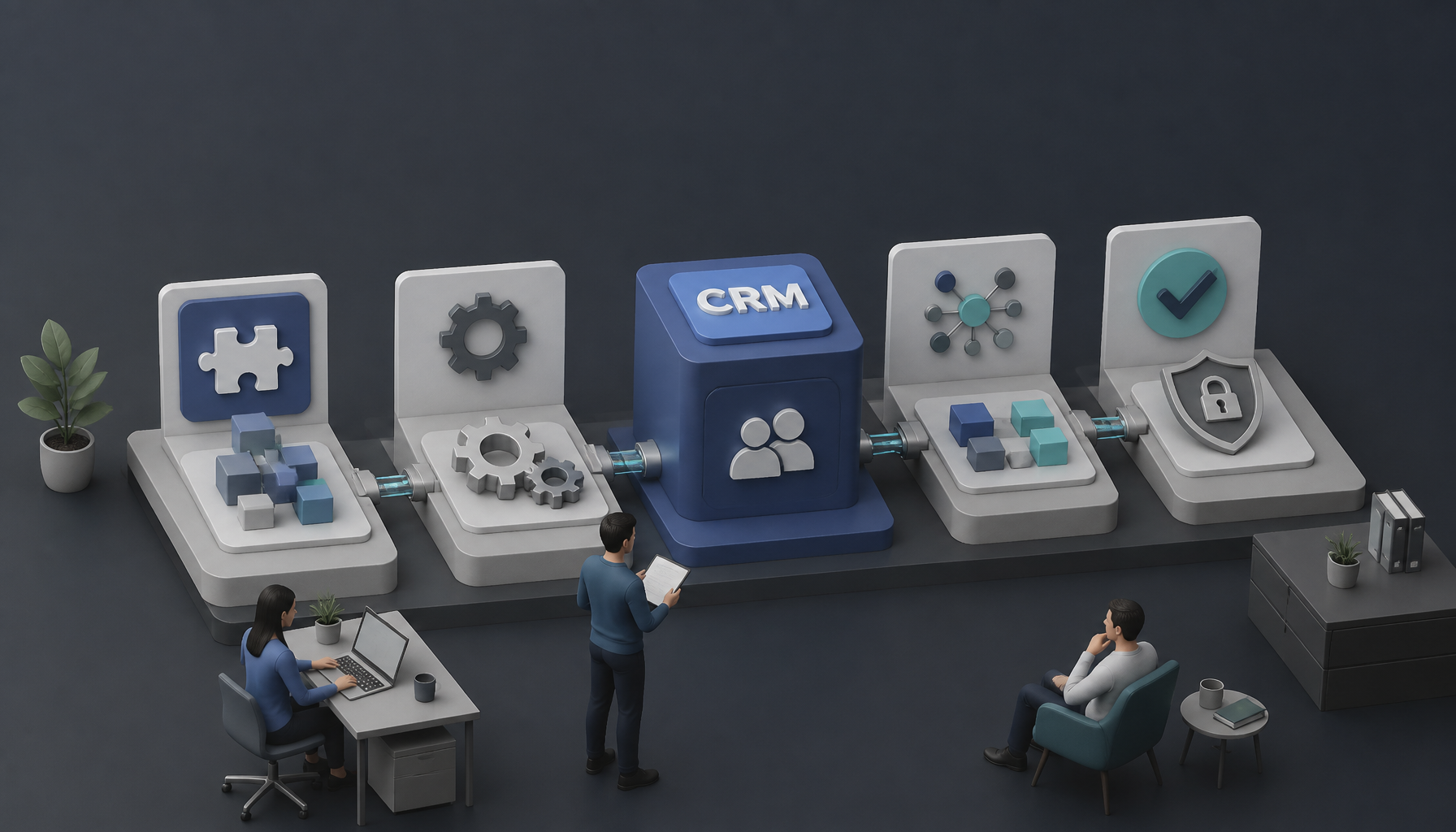
    Step-by-Step Guide to WordPress and CRM Integration

    Learn how to integrate a CRM with WordPress in this step-by-step guide for beginners. Discover CRM integration tips and best practices.

    Understanding CRM and WordPress Integration

    A Customer Relationship Management (CRM) system helps you track people and conversations—who they are, what they asked for, what you sent them, and what happens next. When you integrate a CRM with your WordPress site, you stop treating your website like a brochure and start treating it like an intake desk.

    The point isn’t “more software.” It’s fewer handoffs. Your form submits, the contact gets created (or updated), tags get applied, and an email sequence or task kicks off. Then you can spend time selling or helping customers instead of reconciling data.

    Benefits of CRM Integration with WordPress

    • Streamlined Processes: When customer data lives in one place, you can automate follow-ups, assign owners, and track touchpoints without digging through inbox threads. But the real win is consistency—every lead gets the same first response, even when you’re busy.

    • Enhanced Customer Insights: A CRM makes it obvious what’s working. You can see which forms create the best leads, which emails get replies, and where people drop off. So instead of guessing, you tweak the actual bottleneck.

    • Improved Lead Management: Form-to-CRM automation cuts manual entry (and typos). It also reduces the “ghost lead” problem—those inquiries that sit in your WordPress admin or email and never get followed up.

    Here’s a tiny example I’ve seen a bunch: a site gets 10–20 leads/week. If even 2 of those don’t get a reply within a day, that’s real money left on the table. A CRM integration doesn’t magically sell for you, but it stops the quiet leaks.

    Steps to Integrate a CRM with WordPress

    Step 1: Choose the Right CRM

    Pick the CRM based on how you actually work, not on feature checklists. Before you install anything, answer three questions:

    1. Do you want the CRM inside WordPress (self-hosted), or do you want a hosted platform you log into separately?
    2. Do you mainly need email automation (nurture sequences), sales pipeline tracking, or both?
    3. What’s your “source of truth”—your CRM, or your email tool?

    A few beginner-friendly options:

    • FluentCRM: A WordPress-native CRM focused on email marketing and automation. It’s great if you want everything in one dashboard and you’re okay owning the data and the deliverability setup. I’ve used setups like this where the business wanted fewer monthly SaaS subscriptions. (Gravity Forms)

    • HubSpot: Strong lead management and marketing tools, plus a big ecosystem. It’s usually the smoothest path when you want “it just works,” but you’ll live in HubSpot’s UI—not WordPress.

    • Jetpack CRM: Another WordPress-centric option. Solid if your workflow is more relationship and invoicing oriented, and you want something that feels like a WordPress admin experience.

    • Nutshell: A sales-focused platform that gives you a full view of interactions and helps automate follow-ups. I like it when a team is already thinking in pipelines and stages. (Nutshell)

    Tradeoff I’ll say out loud: WordPress-native CRMs can be awesome, but they also mean your site becomes “mission critical.” So if your hosting is shaky, fix that first, because your CRM data depends on it.

    Step 2: Install the CRM Plugin

    Once you’ve picked a CRM, install the plugin like you would any other—but do it carefully.

    1. Go to your WordPress admin dashboard.
    2. Navigate to Plugins > Add New.
    3. Search for your chosen CRM plugin (e.g., FluentCRM, Jetpack CRM).
    4. Click Install Now and then Activate.

    Now, a couple real-world checks people skip:

    • Backup before you activate. Even “good” plugins can conflict with caching, SMTP, or form plugins. If you can’t restore quickly, you’re gambling with downtime.
    • Use a staging site if you have one. If you don’t, at least do the install during a low-traffic window.
    • Confirm plugin legitimacy. Make sure you’re installing the official plugin, not a random lookalike. I’ve seen beginners install the wrong thing because the names were similar.

    If you’re using a hosted CRM (like HubSpot), the plugin often acts like a connector: it embeds forms, injects tracking, or syncs submissions. That’s normal—just pay attention to what permissions it asks for.

    Step 3: Configure the Plugin Settings

    After activation, configuration is where integrations either become reliable… or become “kinda works most of the time.” Take it slow.

    Typical setup tasks:

    • Set up your user account: Create an admin user in the CRM that isn’t tied to one employee’s personal email. Otherwise, when that person leaves, your automations break and nobody knows why.

    • Connect email correctly: If your CRM sends emails, you’ll want to confirm deliverability. For WordPress-native CRMs, this often means configuring SMTP (or a transactional email service) rather than relying on default PHP mail.

    • Define fields and lifecycle stages: Decide what a “Lead” is versus a “Customer.” Also, map key fields you care about (name, email, phone, company, service interest). If you don’t define this upfront, you’ll end up with 12 versions of the same idea.

    • Set basic automation rules: Start small. For example: “If form = Consultation Request, tag = consult, assign to = sales owner, send email = consult-confirmation.” Then build from there.

    One messy detail: duplicates. Most CRMs use email as the unique key, but some forms let people submit different emails or typos. So if your CRM has a “merge duplicates” setting, learn it early—future you will be grateful.

    Step 4: Integrate Forms and Capture Leads

    This is the make-or-break step, because your CRM is only as good as what you feed it.

    • If using FluentCRM, you can use its built-in forms, but I still like to think about UX: fewer fields usually means more submissions.

    • If using HubSpot (or another hosted CRM), you’ll typically embed their forms with a shortcode or HTML snippet. That approach is reliable, but it can affect styling—so test it on mobile.

    • If you’re already using a WordPress form builder, your goal is simple: every submission should create or update a contact in your CRM with the right tags.

    Here’s a step-by-step test I run every time (even on small sites):

    1. Submit the form with a real email you control (not a fake domain).
    2. Confirm the contact appears in the CRM within 1–2 minutes.
    3. Check that the right fields mapped correctly (name split, phone format, dropdown values).
    4. Verify tags/lists got applied.
    5. Trigger the follow-up email or task, then confirm it actually happened.
    6. Submit the same form again with the same email and a different name—make sure it updates instead of duplicating.

    If you only do one thing from this guide, do that checklist. It catches 90% of beginner integration failures.

    Step 5: Monitor and Analyze the Data

    Once your integration is live, the job shifts from “set it up” to “keep it honest.” CRMs drift over time—new forms get created, someone edits a field, a plugin updates, and suddenly the pipeline is filling with junk.

    What I watch in the first 2–4 weeks:

    • Lead volume by source: Which pages/forms produce contacts that actually convert?
    • Time-to-first-response: Even a basic automated confirmation email can improve this.
    • Email performance: open rates, click-through rates, replies.
    • Pipeline health (if you use deals): how long leads sit in each stage.

    Then I do a quick monthly hygiene pass: archive dead tags, standardize dropdown values (no more “Web design” vs “webdesign”), and remove spammy contacts. It’s boring, but it prevents the CRM from becoming a landfill.

    Common Mistakes to Avoid

    • Skipping the Testing Phase: This is the classic. People install the plugin, see “Connected,” and assume it’s fine. But “connected” doesn’t mean the form field mapping works.

    A real example: I once audited a setup where leads were syncing, but the “message” field was dropping because it exceeded a character limit in the CRM. So sales got a contact record with zero context. The team blamed lead quality for weeks, but the issue was the integration.

    Fix: run the end-to-end checklist from Step 4, and include a long message to test limits.

    • Neglecting Customer Data Management: CRMs get messy fast—duplicates, inconsistent capitalization, random notes in the wrong field. Then automations misfire because tags don’t match.

    Fix: pick naming conventions early (tags, lifecycle stages, interest categories). Also, decide what counts as a duplicate (usually email), and enforce it.

    • Ignoring User Training: Even if you’re solo today, you might not be in six months. I’ve seen teams sabotage a good CRM because nobody agreed on “how we use it.”

    Fix: write a one-page internal doc: how to create a deal, how to log a note, when to move stages, and what not to touch. Simple, but it prevents chaos.

    • Over-automating on day one: Beginners love building 14-step workflows immediately. Then one field changes and everything breaks.

    Fix: start with one automation per form. When it’s stable for a week, add the next.

    FAQ Section

    • Q: What are the benefits of integrating a CRM with WordPress?
      A: You get automatic data flow from your site into your contact database, so follow-ups happen on time and with context. But the sneaky benefit is accountability—once leads are in a CRM, you can see if they were contacted, when, and by whom.

    • Q: How do I choose the right CRM for my needs?
      A: Start with your primary workflow. If you mostly need newsletters and sequences, a WordPress-native tool like FluentCRM can be a clean fit (and it keeps things in one place). If you need a full sales pipeline with multiple reps, a hosted CRM like HubSpot or Nutshell tends to be easier to scale. Also, check integration points you already rely on—forms, booking tools, and email sending.

    • Q: Can I integrate multiple CRMs with WordPress?
      A: You can, but it usually turns into a data ownership fight. Two CRMs means two “truths,” duplicate contacts, and confused automations. If you must do it (say marketing vs sales), pick one system as the master contact record and push data one-way.

    • Q: What if I encounter issues during integration?
      A: Debug in this order: (1) confirm the form submission is being received, (2) confirm the plugin is firing the webhook/sync, (3) check field mapping errors, then (4) check email sending (SMTP/API). Support docs help, but screenshots of the exact form settings and a test contact record will get you a faster answer from support.

    • Q: Will integrating a CRM affect site performance?
      A: It shouldn’t be noticeable if the plugin is well-built, but you can accidentally slow things down with heavy tracking scripts or too many on-page embeds. I usually test key pages with and without the integration enabled, and I keep an eye on admin performance too—some CRMs add large database tables.

    • Q: Do I need double opt-in for leads?
      A: It depends on your region and what you’re sending. If you’re adding people to marketing emails, double opt-in is often the safer route. If it’s purely transactional (like replying to a request), it’s a different story. When in doubt, separate “contact request follow-up” from “newsletter subscription.”

    Conclusion

    If you set up WordPress and CRM integration properly, you stop treating every inquiry like a one-off email and start running a repeatable system. That’s the whole game—especially for beginners who don’t have time to babysit a pipeline.

    One practical next step: pick a single form (your highest-intent one, like “Request a Quote”), connect it to your CRM, and make the automation dead simple—tag the lead, assign an owner, send a confirmation. Let it run for a week, then review the data quality and response times.

    A quick story from the trenches: a small service business I worked with thought they needed “more traffic.” After we integrated their form into a CRM and added a basic 2-email follow-up, they discovered they were already getting leads—they just weren’t replying fast enough, and half the inquiries got buried. Traffic wasn’t the issue. Process was.

    Keep it boring. Keep it tested. Your future self will thank you.


    My Experience With This

    I’m Mobeen Abdullah, and I’ve spent years building and shipping software where integrations are the part everyone underestimates. The UI is the easy part. The messy part is what happens after launch—field changes, plugin updates, staff habits, spam spikes, and “why did this contact not sync?” mysteries.

    One pattern I’m biased toward: start with the simplest reliable flow, then iterate. For example, I’ll often begin with one WordPress form → one CRM list/tag → one automation → one measurable goal (reply within 1 business day). Once that’s stable, I’ll add segmentation, pipeline stages, and smarter sequences.

    If you want this to actually stick, treat it like a mini engineering project: define what success looks like, test it end-to-end, and re-check it after updates. That’s how you avoid the common fate of CRMs—installed with excitement, ignored two months later.

  • Understanding AI Agents in 2026

    Understanding AI Agents in 2026

    Discover what AI agents are, how they function, and their real-world applications in 2026. Learn about their types, examples, and free options.

    What is an AI Agent?

    AI agents are software systems that can perform tasks autonomously on behalf of users or other systems. Essentially, an AI agent analyzes data, makes decisions based on that analysis, and executes actions to achieve specific goals. Think of AI agents as digital assistants that operate independently, often across multiple platforms and systems, to fulfill user requirements effectively.

    What Exactly Does an AI Agent Do?

    An AI agent typically performs several functions, including:

    • Data Analysis: It processes large volumes of data to identify patterns, trends, and insights that inform decision-making.
    • Task Automation: Many AI agents are created to automate routine tasks, which can range from answering customer inquiries to managing emails and scheduling appointments.
    • Interaction: These agents often interface with users through chatbots or voice assistants, providing a seamless user experience while facilitating interactions with technology.
    • Learning: Modern AI agents can improve over time through machine learning, adapting their responses based on past interactions and outcomes.

    Where people get tripped up is the “agent loop.” In practice, a decent agent runs something like: (1) read context → (2) plan → (3) use tools → (4) verify → (5) log + ask for help when uncertain. Because of that loop, it’s not just generating text; it’s coordinating work.

    In many ways, AI agents act similarly to employees; they can take on burdensome tasks, allowing human workers to focus on more complex, strategic initiatives. In my work, I’ve seen teams cut first-response time in support simply by letting an agent do the boring triage—tag the ticket, pull the order details, draft a reply—then hand off to a human for anything weird.

    Common mistake: letting the agent “send” on day one. Draft-first is safer, since you can spot bad assumptions before they become customer-facing.

    Types of AI Agents

    1. Reactive Agents: These agents reply based on the current state of the environment. They do not have memory, meaning they do not store past information.
    2. Deliberative Agents: These agents possess a model of the world and use that model to make decisions, which involves planning and reasoning.
    3. Learning Agents: Such agents improve their performance by learning from their past experiences. An excellent example is how recommendation systems evolve by analyzing user feedback.

    4. Multi-Agent Systems: These consist of multiple agents that collaborate to solve problems that a single agent may find too complex or multifaceted.

    The diversity in AI agents allows organizations to select the type that best fits their specific needs and use cases.

    If you’re choosing for a real product, I’d simplify it like this: reactive agents are fine for “if X then Y,” deliberative agents help when steps matter (refund workflows, approvals), learning agents pay off when you have feedback loops, and multi-agent setups are for when one model can’t reliably juggle everything.

    One tradeoff: more autonomy usually means harder debugging. So, if you can get away with a narrower agent that only touches two systems, you’ll sleep better.

    Is ChatGPT an AI Agent?

    Yes, ChatGPT can be categorized as an AI agent. It interacts with users through natural language processing, enabling it to engage in conversations and respond to inquiries. Programs like ChatGPT can operate in various domains, from customer support to content creation, showcasing the versatility of AI agents in addressing diverse challenges.

    Still, the label depends on how you deploy it. If ChatGPT only chats, it’s closer to an assistant. Once you connect it to tools (ticketing, calendars, repos) and let it take actions, then you’re firmly in “agent” territory.

    Examples of AI Agents

    Various industries are leveraging AI agents to enhance operational efficiency and improve user experiences. Here are a few notable examples:

    AI Agent Microsoft

    Microsoft’s AI agent, Copilot, integrates directly into productivity applications like Word and Excel. Its main purpose is to assist users by generating content, performing calculations, and automating repetitive tasks within the software. For instance, Copilot uses patterns from existing documents to draft emails or create reports, saving users a substantial amount of time.

    I’ve watched a finance lead use it to turn a messy spreadsheet into a readable narrative for leadership. The win wasn’t “better writing,” it was speed—because the agent handled the first ugly draft, then the human fixed the few risky parts (numbers, claims, tone).

    AI Agent Google

    Google Assistant is another leading example of an AI agent. It utilizes natural language understanding to manage various tasks such as setting reminders, playing music, or even controlling smart home devices. With its ability to integrate across multiple Google services, it can provide users with a seamless experience.

    The underrated bit here is orchestration. When an assistant can chain actions—set reminder, send a message, update a list—you start to see what “agent-like” behavior feels like, even if each step is simple.

    AI Agent Copilot

    GitHub Copilot is an AI coding assistant that suggests code snippets in real-time as developers work. It helps streamline coding tasks by allowing users to write software more quickly and accurately, leveraging vast amounts of code data from various repositories to provide relevant suggestions.

    One real pattern I see: developers use it as a second brain for boilerplate, then they manually review anything touching auth, payments, or data deletion. That’s the healthy line. The teams that blindly accept suggestions tend to ship subtle bugs—off-by-one loops, wrong API params, or “helpful” code that ignores edge cases.

    These examples illustrate the numerous ways AI agents can be utilized across different platforms and industries, significantly improving productivity and user experience.

    Free AI Agents

    For those looking to explore AI solutions without incurring costs, numerous free AI agents are available today. Here are some notable options:

    Free AI Options

    1. Wit.ai: A natural language processing platform that allows developers to build conversational agents.
    2. Dialogflow: A Google Cloud service enabling users to create chatbots and conversational interfaces for various applications.
    3. Rasa: An open-source framework for building contextual AI assistants. Highly popular among developers, Rasa allows for significant customization and flexibility.
    4. Nextly: While not free, Nextly offers a robust framework built on Next.js that allows you to define content seamlessly, integrating functionalities like role-based access control and a media library for those who need more than just basic automation.

    If you’re testing these, don’t start by building “a general agent.” Pick one workflow that annoys you weekly.

    Here’s a simple step-by-step I’ve used with small teams:

    1) Write a one-sentence goal (ex: “triage inbound support emails into 5 buckets”).
    2) Define what the agent can access (mailbox read-only first, then escalate).
    3) Create 10–20 real examples and label the right outcome.
    4) Run it in shadow mode for a week (it suggests, humans act).
    5) Only then allow limited actions, with logging and a kill switch.

    The mistake I see most: people evaluate “agent quality” on one perfect demo. So, make sure you test the messy stuff—angry customers, missing info, and requests that require policy judgment.

    Conclusion

    AI agents are integral to shaping the future of technology and business operations in 2026. From automating mundane tasks to enhancing user interactions across platforms, their capabilities are broad and growing. Understanding what an AI agent does, the various types available, and the options for integration enables organizations to harness this technology effectively.

    What I’d actually do next (especially if you’re rolling this out at work): start with a narrow agent that drafts and routes, not one that executes irreversible actions. For example, one ops team I worked with began by letting an agent classify invoices, extract fields, and pre-fill the accounting entry—then a human clicked “approve.” After two weeks, errors dropped because the checks became consistent, and the human reviewer only handled the weird edge cases.

    As you implement agents, measure boring metrics: time-to-first-response, handoff rate to humans, and “oops” incidents per week. If those aren’t improving, you don’t need a fancier model—you need tighter scope, better tools, or clearer rules.

    FAQs

    • Q: What exactly does an AI agent do?
      A: An AI agent performs tasks autonomously by applying artificial intelligence to analyze data and automate processes. In real deployments, it usually follows a loop—read context, plan steps, use tools, and then either complete the task or ask a human when confidence is low.

    • Q: Is ChatGPT an AI agent?
      A: Yes, ChatGPT is a form of an AI agent designed to engage in natural language conversations. If you connect it to tools (like a helpdesk, calendar, or database) and let it take actions, it behaves much more like a true agent rather than a chat-only assistant.

    • Q: How much do AI agents cost?
      A: Costs for AI agents vary widely, ranging from free tools to expensive enterprise solutions. In practice, budget for more than model fees—logging, evaluation, human review time, and integrations often cost more than you expect, especially once you move past a prototype.

    • Q: Is there a free AI agent?
      A: Yes, there are free AI agents available, including various chatbots and personal assistants. That said, “free” usually means you’ll pay in setup time: you still need to define intents, create test cases, and set guardrails so it doesn’t confidently do the wrong thing.

  • Boost Your Strategic Thinking Skills as a Project Manager

    Boost Your Strategic Thinking Skills as a Project Manager

    Learn how to enhance your strategic thinking skills as a project manager with practical techniques and frameworks.

    Understanding Strategic Thinking

    Strategic thinking in project management is less about predicting the future and more about consistently making better bets than your peers.

    What strategic thinking is (and isn’t)

    Strategic thinking is your ability to connect today’s decisions to tomorrow’s outcomes—while dealing with uncertainty, constraints, and people who disagree.

    It’s not:
    – Writing a strategy deck once a year.
    – Saying “aligned with company goals” without knowing what those goals cost.
    – Calling every risky idea “innovative” and hoping it works out.

    It is:
    – Seeing second-order effects (what breaks downstream if we do this?).
    – Spotting the real constraint (time, talent, budget, appetite for change).
    – Choosing tradeoffs explicitly, then communicating them in plain language.

    A quick gut-check I use: if you can’t explain your plan to a finance partner in five minutes, you probably don’t have a strategy yet.

    Long-term planning that doesn’t turn into fantasy

    Long-term planning sounds obvious until you’re inside a real org where priorities shift weekly.

    So I treat “long-term” as three horizons:
    1. Now (0–4 weeks): delivery and risk control. What must be true for this to ship safely?
    2. Next (1–2 quarters): capability building. What will we need soon that we don’t have yet—skills, tooling, vendors, approvals?
    3. Later (6–18 months): direction and optionality. Which decisions today lock us in, and which keep doors open?

    Here’s a real example from a product rollout I ran: leadership wanted a new customer portal “by end of quarter.” We could’ve sprinted to an MVP, but the long-term constraint was authentication—if we cut corners, we’d pay for it in security reviews and support tickets for the next year.

    So we planned for the quarter (ship portal basics), but we also carved out two weeks to implement single sign-on properly. It delayed shiny UI work, and people complained early. Then, three months later, compliance showed up with new requirements and we didn’t panic. That’s long-term planning with teeth.

    Critical analysis: the habit of questioning “obvious” work

    Critical analysis isn’t being negative. It’s refusing to accept fuzzy inputs.

    When someone says, “This is a must-have,” I ask:
    – Must-have for who?
    – What happens if we don’t do it?
    – What’s the cheapest test that proves it matters?
    – Which metric moves if this succeeds?

    That last one—metrics—changes the conversation. It forces stakeholders to pick a definition of “better,” and it gives you something to manage against when opinions start flying.

    A mistake I’ve made (more than once): accepting “reduce churn” as the goal without clarifying which churn (logo churn, revenue churn, involuntary churn). We built the wrong improvements because the problem statement was sloppy. Strategic thinking starts with being annoying—in a useful way.

    Decision frameworks: structure beats vibes

    Frameworks don’t replace judgment, but they stop you from forgetting an entire category of risk.

    I’ll say it bluntly: when a PM tells me, “I’m going with my gut,” what I hear is, “I didn’t do the work to compare options.”

    Use frameworks when:
    – You have competing stakeholder priorities.
    – The decision is irreversible or expensive to undo.
    – The outcome depends on external factors (market, regulation, vendor stability).

    Even a lightweight structure—two options, pros/cons, assumptions, risks, and an exit plan—puts you ahead of most teams.

    Steps To Enhance Your Strategic Thinking Skills

    This is the part you can practice immediately—even if your org is chaotic.

    1. Embrace Continuous Learning

    If you want better strategic judgment, you need better raw material.

    But continuous learning doesn’t mean hoarding articles in a bookmarks folder. I treat it like a project: small, consistent, and tied to the kind of decisions I’m making right now.

    Here’s a routine that actually sticks:
    One hour per week: read one deep thing (not five shallow things). A postmortem, a market analysis, a credible industry write-up.
    One conversation per month: talk to someone adjacent to your world—finance, support, sales engineering, security. You’ll steal their mental models.
    One “what changed?” note per quarter: write a short memo: what’s different in our market, our product, our org? Keep it to a page.

    If you need a place to start, I regularly attend sessions by industry leaders like those at CornerStone Dynamics because they tend to focus on what survives real delivery pressure, not just theory.

    Mini anecdote: I once inherited a project mid-flight, and everyone blamed “scope creep.” After two weeks of talking to the support lead and listening to call recordings, it turned out customers weren’t asking for more features—they were asking for clarity. We shipped fewer features, rewrote onboarding, and churn dropped. I only found that because I kept learning from outside the PM bubble.

    Common mistake: learning only from other PMs. It feels productive, but it narrows your view.

    2. Utilize Frameworks

    Frameworks are training wheels, and that’s a compliment.

    The trick is to use them fast and visibly, so stakeholders see your logic.

    SWOT: use it to argue tradeoffs

    SWOT (Strengths, Weaknesses, Opportunities, Threats) works when you need to decide where to invest.

    A practical way to run SWOT on a project:
    1. Grab a cross-functional group (30 minutes). Keep it small—4–6 people.
    2. Fill each quadrant with specific items (no fluff like “good team”).
    3. Put a star next to items that affect the next 90 days.
    4. Convert the starred items into decisions: “Because X weakness exists, we will…”

    Example: If a weakness is “no QA automation,” your strategic move might be to delay feature work by one sprint to build a smoke suite. That’s painful short-term. It’s also how you stop bleeding.

    PEST: stop ignoring the outside world

    PEST (Political, Economic, Social, Technological) is how you avoid getting blindsided by forces outside your org.

    I like PEST when I’m managing:
    – regulated industries,
    – pricing changes,
    – vendor dependency,
    – anything that touches data privacy.

    You don’t need a thesis. You need a list of “if this changes, we’re in trouble.”

    Porter’s Five Forces: helpful for product-heavy PMs

    Porter’s Five Forces helps when your project affects competitive position—pricing, switching costs, differentiation.

    If your stakeholder asks, “Why does this matter?” Five Forces gives you language like:
    – Are we raising switching costs?
    – Are we reducing buyer power by making outcomes unique?
    – Are we vulnerable to substitutes?

    Even if you’re internal IT, you still have “competition” (shadow tools, manual workarounds, different vendors). Call it what it is.

    Common mistake: running frameworks as a workshop activity, then never turning them into decisions. If it doesn’t change the plan, it’s theatre.

    3. Foster a Strategic Mindset

    Strategic thinking scales when your team starts doing it with you.

    So instead of being the lone “strategy person,” I bake it into normal meetings.

    Run meetings with one strategic question

    Pick one question and make it a recurring habit:
    – “What are we optimizing for this sprint—speed, quality, learning, or cost?”
    – “What’s the risk we’re pretending isn’t real?”
    – “If this slips two weeks, what breaks?”

    At first, people will answer with clichés. That’s fine. Keep asking, and they’ll get sharper.

    Make outcomes visible, not just tasks

    I push teams to tie work to outcomes using a simple chain:
    Initiative → deliverable → behavior change → metric impact

    Example:
    – Initiative: reduce onboarding friction
    – Deliverable: guided setup flow
    – Behavior change: fewer drop-offs during setup
    – Metric impact: activation rate up 10%

    When teams can articulate that chain, they start spotting “busy work” on their own.

    Protect space for thinking

    This is the messy part. Strategic thinking needs slack, but projects eat slack for breakfast.

    What I do:
    – Block one 45-minute slot weekly called “Think + Write.”
    – Write a short note: risks, assumptions, decisions needed.
    – Share it with one person who will challenge you.

    Common mistake: treating strategy time as optional. Then you end up making big calls in hallway conversations.

    4. Practice Scenario Planning

    Scenario planning is how you stop being surprised by predictable problems.

    You’re not trying to guess the future perfectly. You’re trying to rehearse responses.

    A simple scenario planning method (that fits in 60 minutes)

    1. Choose a focal decision. Example: “Do we launch in Q3 or Q4?”
    2. List 5 forces that could change the outcome. Vendor delivery, staffing, competitor move, regulatory review, customer demand.
    3. Pick two forces that are most uncertain and most impactful. Put them on axes.
    4. Create 4 scenarios. Give them names people remember (seriously, it helps).
    5. Write triggers and responses. For each scenario: “If we see X, we do Y.”

    Real example: vendor risk that didn’t become a disaster

    On a platform migration, we depended on a third-party API. They promised a new endpoint “next month.” Classic.

    Our scenarios were basically:
    – Endpoint arrives on time
    – Endpoint arrives late
    – Endpoint arrives broken
    – Vendor changes pricing/limits

    Because we rehearsed “arrives late,” we built a temporary adapter and a throttling plan. Two months later, the endpoint was late and unstable. Meanwhile, other teams panicked. We just executed the play.

    Common mistake: writing scenarios and stopping there. If you don’t define triggers (“we see error rate above 2% for 24 hours”) you’ll argue endlessly about whether the scenario is happening.

    5. Seek Feedback

    Feedback is a shortcut to better strategy—if you ask for the right kind.

    Instead of “Any feedback?” (which gets you nothing), ask:
    – “Where did my reasoning feel weak?”
    – “What assumption am I missing?”
    – “Which stakeholder did I underweight?”

    Build a feedback loop into delivery

    Here’s a cadence I like:
    – After major decision: 10-minute retro with a senior peer.
    – After milestone: ask two stakeholders what they expected vs what they got.
    – After project: do a real postmortem focused on decisions, not blame.

    Mini story: I used to avoid feedback from sales because it felt biased. Then I realized sales was seeing objections weeks before product analytics did. Once I started asking, “What are you hearing that I’m not?” my roadmaps got more realistic.

    Common mistake: only asking your manager. You need feedback from people who feel the consequences of your choices—support, ops, security, finance.

    6. Focus on Data-Driven Decision Making

    Data won’t make decisions for you, but it will keep you honest.

    A recent report from the Institute of Project Management highlights the importance of using data to back up strategic decisions in project executions.

    The PM-friendly data stack (keep it boring)

    You don’t need a data science team. You need consistent signals:
    – Delivery: cycle time, throughput, defect rate, escaped defects
    – Customer: activation, retention, NPS (careful), support ticket volume by category
    – Business: revenue impact, cost-to-serve, churn (define it)

    Tools can be simple: Jira reports, a spreadsheet, Looker/Tableau dashboards, even SQL queries if you have access.

    How to use data without becoming a dashboard zombie

    I use a three-step rule:
    1. Pick one metric per decision. If you pick five, you’ll rationalize anything.
    2. Define the direction and threshold. “Activation up 5%” not “activation improves.”
    3. Decide what you’ll do if it fails. Rollback, iterate, or kill it.

    Common mistake: using data as a weapon. If you cherry-pick metrics to win arguments, people will stop trusting your analysis.

    Measuring Your Strategic Thinking Skills

    You can’t improve what you never evaluate—especially when “strategic” feels subjective.

    Self-reflection that produces evidence

    Self-reflection works when it’s specific and written down.

    Once a month, I do a 20-minute review and answer these questions:
    – Which decisions did I make that had second-order effects?
    – Where did I get surprised, and what signal did I ignore?
    – What did I say “yes” to that I should’ve reframed or declined?
    – Which assumption ended up false?

    Then I pull one artifact—an email, a decision log entry, a retro note—and attach it. Evidence keeps you from rewriting history.

    Real example: I noticed a pattern where I kept underestimating legal review time. After seeing it three projects in a row, I added “legal lead time” as a standing risk item in planning. That single change improved forecast accuracy more than any scheduling technique.

    Common mistake: reflecting only when things go wrong. You learn just as much from wins—especially why they worked.

    Peer reviews that aren’t political

    Peer reviews get weird when they’re vague. Make them about behaviors, not personality.

    Ask peers to rate you (1–5) on statements like:
    – “Explains tradeoffs clearly.”
    – “Surfaces risks early.”
    – “Connects work to business outcomes.”
    – “Changes direction when evidence changes.”

    Keep it anonymous if you can. If not, at least normalize bluntness: “I’m collecting this to improve, not to argue.”

    A tactic that helps: ask two peers from different functions. An engineering lead and a finance partner will see totally different gaps.

    Common mistake: asking friends who won’t tell you the hard truth. If the feedback doesn’t sting a little, it’s probably not useful.

    Performance metrics that reflect strategic impact

    Project delivery metrics matter, but they don’t fully capture strategic thinking.

    So I look at:
    Decision latency: how long big decisions sit unresolved
    Rework rate: how often you redo work due to unclear direction
    Risk burn-down: whether top risks shrink over time or just rotate
    Outcome attainment: whether the project moved the intended metric

    If you want one simple scorecard, try this quarterly:
    – List your top 5 decisions.
    – For each, mark: did it age well after 90 days? yes/no/unclear.
    – Track the ratio.

    Over time, you’ll see improvement. When I started doing this, my “aged well” rate was embarrassingly low. Then, as I got better at surfacing assumptions and running scenarios, it climbed.

    Conclusion

    Strategic thinking doesn’t come from reading one article and suddenly “thinking big.” It comes from practicing small moves that compound—asking better questions, making tradeoffs explicit, and setting up decisions so reality can correct you quickly.

    If you do nothing else this week, do this: pick one active project and write a one-page strategy note.
    – What’s the outcome (metric + target)?
    – What are the top 3 constraints?
    – What are the top 5 risks?
    – What decision do you need next, and by when?

    Then share it with one stakeholder who tends to disagree with you. The point isn’t harmony. The point is clarity.

    A final, real-world reminder: I’ve seen projects “succeed” on time and on budget, then quietly fail because nobody adopted the thing. That’s why strategic thinking matters. Delivery is the start of the story, not the ending.

    Run the next project like it has consequences—because it does.

    FAQs

    Q: What are key concepts of strategic thinking?

    A: I anchor on three: long-term planning (thinking in horizons, not fantasies), critical analysis (challenging assumptions with evidence), and decision frameworks (structured comparisons so you don’t miss categories of risk). The best PMs I’ve worked with also add a fourth concept: communicating tradeoffs so stakeholders can’t pretend everything is priority one.

    Q: How can I measure my strategic thinking skills?

    A: Use a mix of written self-review, peer feedback, and outcome-based metrics. If you want a quick start, track your five biggest decisions this quarter and check whether they “aged well” after 90 days. Also, ask two peers from different functions where your reasoning felt thin—those gaps show you what to practice next.

    Q: What frameworks can enhance strategic thinking?

    A: SWOT helps you connect internal strengths/weaknesses to external opportunities/threats. PEST keeps you honest about outside forces that can derail a plan. Porter’s Five Forces is great when competitive dynamics or switching costs matter. The key is turning frameworks into decisions, not leaving them as workshop artifacts.

    Q: How does strategic thinking benefit project management?

    A: It makes you proactive instead of reactive. You’ll surface risks earlier, choose tradeoffs faster, and align work to outcomes people actually care about. Practically, that means fewer surprise escalations, less rework, and more credibility when you ask for time, budget, or scope changes.

    Q: What’s a common strategic thinking mistake PMs make?

    A: Confusing activity with impact. Shipping a lot of tickets can feel like progress, but if the work doesn’t change a metric or reduce a risk, you’re just burning time. The fix is simple (not easy): define the outcome, then let that outcome veto “nice-to-have” work.

  • The Future of Tractors: Innovations Coming in 2026

    The Future of Tractors: Innovations Coming in 2026

    The future of tractors in 2026 isn’t a shiny gadget story—it’s a hard, practical shift in how fieldwork gets planned, executed, and verified. I’m Mike Wemhoff, and in my role as Vice President of Precision Agriculture at John Deere, I’ve spent the last decade watching “cool demos” either turn into real uptime… or die the first time they hit mud, dust, and a tight planting window.

    What’s different about the 2026 wave is that autonomy, electrification, and connected precision tools are landing at the same time. That matters because farmers don’t buy features in isolation—they buy systems that help them finish the job when labor is short, fuel is expensive, and weather is unpredictable.

    So this isn’t about tractors driving themselves for fun. It’s about reducing wasted passes, catching mistakes earlier (like a blocked row unit or a drifting guidance line), and proving what happened in the field after the fact. If you’re planning equipment updates, 2026 is the year you’ll want to think less about horsepower and more about workflow—from data to dirt and back again.

    Below, I’ll walk through the tractor and machinery innovations I expect to matter most, the market trends pushing them forward, and the core machines that still do the unglamorous work of getting a crop in and out.

    Exploring Future Innovations in Agricultural Machinery

    The agricultural machinery market is evolving fast because the economics got tighter and the tolerance for downtime got smaller. Autonomy, electric powertrains, and precision ag aren’t “nice to have” anymore—farmers are using them to protect timing, inputs, and margins.

    Agricultural Machinery Manufacturers

    John Deere and AGCO are pushing hard on automation, but the best stuff isn’t the press-release version—it’s the parts that survive a long day and still make the operator’s life easier tomorrow. In the Deere world, the headline for 2026 tractor models is autonomous systems that allow for remote operation and management of fieldwork. The why is simple: labor is hard to find, and seasonal help is even harder to keep. When you can supervise more acres per person, you buy breathing room.

    Here’s what I tell growers who ask how to think about autonomy without getting lost. Start with a single, repeatable job—something like tillage on a big, square field or a secondary pass where the “unexpected” is limited. Then work down this checklist:

    • Map the field boundary cleanly (don’t trust a five-year-old shape file if you’ve changed waterways).
    • Confirm guidance accuracy and correction source, because drift you don’t notice at noon becomes a mess by 6 p.m.
    • Create a simple work plan: speed, implement width, turn behavior, and headland strategy.
    • Set alert rules that actually matter (equipment fault, obstacle detection, connectivity loss), not “notify me every time the machine sneezes.”
    • Do a supervised shakedown for the first couple hours and write down what surprised you.

    That last step is where real farms diverge from demos. I’ve seen the same pattern a dozen times: a farm tries autonomy, gets spooked by one weird turn at the edge of a terrace, and then writes the whole thing off. Usually the fix is boring—boundary cleanup, a different headland pattern, or moving a guidance line so the implement tracks better.

    AGCO’s approach varies by brand and region, but the direction is similar: more machine intelligence, more sensor feedback, and more remote visibility. What I care about, though, is serviceability. If a sensor fails, can you keep running in a degraded mode, or does the whole workflow stop? The manufacturers that win 2026 won’t just ship smarter tractors—they’ll ship smarter failure modes.

    New Holland’s T7 XD tractors are a good example of where the market is also going: high fuel efficiency and modernized designs meant for real mixed operations. That matters because many farms are running a fleet that spans decades. When a new tractor can cut fuel use, simplify controls, and still play nicely with older implements, it gets adopted faster.

    Agricultural Machinery Market Trends

    The market is pulling equipment in three directions at once: lower emissions, higher precision, and better documentation. Electric-powered equipment is getting attention as a cleaner alternative to diesel, but I wouldn’t pretend it’s a flip-the-switch transition for every operation. Battery energy density, charging logistics, and cold-weather performance still dictate what’s realistic.

    So where does electrification make sense first? In my experience, it shows up in predictable duty cycles: yard loaders, smaller tractors doing chore work, specialty crops with shorter runs, and hybrid assist for peak loads. Once you can recharge on schedule—and not in the middle of a storm front—it starts to pencil out.

    At the same time, regulatory pressure and consumer demand are nudging farms toward measurable sustainability, which means the data has to exist. That’s where IoT integration stops being marketing and becomes operations. When a tractor, planter, sprayer, and combine all collect time-stamped, location-stamped data, you can answer questions like:

    • Did we overlap on the second pass and waste seed?
    • Did we apply nitrogen on the right rate map, or did the controller drop to a default rate after a comms hiccup?
    • Which fields consistently run behind schedule because turns are too tight or logistics are messy?

    Precision ag technologies reduce waste and optimize resource use, but only if the data is clean enough to trust. One common mistake I see is treating connectivity like a luxury. If your modem coverage is spotty, or your software subscriptions lapse, or you don’t have a plan for syncing files at day’s end, you’ll end up with “almost helpful” data—just good enough to argue about, not good enough to act on.

    By 2026, digital platforms will matter even more, but not because they’re fancy. They matter because they turn machine work into repeatable process. That’s the difference between “we think we planted that field” and “we can prove what happened, down to the row.”

    Agricultural Equipment Innovations

    A lot of the meaningful innovation is happening around the tractor, not just inside it. New planting systems and precision irrigation tools are being built to raise yields while conserving water and nutrients, and the best ones are designed around variability—because no field is uniform, even if it looks flat.

    Take seed placement. Tools like the Precision Planting MiraSense use optical sensors to improve seed monitoring and placement decisions. The real win isn’t the sensor itself; it’s catching problems early enough that you can fix them before you’ve burned half a day. A seed tube issue at 7:30 a.m. is a minor annoyance. The same issue at 3:00 p.m., after you’ve covered 300 acres, becomes a painful phone call and a replant conversation.

    If you’re trying to adopt these systems in 2026 without getting overwhelmed, I’d do it in this order:

    1. Stabilize the basics: clean power, clean CAN connections, updated firmware, and calibrations done on purpose (not “close enough”).
    2. Improve visibility: add monitoring so you can see what’s happening while it’s happening.
    3. Automate one decision: section control, variable-rate prescriptions, or turn automation—pick one.
    4. Only then chase optimization: speed, downforce curves, and deeper analytics.

    Meanwhile, harvest automation keeps getting better too, and it’s not just about comfort. Machines like the Massey Ferguson SB.1436DB baler are engineered for high-density performance, which can tighten logistics—fewer bales to move, fewer loads, less time burning daylight. The tradeoff is that higher density also punishes sloppy maintenance. If bearings, belts, and pickup components aren’t kept up, you’ll find the weak link fast.

    A quick story from the field: I watched a crew add new automation features to a harvest setup and then ignore the “boring” part—operator training. The first day looked rough, and they blamed the tech. Day two, we slowed down, walked through settings, and assigned one person to watch machine alerts instead of everyone assuming “someone else has it.” Output jumped, and the stress level dropped. The technology didn’t change; the process did.

    A Comprehensive List of Agricultural Machinery and Their Uses

    To navigate the future of farming, it’s essential to understand the machines doing the day-to-day work—and how their roles change when you add autonomy or precision layers. Tractors, harvesters, and planters get the spotlight, but the supporting cast (tillage tools, material handling, irrigation) is often where the real efficiency gains hide.

    Common Types of Agricultural Machinery

    Some of the most commonly used machines in agriculture include:

    • Tractors: The backbone of modern agriculture, tractors are used for everything from plowing to harvesting.
    • Plows: Essential for tilling soil, plows prepare the land for planting.
    • Harvesters: These machines efficiently cut and gather crops, significantly enhancing productivity during the harvest season.
    • Seeders: Seeders ensure uniformity in planting, which is crucial for maximizing crop yields.
    • Irrigation Systems: Effective irrigation systems help manage water resources, ensuring crops receive the necessary hydration without waste.

    That list is accurate, but it’s also a little too neat—real operations are messy. So here’s how I’d explain these machines to a new farm manager who needs to make decisions fast.

    Tractors are really “power + control + traction.” In 2026, the tractor is often the hub that connects implements, guidance, and data logging. Common mistake: buying a tractor for horsepower and forgetting hydraulic flow, SCV count, or electrical capacity. Then you add a modern planter or drill and realize you can’t run everything the way you planned.

    Plows and tillage tools still matter, but their use is getting more strategic. Some farms are moving toward reduced till or strip till, so they don’t need maximum tillage capacity—they need consistent depth and residue management. Another mistake I see: running tillage too wet because “we have to go.” You might finish the pass, but you can also create compaction that costs you yield all season.

    Harvesters (combines, forage harvesters) are all about throughput and loss management. Automation helps, but you still need a process for calibration. If you don’t do a loss check and a moisture check, you’re basically guessing. I’ve seen farms run an entire day with a sensor out of calibration, then wonder why the yield map looked like modern art.

    Seeders/planters are where precision pays back quickly because placement mistakes are expensive. Step-by-step, I’d prioritize: correct meters, correct downforce setup, verified row-by-row monitoring, then prescriptions. Don’t skip the mechanical check because you’re excited about the software.

    Irrigation systems range from drip to pivot to full water-management setups. The 2026 angle is measurement—soil moisture probes, weather integration, and variable-rate irrigation. The pitfall is assuming “more data” automatically means “better decisions.” If your probes aren’t placed in representative zones, you’ll end up watering the wrong parts of the field more precisely.

    As we dive deeper into the specifics, understanding how these machines interact with technological advancements is key to embracing the future of farming.

    Agricultural Machinery PDF Resource

    For an extensive overview, I recommend consulting any updated agricultural machinery lists that provide detailed insights into specific equipment types, their features, and the latest technology trends.

    If you use a list like that, my advice is to annotate it for your farm. Literally. Write next to each machine: what job it performs, what month it matters, what breaks most often, and what data (if any) you need it to collect. That simple exercise usually exposes the real gaps—like having plenty of horsepower, but not enough reliable planting capacity to hit the ideal window.

    Conclusion

    2026 won’t reward farms that chase every new feature; it’ll reward the ones that build a dependable system. Autonomy, electrification, and connected precision tools can absolutely raise productivity and reduce waste, but only if they fit your operation’s timing, labor reality, and service capabilities.

    If you’re planning for the next equipment cycle, I’d do three things before you sign anything.

    First, map your bottlenecks by season. Planting late because tender logistics are messy is a different problem than harvest delays caused by grain cart coordination. Second, decide what you want to measure and why—coverage, skips, overlaps, fuel burn, soil disturbance—because otherwise you’ll collect data you never use. Third, train like it matters. A half-day of focused training before the rush usually beats “learning on the fly” when the forecast is closing in.

    One more real-world lesson: I’ve watched operations buy top-end capability and then underfund maintenance and support. The result is predictable—downtime at the worst moment, frustration, and a return to old habits. Budget time for calibrations, software updates, and preseason checks, because that’s where the promised gains actually come from.

    As we look toward 2026, the agricultural landscape is primed for transformation. With innovations in agricultural machinery, particularly tractors, the future holds the promise of enhanced efficiency, sustainability, and productivity. With tools like 21st Century Equipment providing tailored solutions and expert guidance, farmers will have the resources to navigate these changes effectively.

    FAQs

    • Q: What are some examples of agricultural machinery?
      A: Examples include tractors, plows, and harvesters used in various farming operations.
    • Q: What are the 10 machines used in agriculture?
      A: Common machines include tractors, tillers, seeders, and combines.
    • Q: What are 10 common types of farm equipment?
      A: Farm equipment types include tractors, plows, cultivators, and irrigation systems.
    • Q: What is the most common farm machinery?
      A: The tractor is considered the most widely used piece of farm machinery.
    • Q: How will technology improve tractors in 2026?
      A: Technological advancements will lead to smarter tractors that can operate autonomously and optimize resource use.
    • Q: What are the benefits of smart tractors?
      A: Smart tractors improve efficiency, reduce costs, and provide valuable data for better decision-making in farming.
  • Top Email Marketing Services of 2026

    Top Email Marketing Services of 2026

    Explore the most user-friendly email marketing platforms of 2026 tailored for small businesses, marketers, and professionals.

    The Best Email Marketing Platforms for 2026

    Picking the best email marketing services in 2026 is mostly about two things: how fast you can build reliable campaigns, and how painful it gets when your list grows. Features matter, but friction matters more…..

    1. Mailchimp

    Overview: Mailchimp continues to be a popular choice for many small businesses and startups due to its user-friendly interface and robust features. It offers a free tier that allows businesses to send up to 500 emails per month to 500 subscribers, making it a suitable option for those just starting out.

    Here’s what I still like about Mailchimp: you can hand it to a generalist (or a founder who’s doing everything) and they can get a decent newsletter out the door quickly. The editor is familiar, the templates are “good enough,” and the reporting won’t confuse people.

    That said, I’ve also watched teams outgrow Mailchimp in a very specific way: they start wanting deeper segmentation, cleaner automation logic, and more control over how subscribers move between audiences. If you don’t plan for that, you’ll end up with duplicate contacts, messy tags, and surprise bills.

    Key Features:

    • Automation workflows
    • A/B testing tools
    • Extensive template library

    Pros:

    • Intuitive interface
    • Comprehensive analytics

    Cons:

    • Limited customization options on free plan
    • Pricing can escalate quickly as your list grows

    How I’d use it (realistic setup):

    • Start with one primary audience/list. Keep it boring.
    • Use tags for intent (e.g., lead-magnet-a, webinar-registered, customer).
    • Build one welcome automation first, then one “nurture” sequence. Don’t build five flows on day one.

    Common mistake I keep seeing: people split audiences early because it feels organized, then they pay twice for the same contact. If you’re tempted, pause and test whether tags + segments already solve it.

    2. Brevo (formerly Sendinblue)

    Overview: Brevo is rapidly gaining traction for its competitive pricing and powerful automation features. It provides a free plan that supports unlimited contacts, making it a great option for small businesses looking to grow.

    Brevo is one of the few tools that stays approachable while still letting you do “grown-up” things like segmentation and multi-step automations. So if you want more than newsletters — but you don’t want a platform that feels like you need a certification — this is usually the first one I demo.

    The other reason it’s on this list: Brevo’s product direction has been practical. You get email, plus SMS marketing, and the automation builder is flexible enough for most small-business funnels. For an up-to-date industry view on where it sits in the market, Brevo’s own roundup is worth skimming: 15 Best Email Marketing Platforms 2026: Free & Paid.

    Key Features:

    • SMS marketing capabilities
    • A/B testing and advanced segmentation
    • Marketing automation workflows

    Pros:

    • Generous free plan with unlimited contacts
    • SMS marketing integration

    Cons:

    • Email volume limits on free plan
    • Some advanced features can be complex to navigate

    Quick example (small local service business):
    A home-cleaning company I helped set up used Brevo for two simple things: a quote follow-up sequence and an appointment reminder SMS. They weren’t doing anything fancy — but because it was automated, they stopped losing leads who “meant to reply later.” That alone paid for the tool.

    3. ActiveCampaign

    Overview: Known for its advanced segmentation and automation features, ActiveCampaign is ideal for businesses that need to send targeted campaigns. Though it does not offer a free tier, it provides a free trial, allowing users to explore its capabilities before committing.

    ActiveCampaign is where I go when a business is ready to treat email like a system, not a broadcast channel. If your offers differ by persona, lifecycle stage, or behavior, it’s powerful. Also, the CRM features can be a big deal if you’re tired of duct-taping spreadsheets to your pipeline.

    But, yes, it’s heavier. You’ll spend more time setting it up, and you’ll want someone who can think in “if this, then that” logic. I don’t mean an engineer — I mean someone who can map a customer journey without getting lost.

    Key Features:

    • Customizable automation workflows
    • Advanced reporting and analytics
    • CRM features included

    Pros:

    • Excellent for personalized marketing
    • Strong customer support

    Cons:

    • Steeper learning curve
    • Higher price point compared to competitors

    Step-by-step (what I build first):

    1. Create a clean tagging system (intent tags vs. lifecycle tags).
    2. Build a welcome flow that branches on one action (clicked vs. didn’t click).
    3. Add a basic lead score if sales is involved.
    4. Only then build the “big” automations like reactivation and upsells.

    Mistake to avoid: building automations before you’ve defined naming conventions. If your flow list becomes “Automation 1, Automation 2…” you’ll hate your life in two months.

    4. Klaviyo

    Overview: Klaviyo is often recognized as one of the best email marketing platforms for eCommerce businesses. Its integration with platforms like Shopify makes it easier to manage customer data and deliver personalized campaigns.

    Klaviyo is brutally good for eCommerce because it’s wired into revenue. You don’t just see opens and clicks — you see purchases, AOV, repeat rate, and flow revenue. So if you sell products online, that feedback loop changes how you write emails.

    Where teams get tripped up is trying to use Klaviyo like a generic newsletter tool. It can do newsletters, sure, but you’re paying for the behavioral engine. If you’re not using browse abandonment, post-purchase, winback, and segmentation by product/category, you’re underusing it.

    Key Features:

    • Real-time analytics
    • Product recommendations
    • Lifecycles and behavioral targeting

    Pros:

    • Excellent for eCommerce integration
    • High deliverability rates

    Cons:

    • Pricing can be high for larger lists
    • More advanced features require time to learn

    Mini story (how this usually plays out):
    A small Shopify brand I worked with was sending one weekly promo email. After we moved to lifecycle flows (welcome, abandoned cart, post-purchase cross-sell), their campaign volume didn’t explode — but their revenue attribution became obvious. That’s when “email” stopped being a chore and started being a channel.

    If you want a broad, non-vendor perspective on tools in this category, Venture Harbour’s list is a decent starting point: 10 Best Email Marketing Software for 2026.

    5. MailerLite

    Overview: MailerLite is a simple yet effective email marketing platform that offers a clean user interface and a robust feature set. It’s particularly effective for small businesses and bloggers looking for a straightforward solution.

    MailerLite feels like it was built by people who actually watched beginners struggle. The UI is clean, the editor doesn’t fight you, and landing pages + pop-ups are included without turning the product into a maze.

    It’s not the platform I’d pick for complex sales pipelines or heavy personalization. Still, for creators, consultants, and local businesses that mostly need newsletters, lead magnets, and a couple of automations, it’s a solid “do the basics well” choice.

    Key Features:

    • Drag-and-drop email builder
    • Landing pages and pop-ups
    • Advanced click maps

    Pros:

    • Affordable pricing plans
    • Easy to use for beginners

    Cons:

    • Fewer integrations compared to larger platforms
    • Limited reporting features

    Practical workflow (for a solo operator):

    • Build one landing page for your lead magnet.
    • Connect it to a 3-email welcome sequence.
    • Send one newsletter per week for 8 weeks.

    That cadence gives you enough data to learn what your audience wants, without turning email into a second full-time job.

    Comparison Table

    Platform Starting Price Free Tier Best For
    Mailchimp Free / $13/mo Yes Small businesses
    Brevo Free / $25/mo Yes Growth and automation
    ActiveCampaign $15/mo (Free Trial) No Advanced automation
    Klaviyo Starts at $20/mo Yes eCommerce
    MailerLite Free / $10/mo Yes Simple email marketing

    Email Marketing Services Tailored for Small Businesses

    Small businesses usually don’t lose at email because they picked the “wrong” platform. They lose because the setup gets complicated, nobody owns the list, and automations get built on vibes.

    Brevo Email Marketing

    Brevo stands out as an ideal choice for small businesses looking for a robust yet affordable solution. With its free tier allowing unlimited contacts and a variety of features, it’s perfect for businesses that are scaling up their email marketing efforts.

    What makes Brevo especially small-business-friendly is the way it balances capability with guardrails. You can run a simple newsletter program, but you can also grow into segmentation and automation without swapping tools immediately.

    A small-business setup I’d recommend (in order):

    1. Collect emails the right way. Use one main form on your website plus one lead magnet. Don’t add people from business cards unless you’ve got explicit permission.
    2. Create two segments. Prospects vs. customers. That’s it at first.
    3. Write a 4-email welcome series. Email 1 delivers the promised thing. Email 2 tells your story. Email 3 answers common objections. Email 4 asks for a reply (yes, replies help).
    4. Add one automation trigger. “If they click the pricing link, tag them as high intent.” Now your follow-up is smarter.

    Where small businesses mess up: they treat the free tier like a long-term plan. Free is fine while you’re learning, but you still need a growth path: how many subscribers you expect in 6 months, and what sending volume you’ll need.

    Free Email Marketing Services

    Many businesses initially look for free email marketing services to minimize costs while establishing their brand’s marketing strategy. Platforms like Mailchimp and Brevo offer excellent free tiers that can support growing businesses without overwhelming them.

    Free plans are useful, but only if you know what you’re giving up. Usually it’s one (or more) of these: automation depth, reporting, branding removal, sending limits, or support.

    A quick persona example:
    A friend runs a small accounting firm. She started on a free plan and it worked for a monthly newsletter. Then tax season hit, she needed to send segmented reminders (new clients vs. existing clients, payroll vs. self-employed), and suddenly she was juggling exports and manual sends. The platform didn’t “fail” — the use case changed.

    So, before you commit to free, answer two questions:

    • Do you need automations beyond a basic welcome series?
    • Will you ever need to segment by behavior (clicked, booked, bought), not just by a static tag?

    If the answer is yes, choose a tool that lets you upgrade without rebuilding everything.

    Top Free Platforms Comparison

    Service Free Tier Limit Features
    Mailchimp 500 emails/month Basic automation, templates
    Brevo Unlimited contacts Automation, A/B testing
    Sender 2500 emails/month RSS campaigns, automation

    A table helps, but you still need to think about fit. For a newsletter-only business, send limits matter most. For a service business, automation triggers matter more than volume.

    Free Email Marketing Services Comparisons

    Selecting the right free email marketing services can significantly impact your business’s outreach and engagement. The trick is to compare what you’ll actually do in the next 30 days — not what you hope to do “someday.”

    For a broader rundown of free options, EmailToolTester keeps a useful, regularly updated list: The 17 Best Free Email Marketing Services for 2026.

    Sender

    Sender is an excellent option for those on a tight budget. With a free plan that allows sending up to 2500 emails each month, it provides a solid platform for small businesses looking to make their mark. It’s especially useful for users who need automation features without the cost.

    If you’re running a content-driven business (blog, YouTube channel, weekly tips), Sender’s value is simple: you can keep publishing and keep emailing without immediately paying for list size.

    How I’d pressure-test Sender in a week:

    • Day 1: Import a small, permission-based list (even 50 contacts is enough).
    • Day 2: Build one template and send a “baseline” newsletter.
    • Day 3: Add one automation (welcome email) and verify the trigger works.
    • Day 4: Segment by engagement (opened/clicked) and send a follow-up to clickers only.
    • Day 5: Check deliverability signals: reply rate, spam complaints, and whether Gmail clipped your message.

    Common mistake: people chase the biggest “emails per month” number, then ignore list hygiene. If you keep emailing cold contacts, free won’t stay free — your deliverability will tank and you’ll pay for it in lost inbox placement.

    MailerLite

    MailerLite offers one of the most comprehensive free plans, allowing businesses to send up to 1,000 emails to 1,000 subscribers. Its simple interface is particularly appealing to users new to email marketing.

    What I like about MailerLite’s free experience is that you can build an entire small funnel without feeling trapped: form → landing page → automation → newsletter. So if you’re just starting, it reduces the number of tools you’re stitching together.

    A clean “starter funnel” you can copy:

    • Lead magnet: one-page checklist (keep it specific).
    • Form: ask for email + first name only.
    • Automation: 3 emails over 5 days.
    • Weekly newsletter: one story + one tip + one CTA.

    Where beginners stumble: they over-design emails. If your emails look like mini websites, they take longer to build and they often perform worse. Plain, scannable copy tends to win for small lists because it feels personal.

    Brevo

    Brevo’s free tier also permits unlimited contacts, making it a perfect solution for growing businesses that require scalability without the immediate financial burden. This flexibility can help small businesses prioritize growth without a hefty price tag.

    If your list is growing fast (events, partnerships, local networking), unlimited contacts removes a lot of anxiety. Still, you have to watch sending limits and automation constraints, because that’s where “free” usually bites later.

    A real-world comparison scenario:
    Let’s say you’ve got 3,000 contacts from in-person workshops. A platform that caps contacts will force you to prune aggressively or pay early. Brevo lets you keep the list, then you can focus on engagement-based cleanup: suppress people who haven’t opened in 90 days, re-engage once, and then sunset them.

    That approach is healthier anyway, because it protects deliverability while keeping your marketing grounded in what subscribers actually do.

    Conclusion

    Choosing the right email marketing platform can significantly impact your marketing strategy. As Mobeen Abdullah, I emphasize that understanding your business needs is crucial. Each of the platforms we’ve discussed offers unique advantages and drawbacks, so assessing your specific requirements is vital. For small businesses seeking both flexibility and power, a platform like Nextly can provide an advanced open-source framework that simplifies the app development process, pairing well with your email marketing strategy.

    Here’s the decision framework I use when I’m helping a small team pick a tool — because “which is best?” is the wrong question.

    1) Start from your motions, not features.
    If you only send a monthly newsletter, don’t buy an automation monster. Meanwhile, if your revenue depends on follow-ups, reminders, or lifecycle timing, newsletters alone won’t cut it.

    2) Write down your first 3 automations.
    Not ten. Three.

    • Welcome series
    • Post-purchase / post-booking follow-up
    • Re-engagement for cold subscribers

    If the platform makes those painful to build or hard to debug, you’ll abandon them.

    3) Price it at your 6-month list size.
    A lot of tools feel cheap at 500 subscribers. Things change at 5,000. So estimate growth, then do the math now, not after you’re locked in.

    4) Watch deliverability signals like a hawk.
    Opens aren’t perfect anymore, but complaints, bounces, and reply rates still tell you what’s going on. Whatever tool you choose, protect your domain reputation by keeping your list clean and your sending consistent.

    In conclusion, whether you opt for the simplicity of Mailchimp or the robust features of ActiveCampaign, there’s a platform that will fit your unique marketing needs and help elevate your engagement and outreach efforts.

    10 Best Email Marketing Software for 2026
    The 17 Best Free Email Marketing Services for 2026
    10 Best Email Marketing Software for 2026
    15 Best Email Marketing Platforms 2026: Free & Paid

  • Top Email Marketing Services of 2026

    Top Email Marketing Services of 2026

    Explore the most user-friendly email marketing platforms of 2026 tailored for small businesses, marketers, and professionals.

    The Best Email Marketing Platforms for 2026

    Picking the best email marketing services in 2026 is mostly about two things: how fast you can build reliable campaigns, and how painful it gets when your list grows. Features matter, but friction matters more.

    1. Mailchimp

    Overview: Mailchimp continues to be a popular choice for many small businesses and startups due to its user-friendly interface and robust features. It offers a free tier that allows businesses to send up to 500 emails per month to 500 subscribers, making it a suitable option for those just starting out.

    Here’s what I still like about Mailchimp: you can hand it to a generalist (or a founder who’s doing everything) and they can get a decent newsletter out the door quickly. The editor is familiar, the templates are “good enough,” and the reporting won’t confuse people.

    That said, I’ve also watched teams outgrow Mailchimp in a very specific way: they start wanting deeper segmentation, cleaner automation logic, and more control over how subscribers move between audiences. If you don’t plan for that, you’ll end up with duplicate contacts, messy tags, and surprise bills.

    Key Features:
    – Automation workflows
    – A/B testing tools
    – Extensive template library

    Pros:
    – Intuitive interface
    – Comprehensive analytics

    Cons:
    – Limited customization options on free plan
    – Pricing can escalate quickly as your list grows

    How I’d use it (realistic setup):
    – Start with one primary audience/list. Keep it boring.
    – Use tags for intent (e.g., lead-magnet-a, webinar-registered, customer).
    – Build one welcome automation first, then one “nurture” sequence. Don’t build five flows on day one.

    Common mistake I keep seeing: people split audiences early because it feels organized, then they pay twice for the same contact. If you’re tempted, pause and test whether tags + segments already solve it.

    2. Brevo (formerly Sendinblue)

    Overview: Brevo is rapidly gaining traction for its competitive pricing and powerful automation features. It provides a free plan that supports unlimited contacts, making it a great option for small businesses looking to grow.

    Brevo is one of the few tools that stays approachable while still letting you do “grown-up” things like segmentation and multi-step automations. So if you want more than newsletters — but you don’t want a platform that feels like you need a certification — this is usually the first one I demo.

    The other reason it’s on this list: Brevo’s product direction has been practical. You get email, plus SMS marketing, and the automation builder is flexible enough for most small-business funnels. For an up-to-date industry view on where it sits in the market, Brevo’s own roundup is worth skimming: 15 Best Email Marketing Platforms 2026: Free & Paid.

    Key Features:
    – SMS marketing capabilities
    – A/B testing and advanced segmentation
    – Marketing automation workflows

    Pros:
    – Generous free plan with unlimited contacts
    – SMS marketing integration

    Cons:
    – Email volume limits on free plan
    – Some advanced features can be complex to navigate

    Quick example (small local service business):
    A home-cleaning company I helped set up used Brevo for two simple things: a quote follow-up sequence and an appointment reminder SMS. They weren’t doing anything fancy — but because it was automated, they stopped losing leads who “meant to reply later.” That alone paid for the tool.

    3. ActiveCampaign

    Overview: Known for its advanced segmentation and automation features, ActiveCampaign is ideal for businesses that need to send targeted campaigns. Though it does not offer a free tier, it provides a free trial, allowing users to explore its capabilities before committing.

    ActiveCampaign is where I go when a business is ready to treat email like a system, not a broadcast channel. If your offers differ by persona, lifecycle stage, or behavior, it’s powerful. Also, the CRM features can be a big deal if you’re tired of duct-taping spreadsheets to your pipeline.

    But, yes, it’s heavier. You’ll spend more time setting it up, and you’ll want someone who can think in “if this, then that” logic. I don’t mean an engineer — I mean someone who can map a customer journey without getting lost.

    Key Features:
    – Customizable automation workflows
    – Advanced reporting and analytics
    – CRM features included

    Pros:
    – Excellent for personalized marketing
    – Strong customer support

    Cons:
    – Steeper learning curve
    – Higher price point compared to competitors

    Step-by-step (what I build first):
    1. Create a clean tagging system (intent tags vs. lifecycle tags).
    2. Build a welcome flow that branches on one action (clicked vs. didn’t click).
    3. Add a basic lead score if sales is involved.
    4. Only then build the “big” automations like reactivation and upsells.

    Mistake to avoid: building automations before you’ve defined naming conventions. If your flow list becomes “Automation 1, Automation 2…” you’ll hate your life in two months.

    4. Klaviyo

    Overview: Klaviyo is often recognized as one of the best email marketing platforms for eCommerce businesses. Its integration with platforms like Shopify makes it easier to manage customer data and deliver personalized campaigns.

    Klaviyo is brutally good for eCommerce because it’s wired into revenue. You don’t just see opens and clicks — you see purchases, AOV, repeat rate, and flow revenue. So if you sell products online, that feedback loop changes how you write emails.

    Where teams get tripped up is trying to use Klaviyo like a generic newsletter tool. It can do newsletters, sure, but you’re paying for the behavioral engine. If you’re not using browse abandonment, post-purchase, winback, and segmentation by product/category, you’re underusing it.

    Key Features:
    – Real-time analytics
    – Product recommendations
    – Lifecycles and behavioral targeting

    Pros:
    – Excellent for eCommerce integration
    – High deliverability rates

    Cons:
    – Pricing can be high for larger lists
    – More advanced features require time to learn

    Mini story (how this usually plays out):
    A small Shopify brand I worked with was sending one weekly promo email. After we moved to lifecycle flows (welcome, abandoned cart, post-purchase cross-sell), their campaign volume didn’t explode — but their revenue attribution became obvious. That’s when “email” stopped being a chore and started being a channel.

    If you want a broad, non-vendor perspective on tools in this category, Venture Harbour’s list is a decent starting point: 10 Best Email Marketing Software for 2026.

    5. MailerLite

    Overview: MailerLite is a simple yet effective email marketing platform that offers a clean user interface and a robust feature set. It’s particularly effective for small businesses and bloggers looking for a straightforward solution.

    MailerLite feels like it was built by people who actually watched beginners struggle. The UI is clean, the editor doesn’t fight you, and landing pages + pop-ups are included without turning the product into a maze.

    It’s not the platform I’d pick for complex sales pipelines or heavy personalization. Still, for creators, consultants, and local businesses that mostly need newsletters, lead magnets, and a couple of automations, it’s a solid “do the basics well” choice.

    Key Features:
    – Drag-and-drop email builder
    – Landing pages and pop-ups
    – Advanced click maps

    Pros:
    – Affordable pricing plans
    – Easy to use for beginners

    Cons:
    – Fewer integrations compared to larger platforms
    – Limited reporting features

    Practical workflow (for a solo operator):
    – Build one landing page for your lead magnet.
    – Connect it to a 3-email welcome sequence.
    – Send one newsletter per week for 8 weeks.

    That cadence gives you enough data to learn what your audience wants, without turning email into a second full-time job.

    Comparison Table

    Platform Starting Price Free Tier Best For
    Mailchimp Free / $13/mo Yes Small businesses
    Brevo Free / $25/mo Yes Growth and automation
    ActiveCampaign $15/mo (Free Trial) No Advanced automation
    Klaviyo Starts at $20/mo Yes eCommerce
    MailerLite Free / $10/mo Yes Simple email marketing

    Email Marketing Services Tailored for Small Businesses

    Small businesses usually don’t lose at email because they picked the “wrong” platform. They lose because the setup gets complicated, nobody owns the list, and automations get built on vibes.

    Brevo Email Marketing

    Brevo stands out as an ideal choice for small businesses looking for a robust yet affordable solution. With its free tier allowing unlimited contacts and a variety of features, it’s perfect for businesses that are scaling up their email marketing efforts.

    What makes Brevo especially small-business-friendly is the way it balances capability with guardrails. You can run a simple newsletter program, but you can also grow into segmentation and automation without swapping tools immediately.

    A small-business setup I’d recommend (in order):
    1. Collect emails the right way. Use one main form on your website plus one lead magnet. Don’t add people from business cards unless you’ve got explicit permission.
    2. Create two segments. Prospects vs. customers. That’s it at first.
    3. Write a 4-email welcome series. Email 1 delivers the promised thing. Email 2 tells your story. Email 3 answers common objections. Email 4 asks for a reply (yes, replies help).
    4. Add one automation trigger. “If they click the pricing link, tag them as high intent.” Now your follow-up is smarter.

    Where small businesses mess up: they treat the free tier like a long-term plan. Free is fine while you’re learning, but you still need a growth path: how many subscribers you expect in 6 months, and what sending volume you’ll need.

    Free Email Marketing Services

    Many businesses initially look for free email marketing services to minimize costs while establishing their brand’s marketing strategy. Platforms like Mailchimp and Brevo offer excellent free tiers that can support growing businesses without overwhelming them.

    Free plans are useful, but only if you know what you’re giving up. Usually it’s one (or more) of these: automation depth, reporting, branding removal, sending limits, or support.

    A quick persona example:
    A friend runs a small accounting firm. She started on a free plan and it worked for a monthly newsletter. Then tax season hit, she needed to send segmented reminders (new clients vs. existing clients, payroll vs. self-employed), and suddenly she was juggling exports and manual sends. The platform didn’t “fail” — the use case changed.

    So, before you commit to free, answer two questions:
    – Do you need automations beyond a basic welcome series?
    – Will you ever need to segment by behavior (clicked, booked, bought), not just by a static tag?

    If the answer is yes, choose a tool that lets you upgrade without rebuilding everything.

    Top Free Platforms Comparison

    Service Free Tier Limit Features
    Mailchimp 500 emails/month Basic automation, templates
    Brevo Unlimited contacts Automation, A/B testing
    Sender 2500 emails/month RSS campaigns, automation

    A table helps, but you still need to think about fit. For a newsletter-only business, send limits matter most. For a service business, automation triggers matter more than volume.

    Free Email Marketing Services Comparisons

    Selecting the right free email marketing services can significantly impact your business’s outreach and engagement. The trick is to compare what you’ll actually do in the next 30 days — not what you hope to do “someday.”

    For a broader rundown of free options, EmailToolTester keeps a useful, regularly updated list: The 17 Best Free Email Marketing Services for 2026.

    Sender

    Sender is an excellent option for those on a tight budget. With a free plan that allows sending up to 2500 emails each month, it provides a solid platform for small businesses looking to make their mark. It’s especially useful for users who need automation features without the cost.

    If you’re running a content-driven business (blog, YouTube channel, weekly tips), Sender’s value is simple: you can keep publishing and keep emailing without immediately paying for list size.

    How I’d pressure-test Sender in a week:
    – Day 1: Import a small, permission-based list (even 50 contacts is enough).
    – Day 2: Build one template and send a “baseline” newsletter.
    – Day 3: Add one automation (welcome email) and verify the trigger works.
    – Day 4: Segment by engagement (opened/clicked) and send a follow-up to clickers only.
    – Day 5: Check deliverability signals: reply rate, spam complaints, and whether Gmail clipped your message.

    Common mistake: people chase the biggest “emails per month” number, then ignore list hygiene. If you keep emailing cold contacts, free won’t stay free — your deliverability will tank and you’ll pay for it in lost inbox placement.

    MailerLite

    MailerLite offers one of the most comprehensive free plans, allowing businesses to send up to 1,000 emails to 1,000 subscribers. Its simple interface is particularly appealing to users new to email marketing.

    What I like about MailerLite’s free experience is that you can build an entire small funnel without feeling trapped: form → landing page → automation → newsletter. So if you’re just starting, it reduces the number of tools you’re stitching together.

    A clean “starter funnel” you can copy:
    – Lead magnet: one-page checklist (keep it specific).
    – Form: ask for email + first name only.
    – Automation: 3 emails over 5 days.
    – Weekly newsletter: one story + one tip + one CTA.

    Where beginners stumble: they over-design emails. If your emails look like mini websites, they take longer to build and they often perform worse. Plain, scannable copy tends to win for small lists because it feels personal.

    Brevo

    Brevo’s free tier also permits unlimited contacts, making it a perfect solution for growing businesses that require scalability without the immediate financial burden. This flexibility can help small businesses prioritize growth without a hefty price tag.

    If your list is growing fast (events, partnerships, local networking), unlimited contacts removes a lot of anxiety. Still, you have to watch sending limits and automation constraints, because that’s where “free” usually bites later.

    A real-world comparison scenario:
    Let’s say you’ve got 3,000 contacts from in-person workshops. A platform that caps contacts will force you to prune aggressively or pay early. Brevo lets you keep the list, then you can focus on engagement-based cleanup: suppress people who haven’t opened in 90 days, re-engage once, and then sunset them.

    That approach is healthier anyway, because it protects deliverability while keeping your marketing grounded in what subscribers actually do.

    Conclusion

    Choosing the right email marketing platform can significantly impact your marketing strategy. As Mobeen Abdullah, I emphasize that understanding your business needs is crucial. Each of the platforms we’ve discussed offers unique advantages and drawbacks, so assessing your specific requirements is vital. For small businesses seeking both flexibility and power, a platform like Nextly can provide an advanced open-source framework that simplifies the app development process, pairing well with your email marketing strategy.

    Here’s the decision framework I use when I’m helping a small team pick a tool — because “which is best?” is the wrong question.

    1) Start from your motions, not features.
    If you only send a monthly newsletter, don’t buy an automation monster. Meanwhile, if your revenue depends on follow-ups, reminders, or lifecycle timing, newsletters alone won’t cut it.

    2) Write down your first 3 automations.
    Not ten. Three.
    – Welcome series
    – Post-purchase / post-booking follow-up
    – Re-engagement for cold subscribers

    If the platform makes those painful to build or hard to debug, you’ll abandon them.

    3) Price it at your 6-month list size.
    A lot of tools feel cheap at 500 subscribers. Things change at 5,000. So estimate growth, then do the math now, not after you’re locked in.

    4) Watch deliverability signals like a hawk.
    Opens aren’t perfect anymore, but complaints, bounces, and reply rates still tell you what’s going on. Whatever tool you choose, protect your domain reputation by keeping your list clean and your sending consistent.

    In conclusion, whether you opt for the simplicity of Mailchimp or the robust features of ActiveCampaign, there’s a platform that will fit your unique marketing needs and help elevate your engagement and outreach efforts.

    10 Best Email Marketing Software for 2026
    The 17 Best Free Email Marketing Services for 2026
    10 Best Email Marketing Software for 2026
    15 Best Email Marketing Platforms 2026: Free & Paid

  • Choosing the Right Construction Equipment

    Choosing the Right Construction Equipment

    Explore how to select the best used construction equipment for your job. From types to top companies, find what you need to succeed.

    Explore Top Options for Construction Equipment for Sale

    When it comes to used construction equipment, the market is booming. As of 2026, the used construction equipment market is estimated to reach USD 132.67 billion, showcasing a growth rate of 5.63% CAGR until 2031 (Mordor Intelligence). That doesn’t surprise me—more crews are optimizing around availability and total cost, not the thrill of unwrapping a brand-new machine.

    Used can be a smart move because it lowers capital risk. But it only works when you buy like a skeptic: verify hours, understand wear items, and confirm you can get parts fast. If you’re rushing, you’ll pay twice—once for the “deal,” then again in downtime.

    Here’s the reality I plan around: if your project has a hard start date, used inventory often beats waiting on new lead times. That said, I’ve also seen a “great price” turn into a parked excavator because no one checked undercarriage wear or the dealer couldn’t support it locally.

    Finding Construction Equipment Dealers

    Selecting a dependable construction equipment dealer is your first step toward acquiring the right machinery. I don’t start with price—I start with proof.

    Ask for a written inspection report that includes engine blow-by notes, hydraulic leak checks, undercarriage measurements (track wear isn’t a vibe, it’s a number), and service history. If they can’t produce documentation quickly, that’s information.

    Then, do a short field test. Run it through all functions, get it warm, and look for things that only show up after 20–30 minutes: drifting cylinders, overheating, weak travel motors, or a hydraulic whine that magically wasn’t there on startup.

    Common mistake: people rely on a quick walkaround and a glossy listing. Meanwhile, the machine needs tires, pins/bushings, and a battery before it can even pass a basic site safety check.

    Learn About Different Types of Construction Equipment

    Understanding the various construction equipment types is essential to making informed choices. The trick isn’t memorizing machines—it’s matching capabilities to constraints (space, ground pressure, lift height, and cycle time).

    • Excavators: Perfect for digging and demolition tasks.
    • Bulldozers: Ideal for pushing large quantities of soil or sand.
    • Cranes: Needed for lifting heavy materials to significant heights.
    • Scissor Lifts: Used for maintenance work at heights without scaffolding.

    You can find detailed descriptions and uses of these machines in resources like DOZR and Cat Rentals.

    Before you pick anything, write down three numbers: (1) what you’re moving (material + weight), (2) how far you’re moving it (reach/height/haul), and (3) how many cycles per hour you need to hit production. Those three force you into reality fast.

    Construction Equipment Machinery

    Investing in the right machinery is not just about brand loyalty. Precision tech and telematics can genuinely reduce operating costs—if you’ll use the data.

    For example, with advancements in telematics, you can monitor equipment performance in real-time, which helps in minimizing downtime and maintaining productivity. I’ve seen teams catch a recurring overheating issue early because the temp trend was obvious in the dashboard, then schedule a fix on a slow day instead of losing a full shift mid-pour.

    On the other hand, basic machinery setups are more cost-effective upfront but may incur additional costs over the long term due to less fuel efficiency and more frequent repairs. That tradeoff can still be worth it on short jobs, or when you’ve got a trusted mechanic and don’t need the bells and whistles.

    One step I like: map the “hidden costs” before you commit—transport permits, mobilization, attachments, fuel burn, operator rate, and expected wear items. People fixate on purchase price, so they miss the fact that a slightly pricier unit with better buckets and fewer leaks can beat a cheaper machine by a mile over a 6–12 month run.

    Equipment Names to Know

    Familiarizing yourself with construction equipment names is crucial for effective communication on-site. It keeps you from ordering the wrong thing, which happens more than anyone admits.

    From backhoe loaders to compact track loaders, knowing the terminology helps in discussing specific capabilities with vendors and operators. Websites like BigRentz provide extensive lists of equipment with images and descriptions, which can be beneficial for training new operators.

    Real-world example: I once watched a crew request a “small dozer” for tight grading, but what they needed was a compact track loader with a grading attachment. The dozer showed up, couldn’t maneuver between utilities, and the job lost half a day while someone scrambled for a swap. Same intent, wrong machine.

    Quick habit that helps: when you say a machine name, add the key spec right after it—“mini-ex, 3.5 ton,” “telehandler, 10k/55 ft,” “scissor lift, 26 ft electric.” That one line prevents a lot of expensive miscommunication.

    Top Construction Equipment Companies to Consider

    When searching for construction equipment, consider well-known construction equipment companies like Caterpillar, Komatsu, and Volvo. The brands matter less than support, but reputations exist for a reason.

    For example, Caterpillar is known for its robust performance on large job sites, while Volvo focuses on fuel-efficient machines that are environmentally friendly. I also look hard at resale value in my region—some models move fast locally, and that affects your exit plan if the job ends early.

    In addition, a growing trend in the construction industry is to assess companies based on their service support and maintenance offerings, which can significantly impact the total cost of ownership over time. A machine that’s “down” two days a month isn’t cheaper, even if the invoice was.

    Equipment Dealer Insights

    Local equipment dealers often have access to information about the best performers in your area and can help navigate unique local challenges. They’ll know, for example, which machines hate your clay, which ones handle altitude well, and which parts are always backordered.

    Many dealers, like 4Rivers Equipment, provide not only equipment but also support and training to ensure that operators can maximize efficiency and safety on the job site.

    If you’re comparing dealers, ask two blunt questions: “What’s your typical turnaround on field service?” and “Do you stock common wear parts for this model?” You want an answer with specifics (hours/days, what’s on the shelf), not a friendly shrug.

    Also, clarify what “warranty” means on used equipment. Some plans cover major components only, so you’ll still eat the cost of hoses, sensors, and the stuff that actually fails first on older units.

    Find Qualified Construction Equipment Operators

    No matter how great your equipment is, the skill of its operators is equally important. I’ve seen a top-tier machine underperform because the operator didn’t understand lift charts, load balance, or basic daily checks.

    Hiring qualified construction equipment operators can directly influence your project outcomes. Look for operators who are certified and have a solid track record in the industry. Many training programs, like those offered by Heavy Construction Academy, provide comprehensive operator certification, which can give you peace of mind about the safety and efficiency of your team.

    One practical move: match operator experience to your risk. If you’re doing tight trenching near utilities, don’t treat it like a “learn on the job” role. Put your best operator there, because a strike costs more than the wage difference.

    Training Programs for Operators

    Investing in training helps ensure that your operators know how to use your machinery safely and effectively. Programs available through TEEX focus on hands-on training necessary for competent operation across various types of heavy equipment.

    This is particularly pertinent in today’s fast-paced construction environment where safety and proficiency must be prioritized. That said, training isn’t just classroom time—it’s also site habits: daily walkarounds, lockout/tagout basics, spotting signals, and knowing when to stop and ask.

    A step-by-step approach I’ve used on sites:
    1. Pair a newer operator with a lead for the first week.
    2. Require a daily inspection checklist (paper or app).
    3. Run a short “end of shift” debrief on issues—leaks, strange noises, damaged teeth.
    4. Schedule a weekly hour for skills work (grading tolerance, trenching straightness, load handling).

    That routine catches mistakes early, and it builds confidence without gambling with safety.

    Operator Job Market

    The demand for skilled operators is on the rise, and according to industry reports, the median pay is significantly higher than the national average for all occupations. This underscores the importance of not only investing in the best machinery but also ensuring that the right individuals are at the controls.

    With the competitive landscape, well-trained operators provide an edge by increasing productivity and minimizing errors on the job site. In practice, it also affects scheduling: when you can’t hire fast, you may need to choose equipment that’s simpler to run (or plan for vendor-supported onboarding).

    I’ve watched projects stall because the “plan” assumed an experienced operator would appear two days before mobilization. Instead, the crew got someone green, production dropped, and the superintendent started compensating with overtime. The machine wasn’t the problem. The staffing assumption was.

    FAQs

    • What types of construction equipment are available for sale?
      A: We offer a wide range including excavators, bulldozers, and cranes. If you want to narrow it down fast, start with your task list and the site constraints.

    Here’s a quick way to sort it:
    1. Earthmoving (excavators, dozers, loaders) for digging, stripping, and rough grade.
    2. Material handling (telehandlers, cranes, forklifts) for setting pipe, trusses, pallets.
    3. Access (scissor lifts, boom lifts) for elevated work.

    Common mistake: buying a “general purpose” machine and assuming it’ll cover everything. It won’t—attachments and capacity specs matter as much as the base unit.

    • How can I ensure I’m choosing the right equipment?
      A: We provide expert consultations and detailed guides to help you make informed decisions. Even if you’re doing it yourself, I’d still follow a simple checklist.

    Step-by-step, this is what I ask before I sign anything:
    1. What’s the heaviest load and the farthest reach/height we need?
    2. What’s the ground like—soft, rocky, muddy, paved (track vs. tire matters)?
    3. What’s access like (gate width, overhead lines, turning radius)?
    4. What attachments are required (bucket sizes, breaker, forks, compactor)?
    5. Who will service it, and what’s the downtime plan?

    The big “gotcha” is underestimating logistics—delivery lead time, transport permits, and whether the machine physically fits where you need it.

    • What if I need training for equipment operation?
      A: We can guide you to qualified operators or provide training sessions. If you’re adding a new machine type to your site, plan training as part of mobilization, not as an afterthought.

    A real example: a site added a telehandler for the first time, but nobody reviewed load charts with the crew. They started picking loads at full reach like it was a forklift. Luckily, a seasoned operator flagged it before anything tipped.

    What I’d do instead:
    1. Set a one-hour vendor walk-through on delivery day.
    2. Require a spotter for the first few shifts.
    3. Post lift charts and hand signals where the crew actually sees them.

    The mistake isn’t “not knowing.” It’s pretending you know and rushing anyway.

    • Are financing options available for purchasing equipment?
      A: Yes, we offer flexible financing options to fit your budget. Financing can be helpful, but you should run it alongside your expected utilization.

    If the machine will sit 40% of the time, renting or buying used might pencil out better than paying for shiny idle steel. I like to estimate hours per month and compare that to the payment, insurance, maintenance, and storage.

    Watch out for these traps:
    – Stretching terms so far that you’re still paying when the job is long gone.
    – Ignoring maintenance reserves (financing doesn’t cover blown hoses).
    – Forgetting transport costs—financing doesn’t move the machine to the site.

    • Can I return equipment if it doesn’t meet my needs?
      A: Yes, we offer a 30-day money-back guarantee on all purchases. Before you count on a return, confirm the fine print.

    Practically, you want to know:
    1. Does “30 days” mean calendar days or operating hours?
    2. Are there restocking fees, transport costs, or usage limits?
    3. What condition does it need to be in (tires/tracks, attachments, cosmetic damage)?

    I’ve seen returns get messy when a machine is used hard for two weeks, then sent back with damaged cutting edges. So document condition on day one—photos, hour meter, and any existing dings—because that protects both sides.

    • How do I contact customer support?
      A: You can reach our support team via phone or email for immediate assistance. When you contact support, you’ll get faster help if you provide the basics upfront.

    Here’s what I include in the first message:
    – Machine make/model and serial number
    – Hour meter reading
    – A short description of the issue (what happened right before it started)
    – Photos or a 20-second video (leak location, error codes, sounds)

    Common mistake: calling with “it’s not working” and no details. With good info, support can often triage whether it’s a quick fix (sensor, fuse) or if you should shut it down and schedule service.

  • How to Integrate WordPress with Your CMS in 2026

    How to Integrate WordPress with Your CMS in 2026

    Learn how to integrate WordPress with your CMS in 2026 for enhanced content management. Follow this guide for effective setups and plugin recommendations.

    How to Integrate WordPress with Your CMS

    Integrating WordPress with a content management system (CMS) can give you tighter workflows, cleaner publishing, and fewer “where did that content come from?” surprises. As of 2026, WordPress powers 41.2% of all websites and dominates the CMS market with 59.1% share, so it’s usually already in the mix somewhere (WPZoom). The trick is picking an integration style you can actually operate.

    Understanding WordPress Site Integration

    “WordPress site integration” sounds like one thing, but it’s really a few different patterns. The right one depends on what you’re trying to centralize—editing, storage, rendering, or analytics.

    Here are the three setups I see most often:

    • WordPress as the editor, other CMS as the source of truth: WordPress pulls content via API and renders pages. This works when marketing needs WordPress, but product docs or catalog data lives elsewhere.
    • WordPress as the source of truth, other CMS consumes it: You publish in WordPress, then push content outward (mobile app, kiosk, partner portal). This is common when WordPress is your “newsroom.”
    • Split-brain with synchronization rules: Some content lives in WordPress, some lives in the other CMS, and you sync specific fields. This is where projects get messy, because someone has to own conflicts.

    Before you pick tools, write down two blunt answers:

    1) Which system is authoritative for each content type? (Blog posts, landing pages, product pages, authors, categories.)

    2) What’s the failure mode you can tolerate? For example, if the sync fails at 2 a.m., is it acceptable that yesterday’s pricing table shows up for six hours? If not, you want “fetch live via API,” not “sync nightly.”

    One more reality check: integrations aren’t only about content. Auth, redirects, image handling, and preview links become the real work.

    Common CMS Plugins for WordPress

    Most integrations end up using one of two APIs: GraphQL or REST. I’m biased toward whatever is simplest for your team to debug at 11 p.m.—because you will debug it at 11 p.m.

    • WPGraphQL: Open-source plugin that exposes WordPress data through GraphQL. I like it when you’re building a modern front end (Next.js, Remix, etc.) or when consumers need flexible queries.
    • Rest API Plugins: WordPress already has a REST API, but plugins can extend endpoints, add auth helpers, or map custom fields. REST stays easier for many teams because curl + JSON is straightforward.

    A common mistake: installing three “integration” plugins that overlap (GraphQL + REST extender + some sync tool) and then blaming WordPress when endpoints behave inconsistently. Pick one primary contract first—GraphQL or REST—and only layer extras when you can explain why.

    If you want a broader scan of plugin options and what they’re good at, this guide on essential CMS plugins for WordPress is a decent starting point.

    Setting Up CMS Plugins for WordPress

    You can absolutely install a plugin and “make it work,” but a stable integration needs a bit more discipline. The steps below are the same ones I follow on client builds, just written in plain English.

    1) Identify your integration contract

    Start by defining what moves between systems:

    • Content types: posts, pages, products, people, FAQs
    • Fields: title, slug, body, excerpt, tags, SEO meta, canonical URL
    • Media: where images live, who resizes them, who owns alt text
    • Taxonomy rules: categories vs. tags vs. custom taxonomies

    Then decide how the other CMS will talk to WordPress:

    • Read-only (fetch from WP)
    • Write-only (push to WP)
    • Read/write (rarely worth the complexity unless you have strong governance)

    If you skip this and jump straight to plugin configuration, you’ll end up “syncing everything” and paying for it in performance and confusion.

    2) Choose the right plugins (and keep the list short)

    Based on your contract, choose one path:

    • Headless / API-first: WPGraphQL (or REST enhancements) + proper auth (application passwords, OAuth, or a gateway).
    • SEO + governance: you may also need tooling that checks content quality and consistency.

    For teams who need content quality reporting inside WordPress, Siteimprove is one example of a CMS plugin approach that adds analytics and checks. Whether you use that or something else, the key is this: don’t bolt on “monitoring” after launch. Put it in early, so content issues get caught during publishing.

    3) Install and configure without breaking production

    I don’t like doing integration setup directly on a live site. Even if it’s “just a plugin,” integrations can change routing, caching behavior, and user permissions.

    My baseline workflow:

    • Clone production into staging.
    • Install the plugin(s) in staging.
    • Configure auth keys and environment variables.
    • Add one test content type first (like posts) before touching complex ones (like products).

    Then I test with real payloads, not lorem ipsum. Drafts, scheduled posts, password-protected pages—those are the things that expose edge cases.

    4) Test the integration like you mean it

    Most teams test “does it work once?” and stop. I test “does it fail safely?” because that’s what keeps support tickets down.

    Here’s a quick checklist I reuse:

    • Pagination: does page 2 return results consistently?
    • Drafts and previews: can editors preview changes without publishing?
    • Rate limits: what happens when the other CMS requests 1,000 items?
    • Caching: are you caching API responses, and where?
    • Images: do you get broken URLs, hotlinking, or missing sizes?

    If you’re already using a cache layer (object cache, page cache, CDN), test with caching on. Otherwise you’ll ship something that works in staging and flakes out in production.

    5) Document what you did (future-you will thank you)

    Write down:

    • Which plugins you installed and why
    • Endpoint URLs or GraphQL schema notes
    • Auth method and key rotation process
    • Any “do not change this setting” landmines

    This isn’t paperwork for the sake of it. It’s how you avoid a junior dev “cleaning up plugins” and quietly deleting the one piece holding your integration together.

    Troubleshooting Integration Issues

    Integration issues are normal. The difference between a good build and a painful one is how fast you can isolate the problem.

    The fast isolation routine I use

    When something breaks, I run the same sequence every time because it avoids guesswork:

    1) Reproduce the issue with a single request. If the other CMS says “content is missing,” I hit the endpoint directly (browser, Postman, curl) and confirm what WordPress returns.

    2) Check auth first. Expired tokens, wrong scopes, or blocked application passwords cause a ton of “it randomly fails” reports. If you see 401/403 anywhere, stop and fix auth before touching plugins.

    3) Disable caching temporarily (or bypass it). CDN and object caching can make you chase ghosts. I’ll add a cache-busting header or hit origin directly.

    4) Confirm data shape. Half of “integration bugs” are actually mapping bugs: the other CMS expects slug, WordPress returns post_name; one system uses arrays for tags, the other uses comma-separated strings.

    5) Only then I look at plugin conflicts.

    Common problems (and what actually fixes them)

    • Plugin conflicts: Yes, they happen, but “disable everything” is a blunt tool. I start by disabling anything that touches routing, caching, or security headers. Those are the usual culprits.

    • Configuration errors: This is the classic. A base URL with a missing trailing slash, wrong content type selection, or an endpoint set to “drafts included” when it shouldn’t be.

    • Compatibility checks: If the integration plugin hasn’t been updated in a long time, don’t gamble. I’d rather swap plugins than maintain a brittle fork.

    A real-world example: the preview link trap

    I once worked on an integration where everything looked fine—until the marketing team tried previews. Published pages rendered perfectly, but preview URLs returned 404s.

    The cause wasn’t “WordPress being WordPress.” The other CMS generated preview URLs without the right query args, and WordPress had a security plugin stripping unknown parameters.

    Fix was boring but effective:

    • Create a dedicated preview route pattern.
    • Allowlist the preview query args in the security layer.
    • Add a small health check endpoint the other CMS could hit to confirm preview support.

    If you’re stuck in a similar loop, this set of guides on CM integration troubleshooting can help you compare symptoms to known fixes.

    Benefits of Integrating WordPress with a CMS

    The benefits are real, but only if you integrate with intent. Otherwise you just create two systems that can both break.

    Better workflows (less Slack chaos)

    When WordPress and another CMS share a clear contract, editors stop copying/pasting between tools. That means:

    • Fewer “which version is correct?” arguments
    • Cleaner approvals (draft → review → publish)
    • Less accidental overwriting of SEO fields

    One underrated win: predictable roles. I like letting WordPress handle editorial roles and letting the other CMS handle structured content roles (like product managers). It keeps permissions aligned with reality.

    More flexible delivery (web, app, whatever)

    If you expose content through an API cleanly, you can render it anywhere:

    • Marketing site pages in WordPress
    • In-app help center consuming the same articles
    • Partner portal pulling a subset of content

    That said, don’t pretend “multi-channel” is free. You’ll need to standardize components (tables, callouts, embedded media), or else content looks wildly different across channels.

    Scalability you can feel

    A good integration reduces load in the places that matter:

    • Offload heavy queries to the system best suited for them
    • Cache API responses at the right layer
    • Avoid duplicating media libraries

    I’ve seen teams cut publish-related incidents simply by switching from a fragile “sync everything nightly” job to a smaller, event-based sync (only changed content), plus caching. How I know: fewer failed cron jobs, fewer “why is the homepage old?” alerts, and fewer emergency rollbacks.

    A concrete scenario: the ecommerce + editorial split

    If your product catalog lives in a commerce platform or headless CMS, WordPress can still be the editorial front door. You let WordPress handle campaigns, landing pages, and content-led SEO, while the other system remains authoritative for SKUs, inventory, and pricing.

    That split avoids the worst move I still see: forcing WordPress to behave like an ERP. It can, but you’ll hate the maintenance.

    My Experience With This

    I’m Mobeen Abdullah, and I’ve spent 10+ years doing full-stack engineering where “content” is tied to auth, performance, SEO, and governance—so the integration details matter.

    Here’s what I’ve learned the hard way: most WordPress-to-CMS integrations don’t fail because the code is impossible. They fail because nobody agrees on ownership. Two teams, two roadmaps, and then a sync script becomes the battlefield.

    The mistake I see (and fix) the most

    A team will say, “We’ll just mirror everything into WordPress so marketing can edit it.” Then six weeks later:

    • The product team updates specs in the source CMS.
    • Marketing tweaks the same specs in WordPress for a campaign.
    • The nightly sync runs and overwrites someone.

    Now everyone’s angry, and worse, nobody trusts the website.

    So I push for one of two approaches:

    • Strict ownership: WordPress owns editorial content; the other CMS owns structured data. No overlaps.
    • Field-level rules: if overlaps are unavoidable, define write permissions per field (and log changes).

    A step-by-step integration I shipped recently

    This is the pattern that’s been the least dramatic in production:

    1) Define content types and owners in a one-page spec.
    2) Expose WordPress via GraphQL or REST with only the fields consumers need.
    3) Add a staging-to-production promotion flow for plugin/config changes.
    4) Build preview support early (editors will demand it).
    5) Add monitoring around sync lag and API errors.

    At Revnix, I focus on building modern applications with an API-first approach, ensuring clients maintain complete ownership of their systems without vendor lock-in. That experience made me picky: if an integration can’t be explained, tested, and handed off cleanly, it’s not “done.”

    If you’re about to integrate WordPress with a CMS, start by writing down the ownership rules and the failure mode you can tolerate—then pick tools that match that reality.

    essential CMS plugins for WordPress

  • Top 10 Email Marketing Tools for 2026

    Top 10 Email Marketing Tools for 2026

    Discover the best email marketing tools for businesses in 2026. Compare features, pricing, and find the right software for your needs.

    The Importance of Choosing the Right Email Marketing Tool

    Email marketing still prints results when the basics are solid—clean data, clear offers, and consistent sending. But the tool matters because it either helps you stay disciplined… or it quietly lets bad habits pile up.

    Automation, segmentation, and reporting are the obvious checkboxes. What’s less obvious (and usually more painful) is day-two stuff: how fast you can build a new workflow, how easy it is to exclude recent buyers, whether templates stay on-brand, and if your team can troubleshoot without begging support.

    Top 10 Email Marketing Tools for 2026

    Here’s my take on the platforms you’ll keep seeing in 2026. I’m not pretending one tool wins for everyone—so I’m going to be picky about who each tool is for.

    1. Mailchimp

    Mailchimp is still the “default” for a reason: most people can get a campaign out the door in an afternoon. The editor is friendly, the template ecosystem is big, and it’s usually the least scary option for a first real newsletter.

    Where it starts to hurt is when you outgrow simple blasts. I’ve seen teams bolt on half a dozen workarounds—tags that nobody documents, segments that overlap, and A/B tests that never hit statistical significance because the list is too small.

    If you pick Mailchimp, do this early: set naming rules for audiences/tags, and write down what each tag means. That one small habit prevents the “why do we have 73 tags?” mess six months later.

    2. ActiveCampaign

    ActiveCampaign is my go-to when a business says, “We need automation that reacts to behavior.” It’s strong for multi-step funnels: visited pricing page → clicked demo → no booking → send reminder → notify sales.

    The common mistake is building a spaghetti monster. People create ten automations that all email the same lead, then wonder why replies get salty. Keep it boring: one master nurture, a few supporting paths, and strict exit rules (like “stop nurturing once opportunity stage = X”).

    If you’re running B2B, the CRM integration is a real advantage, but only if your sales team actually uses the CRM. Otherwise you’ll be automating off fantasy data.

    3. GetResponse

    GetResponse is a solid “do a lot in one place” platform—email, landing pages, automation, and even webinars. For a small team, that can be the difference between shipping campaigns weekly and never shipping at all.

    I’ve used it in launches where we needed landing pages fast. The win wasn’t fancy design—it was speed and fewer handoffs.

    Watch out for this, though: if you build landing pages in one tool and your core site is elsewhere, align tracking early (UTMs, conversion events, and naming). If you wait until after launch week, your attribution report will be a sad little guessing game.

    4. Klaviyo

    Klaviyo is hard to beat for eCommerce lifecycle email: browse abandonment, post-purchase education, replenishment, VIP segmentation, winback. It’s built around event data, so you’re not stuck with “open/click” as your only signals.

    A real-world example: I worked with a store that emailed the entire list the same discount every Friday. Revenue looked fine—until margins collapsed. We moved them to segments (new buyers vs. repeat vs. VIP), added a post-purchase flow that reduced returns, and stopped training customers to wait for discounts.

    If you’re on Shopify, Klaviyo’s integrations make setup quick. The tradeoff is that you’ll spend time keeping events clean (product viewed vs. collection viewed, duplicate checkout events, that sort of stuff). Data hygiene is the job.

    5. MailerLite

    MailerLite is the tool I recommend when you want “clean, simple, affordable” and you don’t need a giant marketing suite. The editor is straightforward, the learning curve is gentle, and you can move fast without feeling like you’re flying a plane.

    I’ve seen creators and small service businesses do really well with MailerLite because they don’t overcomplicate things. A welcome sequence, a weekly email, a lead magnet, done.

    One caution: don’t judge performance on open rates alone. Since privacy changes, opens are noisy. Track clicks, replies, and downstream actions (booked calls, purchases, registrations) instead.

    6. Sendinblue

    Sendinblue (and yes, the naming here gets confusing—keep reading) is strong when you want email plus SMS, and when transactional messages matter. If you send order confirmations, password resets, appointment reminders, or shipping updates, having marketing + transactional under one roof can simplify operations.

    Where people slip: they treat SMS like email. SMS is personal and interruptive, so keep it tight—one clear message, one clear action, and sane frequency caps.

    I also like Sendinblue for teams that need basic CRM features but don’t want to buy a full CRM yet. It’s not perfect, but it’s practical.

    7. Constant Contact

    Constant Contact wins on approachability and support. If you’re a local business, nonprofit, or community org, the training wheels are helpful—especially when the person “doing marketing” is also answering phones and running events.

    I’ve watched Constant Contact save campaigns simply because someone could get a real answer from support in time. That matters more than people admit.

    The downside is that advanced automation isn’t its main strength. If your roadmap includes deep personalization, you’ll probably hit a ceiling and plan a migration later.

    8. Brevo (formerly SendinBlue)

    Brevo is the rebrand path from what many people still call Sendinblue, and it leans into email + CRM + automation for customer communication. If you’re comparing vendors and you see both names floating around, don’t panic—just double-check which product and plan you’re actually pricing.

    Brevo’s sweet spot is “we want segmented campaigns and automations, but we’re not an enterprise.” It’s also a decent pick if you need multi-channel messaging and you’re trying to avoid gluing five tools together.

    What I’d avoid: overbuilding automations before your core message works. Get one or two campaigns converting first, then automate the winners.

    9. HubSpot

    HubSpot is the all-in-one option when your team wants marketing + CRM + reporting tied together. When it’s implemented well, it’s clean: leads move stages, emails reflect that stage, and reporting isn’t a patchwork of spreadsheets.

    But implementation is the whole game. I’ve seen HubSpot setups where lifecycle stages are wrong, lists are built on bad properties, and sales never updates anything—so marketing automations fire at the wrong time.

    If you choose HubSpot, schedule a monthly “data hygiene” hour. Fix duplicate contacts, standardize properties, and audit the top workflows. That small routine prevents the slow drift into chaos.

    10. Revnix

    For businesses seeking a more tailored approach, Revnix specializes in custom AI agents and modern web applications built on open-source stacks that clients fully own. Their API-first, modular approach is designed to ensure no vendor lock-in, empowering businesses to have complete ownership of their code and systems.

    Comparison of Email Marketing Tools

    If you’re stuck because “they all look the same,” compare them like you’re buying an operational system, not a shiny template builder. I use a simple scoring pass, then a short proof-of-concept.

    A quick, practical checklist

    Start with five questions and answer them in writing. It keeps you honest.

    1) What are we sending? Newsletter only, promos, lifecycle, transactional, SMS?

    2) Where does truth live? Shopify, a CRM, your app database, spreadsheets (be honest), or a mix?

    3) How complex is targeting? “All customers” vs. “bought X but not Y in 30 days” vs. “visited pricing twice and didn’t convert.”

    4) Who owns it internally? A marketer, a RevOps person, an engineer, or “whoever has time.” Your tool should match that reality.

    5) How will we measure success? Not opens. Pick clicks, revenue per recipient, booked calls, retention, or reply rate.

    Step-by-step: how I’d choose in a week

    Here’s the process I’ve used when time is tight and stakeholders are loud:

    • Day 1: shortlist 3 tools. Force it. If you keep 8 tools “just in case,” you’ll never decide.
    • Day 2: map your core segments on paper (new lead, active customer, lapsed, VIP). If a tool can’t express these cleanly, it’s out.
    • Day 3: build one welcome flow and one promotional campaign. Time yourself. Friction shows up fast.
    • Day 4: test deliverability basics: authenticate domain (SPF/DKIM), send to internal seed list across Gmail/Outlook/Yahoo, and check spam placement.
    • Day 5: review reporting: can you answer “which segment made money?” without exporting CSVs for an hour?

    Common mistakes I keep seeing

    A few recurring faceplants:

    • Buying for features you won’t use. If nobody on the team can maintain advanced branching logic, it’ll rot.
    • Ignoring list hygiene. Bad imports and stale lists tank deliverability, regardless of platform.
    • No governance. If anyone can create tags, fields, and automations, you’ll end up with contradictory logic.

    If you want more tool-by-tool context, skim my related breakdowns on Top Email Marketing Tools for 2026, Top Email Marketing Tools for Small Businesses, and 2026’s Most Effective Email Marketing Software.

    Conclusion

    The “best” email marketing tool for 2026 is the one your team will actually use weekly—and that won’t sabotage deliverability or segmentation as your list grows. Fancy automation is useless if your data is messy, your targeting is vague, and half your emails go to people who shouldn’t get them.

    If you want a grounded next step, do this: pick one primary goal (more first purchases, more repeat purchases, more booked calls), then build one workflow that supports it end-to-end. For example: lead magnet → welcome series → one offer email → a light nudge to reply with a question. That sequence alone can tell you if your tool fits your reality.

    One quick anecdote: I once inherited an account where the prior team had three separate “welcome” automations. New subscribers got nine emails in four days, then they blamed the tool for unsubscribes. We consolidated to one welcome flow, added a simple preference link (“weekly tips” vs. “product updates”), and unsubscribes dropped within two sends. Same list, same industry—just less chaos.

    So pick a tool, commit for 90 days, and measure something that matters. You can always migrate later, but you can’t get back months of not sending.

    FAQ

    • Q: What is the best email marketing tool for beginners?
      A: Mailchimp is widely regarded as the best option for beginners, due to its user-friendly interface and robust features.

    • Q: How much do email marketing tools cost?
      A: Email marketing tools can range from free options to paid subscriptions, typically starting around $9.99/month.

    • Q: Can I automate my email marketing campaigns?
      A: Yes, many tools like ActiveCampaign offer strong automation features to optimize your campaigns.

    • Q: Which email marketing tool offers the best analytics?
      A: Mailchimp provides advanced analytics, allowing users to track the performance of their campaigns effectively.

    • Q: How do I choose the right email marketing tool?
      A: Consider factors like ease of use, pricing, features, and customer support when selecting an email marketing tool.

    • Q: What is the importance of email marketing?
      A: Email marketing is crucial for businesses to communicate with customers, promote products, and drive conversions.

    Related reading