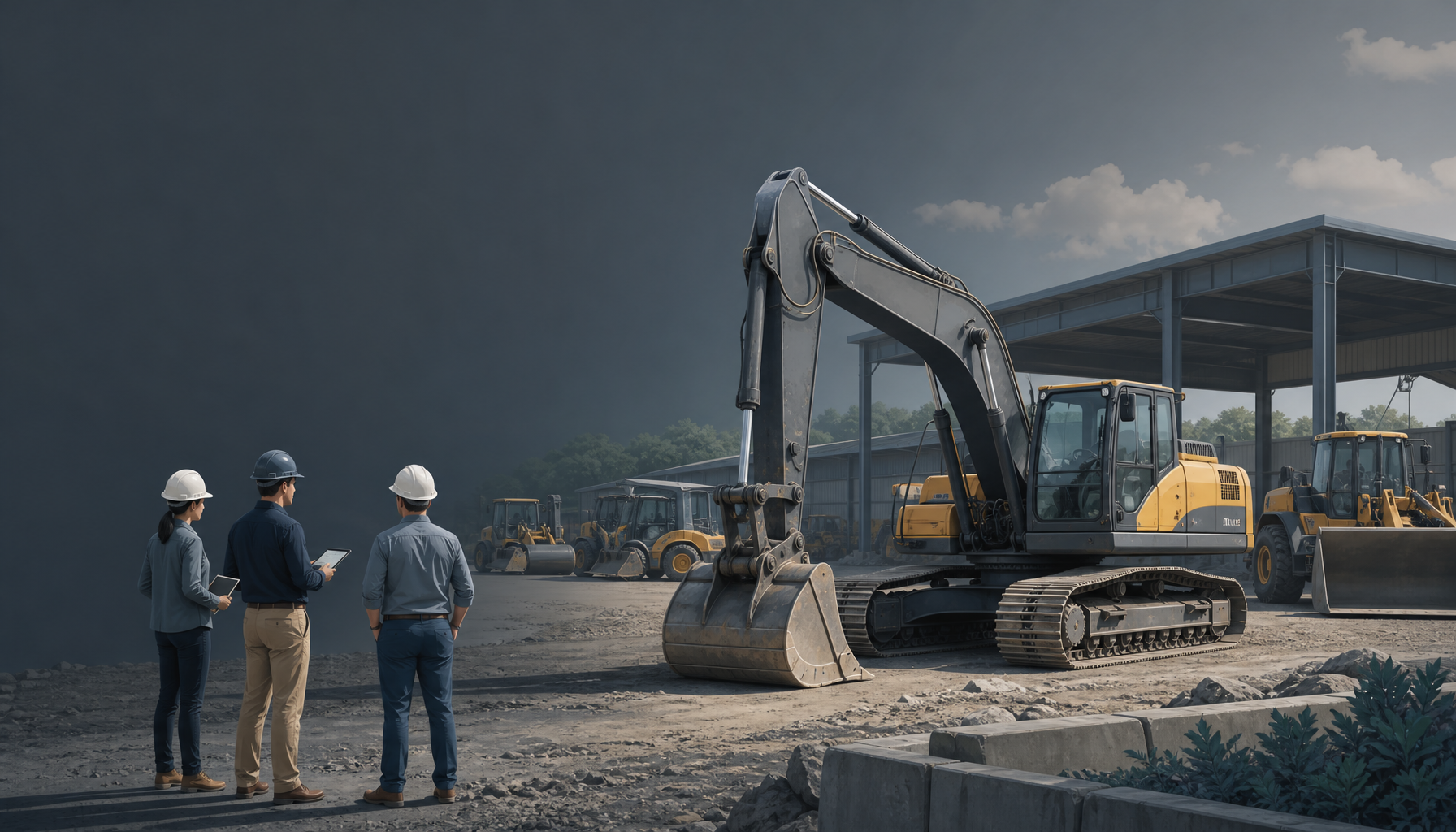
Explore how to select the best used construction equipment for your job. From types to top companies, find what you need to succeed.
Explore Top Options for Construction Equipment for Sale
When it comes to used construction equipment, the market is booming. As of 2026, the used construction equipment market is estimated to reach USD 132.67 billion, showcasing a growth rate of 5.63% CAGR until 2031 (Mordor Intelligence). That doesn’t surprise me—more crews are optimizing around availability and total cost, not the thrill of unwrapping a brand-new machine.
Used can be a smart move because it lowers capital risk. But it only works when you buy like a skeptic: verify hours, understand wear items, and confirm you can get parts fast. If you’re rushing, you’ll pay twice—once for the “deal,” then again in downtime.
Here’s the reality I plan around: if your project has a hard start date, used inventory often beats waiting on new lead times. That said, I’ve also seen a “great price” turn into a parked excavator because no one checked undercarriage wear or the dealer couldn’t support it locally.
Finding Construction Equipment Dealers
Selecting a dependable construction equipment dealer is your first step toward acquiring the right machinery. I don’t start with price—I start with proof.
Ask for a written inspection report that includes engine blow-by notes, hydraulic leak checks, undercarriage measurements (track wear isn’t a vibe, it’s a number), and service history. If they can’t produce documentation quickly, that’s information.
Then, do a short field test. Run it through all functions, get it warm, and look for things that only show up after 20–30 minutes: drifting cylinders, overheating, weak travel motors, or a hydraulic whine that magically wasn’t there on startup.
Common mistake: people rely on a quick walkaround and a glossy listing. Meanwhile, the machine needs tires, pins/bushings, and a battery before it can even pass a basic site safety check.
Learn About Different Types of Construction Equipment
Understanding the various construction equipment types is essential to making informed choices. The trick isn’t memorizing machines—it’s matching capabilities to constraints (space, ground pressure, lift height, and cycle time).
- Excavators: Perfect for digging and demolition tasks.
- Bulldozers: Ideal for pushing large quantities of soil or sand.
- Cranes: Needed for lifting heavy materials to significant heights.
- Scissor Lifts: Used for maintenance work at heights without scaffolding.
You can find detailed descriptions and uses of these machines in resources like DOZR and Cat Rentals.
Before you pick anything, write down three numbers: (1) what you’re moving (material + weight), (2) how far you’re moving it (reach/height/haul), and (3) how many cycles per hour you need to hit production. Those three force you into reality fast.
Construction Equipment Machinery
Investing in the right machinery is not just about brand loyalty. Precision tech and telematics can genuinely reduce operating costs—if you’ll use the data.
For example, with advancements in telematics, you can monitor equipment performance in real-time, which helps in minimizing downtime and maintaining productivity. I’ve seen teams catch a recurring overheating issue early because the temp trend was obvious in the dashboard, then schedule a fix on a slow day instead of losing a full shift mid-pour.
On the other hand, basic machinery setups are more cost-effective upfront but may incur additional costs over the long term due to less fuel efficiency and more frequent repairs. That tradeoff can still be worth it on short jobs, or when you’ve got a trusted mechanic and don’t need the bells and whistles.
One step I like: map the “hidden costs” before you commit—transport permits, mobilization, attachments, fuel burn, operator rate, and expected wear items. People fixate on purchase price, so they miss the fact that a slightly pricier unit with better buckets and fewer leaks can beat a cheaper machine by a mile over a 6–12 month run.
Equipment Names to Know
Familiarizing yourself with construction equipment names is crucial for effective communication on-site. It keeps you from ordering the wrong thing, which happens more than anyone admits.
From backhoe loaders to compact track loaders, knowing the terminology helps in discussing specific capabilities with vendors and operators. Websites like BigRentz provide extensive lists of equipment with images and descriptions, which can be beneficial for training new operators.
Real-world example: I once watched a crew request a “small dozer” for tight grading, but what they needed was a compact track loader with a grading attachment. The dozer showed up, couldn’t maneuver between utilities, and the job lost half a day while someone scrambled for a swap. Same intent, wrong machine.
Quick habit that helps: when you say a machine name, add the key spec right after it—“mini-ex, 3.5 ton,” “telehandler, 10k/55 ft,” “scissor lift, 26 ft electric.” That one line prevents a lot of expensive miscommunication.
Top Construction Equipment Companies to Consider
When searching for construction equipment, consider well-known construction equipment companies like Caterpillar, Komatsu, and Volvo. The brands matter less than support, but reputations exist for a reason.
For example, Caterpillar is known for its robust performance on large job sites, while Volvo focuses on fuel-efficient machines that are environmentally friendly. I also look hard at resale value in my region—some models move fast locally, and that affects your exit plan if the job ends early.
In addition, a growing trend in the construction industry is to assess companies based on their service support and maintenance offerings, which can significantly impact the total cost of ownership over time. A machine that’s “down” two days a month isn’t cheaper, even if the invoice was.
Equipment Dealer Insights
Local equipment dealers often have access to information about the best performers in your area and can help navigate unique local challenges. They’ll know, for example, which machines hate your clay, which ones handle altitude well, and which parts are always backordered.
Many dealers, like 4Rivers Equipment, provide not only equipment but also support and training to ensure that operators can maximize efficiency and safety on the job site.
If you’re comparing dealers, ask two blunt questions: “What’s your typical turnaround on field service?” and “Do you stock common wear parts for this model?” You want an answer with specifics (hours/days, what’s on the shelf), not a friendly shrug.
Also, clarify what “warranty” means on used equipment. Some plans cover major components only, so you’ll still eat the cost of hoses, sensors, and the stuff that actually fails first on older units.
Find Qualified Construction Equipment Operators
No matter how great your equipment is, the skill of its operators is equally important. I’ve seen a top-tier machine underperform because the operator didn’t understand lift charts, load balance, or basic daily checks.
Hiring qualified construction equipment operators can directly influence your project outcomes. Look for operators who are certified and have a solid track record in the industry. Many training programs, like those offered by Heavy Construction Academy, provide comprehensive operator certification, which can give you peace of mind about the safety and efficiency of your team.
One practical move: match operator experience to your risk. If you’re doing tight trenching near utilities, don’t treat it like a “learn on the job” role. Put your best operator there, because a strike costs more than the wage difference.
Training Programs for Operators
Investing in training helps ensure that your operators know how to use your machinery safely and effectively. Programs available through TEEX focus on hands-on training necessary for competent operation across various types of heavy equipment.
This is particularly pertinent in today’s fast-paced construction environment where safety and proficiency must be prioritized. That said, training isn’t just classroom time—it’s also site habits: daily walkarounds, lockout/tagout basics, spotting signals, and knowing when to stop and ask.
A step-by-step approach I’ve used on sites:
1. Pair a newer operator with a lead for the first week.
2. Require a daily inspection checklist (paper or app).
3. Run a short “end of shift” debrief on issues—leaks, strange noises, damaged teeth.
4. Schedule a weekly hour for skills work (grading tolerance, trenching straightness, load handling).
That routine catches mistakes early, and it builds confidence without gambling with safety.
Operator Job Market
The demand for skilled operators is on the rise, and according to industry reports, the median pay is significantly higher than the national average for all occupations. This underscores the importance of not only investing in the best machinery but also ensuring that the right individuals are at the controls.
With the competitive landscape, well-trained operators provide an edge by increasing productivity and minimizing errors on the job site. In practice, it also affects scheduling: when you can’t hire fast, you may need to choose equipment that’s simpler to run (or plan for vendor-supported onboarding).
I’ve watched projects stall because the “plan” assumed an experienced operator would appear two days before mobilization. Instead, the crew got someone green, production dropped, and the superintendent started compensating with overtime. The machine wasn’t the problem. The staffing assumption was.
FAQs
- What types of construction equipment are available for sale?
A: We offer a wide range including excavators, bulldozers, and cranes. If you want to narrow it down fast, start with your task list and the site constraints.
Here’s a quick way to sort it:
1. Earthmoving (excavators, dozers, loaders) for digging, stripping, and rough grade.
2. Material handling (telehandlers, cranes, forklifts) for setting pipe, trusses, pallets.
3. Access (scissor lifts, boom lifts) for elevated work.
Common mistake: buying a “general purpose” machine and assuming it’ll cover everything. It won’t—attachments and capacity specs matter as much as the base unit.
- How can I ensure I’m choosing the right equipment?
A: We provide expert consultations and detailed guides to help you make informed decisions. Even if you’re doing it yourself, I’d still follow a simple checklist.
Step-by-step, this is what I ask before I sign anything:
1. What’s the heaviest load and the farthest reach/height we need?
2. What’s the ground like—soft, rocky, muddy, paved (track vs. tire matters)?
3. What’s access like (gate width, overhead lines, turning radius)?
4. What attachments are required (bucket sizes, breaker, forks, compactor)?
5. Who will service it, and what’s the downtime plan?
The big “gotcha” is underestimating logistics—delivery lead time, transport permits, and whether the machine physically fits where you need it.
- What if I need training for equipment operation?
A: We can guide you to qualified operators or provide training sessions. If you’re adding a new machine type to your site, plan training as part of mobilization, not as an afterthought.
A real example: a site added a telehandler for the first time, but nobody reviewed load charts with the crew. They started picking loads at full reach like it was a forklift. Luckily, a seasoned operator flagged it before anything tipped.
What I’d do instead:
1. Set a one-hour vendor walk-through on delivery day.
2. Require a spotter for the first few shifts.
3. Post lift charts and hand signals where the crew actually sees them.
The mistake isn’t “not knowing.” It’s pretending you know and rushing anyway.
- Are financing options available for purchasing equipment?
A: Yes, we offer flexible financing options to fit your budget. Financing can be helpful, but you should run it alongside your expected utilization.
If the machine will sit 40% of the time, renting or buying used might pencil out better than paying for shiny idle steel. I like to estimate hours per month and compare that to the payment, insurance, maintenance, and storage.
Watch out for these traps:
– Stretching terms so far that you’re still paying when the job is long gone.
– Ignoring maintenance reserves (financing doesn’t cover blown hoses).
– Forgetting transport costs—financing doesn’t move the machine to the site.
- Can I return equipment if it doesn’t meet my needs?
A: Yes, we offer a 30-day money-back guarantee on all purchases. Before you count on a return, confirm the fine print.
Practically, you want to know:
1. Does “30 days” mean calendar days or operating hours?
2. Are there restocking fees, transport costs, or usage limits?
3. What condition does it need to be in (tires/tracks, attachments, cosmetic damage)?
I’ve seen returns get messy when a machine is used hard for two weeks, then sent back with damaged cutting edges. So document condition on day one—photos, hour meter, and any existing dings—because that protects both sides.
- How do I contact customer support?
A: You can reach our support team via phone or email for immediate assistance. When you contact support, you’ll get faster help if you provide the basics upfront.
Here’s what I include in the first message:
– Machine make/model and serial number
– Hour meter reading
– A short description of the issue (what happened right before it started)
– Photos or a 20-second video (leak location, error codes, sounds)
Common mistake: calling with “it’s not working” and no details. With good info, support can often triage whether it’s a quick fix (sensor, fuse) or if you should shut it down and schedule service.