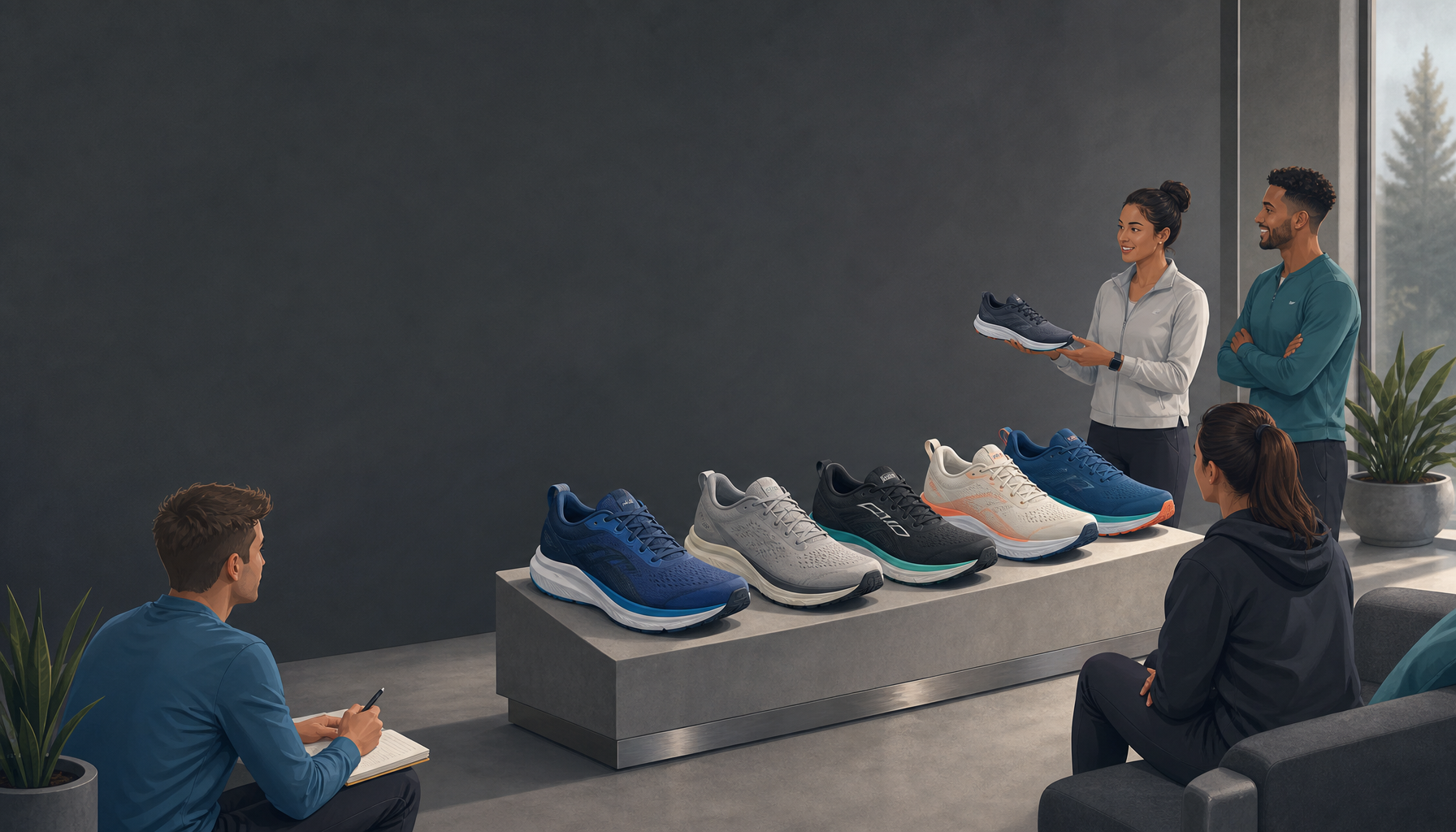
Learn how to select the best running shoes for your individual needs in 2026 with this comprehensive guide.
Best Online Running Shoe Options
Buying running shoes online in 2026 is totally workable—if you treat it like a fitting process, not a one-click gamble. The best stores make sizing and returns painless, and they give you enough detail (stack height, drop, use case) to avoid buying the wrong tool for the job.
Fleet Feet Running Shoes
Fleet Feet earns its reputation because they push you toward fit, not just whatever’s trending. That matters, especially if you’re between sizes or you’ve got a wide forefoot with a narrow heel (a combo that makes a lot of shoes feel “fine” in the store and awful on mile 3).
Here’s how I’d use Fleet Feet if I were buying blind:
1. Start with your current shoe model (even if you hate it) and note what’s wrong—heel slip, toe bang, arch pressure, calf tightness.
2. Pick a category first (daily trainer vs stability vs max cushion), then filter models.
3. Use their fitting guidance to sanity-check width and support.
4. Order two sizes if you’re unsure, because a half-size can be the difference between “perfect” and black toenails.
A real example: a buddy of mine kept buying neutral trainers because they “felt fast.” Meanwhile, his ankles collapsed inward late in runs, and he’d shred the inside heel lining in a month. Switching to a mild stability shoe fixed both issues—and his shoes stopped dying early. That’s not magic tech; that’s fit and support matching the runner.
Running Warehouse
Running Warehouse is my pick when you already know roughly what you want and you care about selection. They usually carry a deep run of sizes, widths, and older colorways, so you can replace a shoe you loved without playing the “new version roulette.”
What makes them useful in practice:
– Competitive pricing (often the best on last-season models).
– Fast shipping so you’re not stuck tapering in worn-out shoes.
– Free returns on a lot of orders, which is huge because you can’t truly judge shoes from standing in your kitchen.
One tip that saves money: if you find a shoe that works, grab a second pair when it goes on sale. I’ve watched runners panic-buy a replacement a week before a race, then show up with blisters because the new model fits different.
Top 5 Best Running Shoes in 2026
This list is a solid starting point, but treat it like a menu—not a prescription. “Best” depends on whether you’re doing easy miles, tempo work, long runs, or you need stability.
- Nike Air Zoom Pegasus – A versatile shoe known for its comfort and responsiveness.
- Brooks Ghost 18 – Ideal for neutral runners looking for cushioning and support.
- Hoka Bondi 8 – Renowned for its maximum cushioning, perfect for long-distance runs.
- Saucony Endorphin Speed 3 – A great option for speed workouts and racing, offering a lightweight feel.
- Asics Gel-Kayano 29 – An excellent choice for stability and support, designed for overpronators.
How I’d actually choose from these five:
– Pegasus vs Ghost 18: pick based on fit and ride. If one gives you heel slip, it’s a no.
– Bondi 8: great when you want cushion and a forgiving ride, but it can feel bulky for speed.
– Endorphin Speed 3: fun for workouts, although some runners feel it’s a little unstable when tired.
– Gel-Kayano 29: a safer bet if you know you overpronate or you always wear through the inside edge.
You can find these options on any of the mentioned platforms, which offer detailed specifications to help you make the best choice.
How to Shop for Running Shoes Online
Online shoe shopping goes well when you control the variables. Fit, return logistics, and a quick at-home test routine beat guessing off influencer picks.
Know Your Size
Start with measurements, but don’t stop there, because running shoe sizing is messy across brands.
Use this simple routine:
1. Measure both feet in the evening (they swell during the day).
2. Stand while measuring—weight-bearing changes length and width.
3. Check the brand’s sizing chart on the retailer site.
4. Plan for toe room: most runners want roughly a thumbnail’s width in front of the big toe.
Common mistake: people size their running shoes like dress shoes. Then they wonder why their toes go numb on longer runs. If you run hills or long distances, being a touch generous on length can save your toenails.
Research and Read Reviews
Reviews are useful when you read them for patterns, not praise.
What I scan for:
– Fit notes (runs narrow, shallow toe box, heel collar rubs).
– Ride feel (firm vs soft, stable vs wobbly).
– Use case clarity (daily miles vs speed vs recovery).
And yes, expert write-ups help narrow the field. Runner’s World does a lot of comparisons, which can point you toward a short list before you start ordering boxes (Runner’s World).
One quick sanity-check: if reviewers say “great shoe, but unstable,” and you already know you get ankle fatigue late in runs, that’s a red flag. Don’t assume you’ll “adapt.” Sometimes you do, but often you just get injured.
Utilize Return Policies
Return policies are your safety net, so use them on purpose.
Here’s the at-home test I recommend before you decide:
1. Try the shoes on with your running socks (the thick ones you actually wear).
2. Lace them like you’ll run—not loose “store laces.”
3. Walk stairs and do a few calf raises to check heel slip.
4. Do a short jog indoors (if the retailer requires unworn soles).
What you’re looking for is immediate deal-breakers: pressure on the top of the foot, arch stabbing, heel movement, or toes brushing the front. Those rarely improve.
Another common mistake: people keep shoes because they’re expensive. Price doesn’t heal blisters. If the return window is open, be ruthless.
Check the Discounts
Discount hunting is fine, but don’t let a deal talk you into a bad match.
The smarter play:
– Buy last season’s version of a shoe you know works.
– Watch holiday sales and end-of-season clearances.
– Don’t stockpile experimental models just because they’re 40% off.
Fleet Feet and Running Warehouse both run promotions, so it’s worth checking before checkout. Still, the “best bargain” is the shoe you can run in comfortably for months.
Final Thoughts
Choosing the right running shoes is a personal process, but it shouldn’t be mysterious. Match the shoe to your foot and your training first, then worry about brand and colorways.
If you only do one thing after reading this, do this: pick one reliable daily trainer, nail the sizing, and stop rotating through random pairs hoping one fixes everything. Once you’ve got that baseline, trying a faster shoe or a max-cushion option gets a lot easier.
FAQ Section
- Q: What is the best online store to buy running shoes?
A: Fleet Feet and Running Warehouse are my two safest recommendations because they’re runner-focused and usually make returns straightforward. Zappos is also solid for general shoe buying, but it’s not always as detailed on run-specific specs.
Quick way to decide: if you don’t know what you need, start with Fleet Feet’s fit guidance. If you already know the model and want sizes/widths plus good pricing, Running Warehouse is hard to beat.
- Q: What are the top 5 best running shoes?
A: The top 5 best running shoes in 2026 are expected to include models from Nike, Brooks, Hoka, Saucony, and Asics—specifically the Nike Air Zoom Pegasus, Brooks Ghost 18, Hoka Bondi 8, Saucony Endorphin Speed 3, and Asics Gel-Kayano 29.
The catch: “top 5” lists don’t know your feet. I’ve seen runners buy a max-cushion shoe because TikTok said it’s the most comfortable thing on earth, then quit on it because the platform felt unstable on cambered roads.
- Q: What is the most legit website to buy shoes?
A: Zappos, Fleet Feet, and Running Warehouse are considered some of the most legit because they’ve been around, they handle returns like adults, and they don’t play sketchy marketplace games.
If you want a simple safety check, look for: clear return terms, real customer service contact info, and consistent inventory (not one-off sellers).
- Q: How do I determine my running shoe size?
A: Measure your foot using a ruler or Brannock-style guide, then confirm with the sizing charts provided by online stores. Do it at night, measure both feet, and size to the larger one.
Step-by-step that actually works:
1) Put on your running socks.
2) Stand on paper and trace your foot.
3) Measure heel-to-toe and width at the widest point.
4) Compare to the retailer chart, then choose the size that leaves some toe room.
Biggest mistake I see: people lock into “I’m always a 10.” Shoe lasts vary, so be flexible.
- Q: Are expensive running shoes worth it?
A: Sometimes. Expensive running shoes often provide better cushioning, support, and durability, so they can be worth it if you run consistently or you’re injury-prone.
That said, price doesn’t guarantee compatibility. A $200 superfoam shoe that aggravates your Achilles is a bad deal. Meanwhile, a boring $140 daily trainer that fits your foot and lets you train all year is a great deal.
- Q: What should I look for when choosing running shoes?
A: Look for proper fit, the right support type (neutral, stability, motion control), cushioning that matches your mileage, and breathable materials.
A practical checklist before you keep a pair:
– Heel feels locked in (no slipping).
– Toes have room, especially on downhills.
– No sharp arch pressure in the first 2 minutes.
– The shoe matches your use: easy days vs workouts vs long runs.
If you’re stuck, pick one shoe for daily miles and make it boring-on-purpose. You can experiment later—after you’ve got something dependable under you.