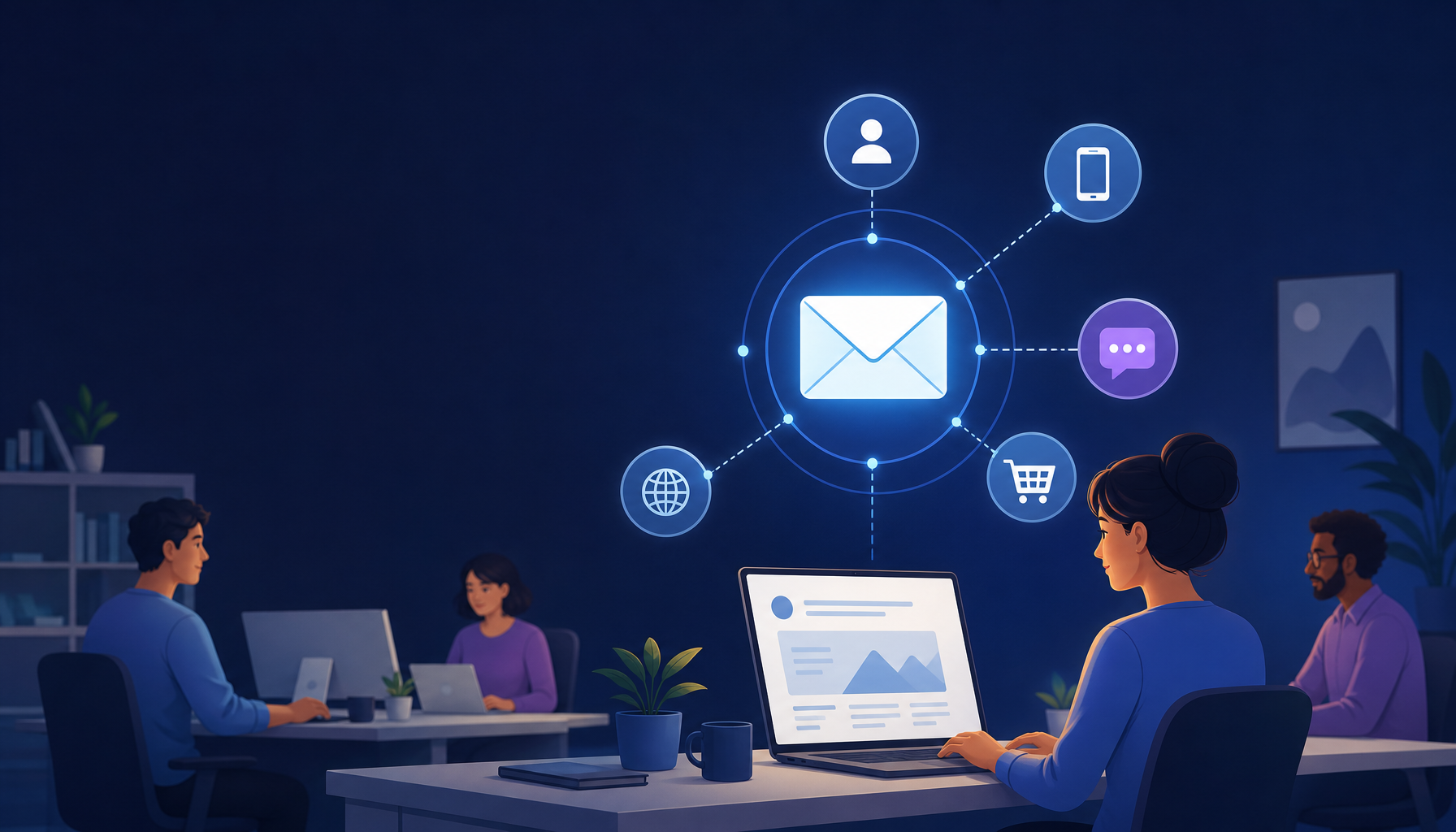
Discover the top email marketing trends for small businesses to follow in 2026. From AI personalization to automation, learn how to boost your campaigns.
Top 5 Email Marketing Trends to Follow in 2026
How to Start Email Marketing
Email marketing is still one of the few channels you can “own,” but only if you set it up with discipline. Here’s the path I use with small businesses so we don’t end up guessing later.
-
Understand Your Audience: Knowing who your customers are is the first step in crafting effective email campaigns. Gather insights through surveys or analytics to determine their preferences.
-
Choose an Email Marketing Tool: Selecting the right platform is crucial. Tools like Mailchimp, Constant Contact, or platforms that integrate well with your existing systems will aid in reaching your audience effectively.
-
Craft Targeted Content: Personalization is key. Use the data you’ve collected to tailor your messages to different segments of your audience, making your emails more relevant.
A quick reality check, though: the tool is rarely the problem. Bad tagging, vague offers, and “batch-and-blast” habits are what make email feel ineffective.
Email Marketing for New Customers
To attract new customers through email, utilize strategies like:
- Welcome Emails: Send a warm welcome to new subscribers, offering them a special discount or valuable information about your products or services.
- Referral Programs: Encourage existing customers to refer their friends by providing benefits for both parties.
If you want a simple welcome flow that works in 2026, build it in this order:
- Email #1 (immediate): confirm what they signed up for, set expectations (“weekly tips” or “monthly offers”), and give the promised incentive.
- Email #2 (day 2): one tight story—why you exist, who you’re for, and the problem you solve.
- Email #3 (day 5): your best proof (reviews, before/after, top case study), plus one clear CTA.
- Email #4 (day 10): ask a one-question preference reply (e.g., “What are you shopping for?”). That reply becomes segmentation fuel.
One mistake I keep seeing: brands throw a 20% coupon in Email #1 and then go silent for three weeks. So, when they finally send a campaign, subscribers barely remember them.
Email Marketing Examples
Real-world examples can help you see how effective email marketing can be:
- A bakery that sends out weekly newsletters featuring new items and limited-time offers, resulting in increased foot traffic on weekends.
- An online clothing store that uses email to inform customers about sales, leading to a significant boost in online orders during marketing campaigns.
Here’s another example I’ve watched play out: a local service business (think dental, salon, or home repair) stops relying on “promos” and starts sending two email types—(1) quick educational tips and (2) appointment nudges tied to seasons. Because the emails feel useful, not pushy, bookings increase without discounting.
The key is consistency. A decent monthly email beats a “perfect” email you only send when you’re desperate for sales.
How Do I Start Email Marketing?
Starting email marketing is straightforward if you follow these guidelines. Establish clear goals for your campaigns, be aware of legal regulations regarding email communications, and continually analyze the performance of your email marketing efforts to make necessary adjustments.
If you’re unsure what to track, keep it simple at first:
- Deliverability signal: are you getting replies, forwards, or saves?
- Click behavior: which links get attention (and which get ignored)?
- Conversion: what % of clickers take the next step (book, buy, request a quote)?
Then, tighten one variable at a time. Change the subject line or the offer or the audience segment—otherwise you’ll never know what actually moved results.
Email Marketing Trends in 2026
Email marketing remains a vital channel in 2026, with trends evolving to enhance user engagement. The biggest shift is that “spray and pray” dies faster now—people expect relevance, and inbox providers punish sloppy sending.
1) AI Personalization (without the creepy vibe)
More businesses are leveraging AI to create personalized content tailored to users’ preferences. This involves using data analytics to generate insights that inform the type of content consumers will find appealing.
What I’d do in practice, step by step:
- Start with two segments, not twenty. For example: “first-time buyers” and “repeat buyers.”
- Personalize the offer, not just the name. A first-time buyer gets a starter bundle; a repeat buyer gets refills, upgrades, or VIP access.
- Use AI to draft variations, then you edit. AI is great at giving you five angles fast; it’s also great at writing generic filler if you don’t steer it.
- Measure lift on one campaign. If the personalized version doesn’t beat your control, don’t force it.
Common mistake: people let AI generate “personalized” copy based on shaky data (or worse, wrong data). The fastest way to lose trust is to recommend something that makes it obvious you don’t know the subscriber.
2) Interactive Emails that earn the click
The rise of interactive elements in emails, such as polls, surveys, and embedded video content, will become increasingly popular as it engages readers more effectively and encourages click-throughs.
A real use case that works: a short two-option poll (“Which are you shopping for: A or B?”). Once they click, you tag them and send a follow-up that actually matches their choice.
Keep the interaction lightweight. If it feels like homework, people bounce.
Mistake to avoid: cramming interactive elements into every send. Interactive should support the point of the email—product discovery, feedback, or preference capture—not just look fancy.
3) Mobile Optimization as the default
With more consumers reading emails on mobile devices, ensuring your emails are mobile-friendly is crucial. Responsive designs that adapt to different screen sizes will be a standard expectation.
My mobile-first checklist (the unglamorous stuff that saves campaigns):
- One main CTA button near the top, not buried.
- Short subject + preheader that work together.
- Big tap targets (buttons, not tiny text links).
- Fast-loading images and a message that still makes sense if images don’t load.
I’ve seen brands spend weeks perfecting desktop design, then ship a mobile email where the CTA sits below three giant images. Clicks fall off a cliff, and they blame “email being dead.” It wasn’t dead—the layout was.
4) Privacy-first targeting (less data, better consent)
This one isn’t as flashy as AI, but it matters more over time. As tracking gets messier and people get more protective, you’ll win by collecting clean data:
- Ask for preferences at signup (“deals,” “new arrivals,” “tips”).
- Encourage replies (“Tell me what you’re stuck on.”) because replies are both insight and a positive inbox signal.
- Use zero-party data (what they directly tell you) instead of guessing.
Tradeoff: you’ll collect fewer data points. The upside is those data points are accurate, and you can act on them without feeling sketchy.
5) Deliverability and list hygiene as a growth lever
In 2026, deliverability is marketing. If inbox providers don’t trust you, your “best” copy never gets seen.
What I’m biased toward: boring list hygiene.
- Suppress or re-engage cold subscribers instead of hammering them.
- Keep signup sources clean (no purchased lists).
- Watch spikes in complaints or unsubscribes and treat them like a fire alarm.
Most teams wait until performance drops. I prefer a monthly 30-minute routine, because fixing a damaged sender reputation is slow and painful.
How Much is a 1000 Email List Worth?
The worth of an email list can vary significantly based on several factors, ranging from $10 to $300, depending on engagement rates and industry standards. According to email list pricing in 2026, B2B email lists can be particularly valuable, sometimes costing over $1,000 per thousand addresses. Understanding the value of your email list will guide your strategies for email marketing and list acquisition.
One thing I’d add from experience: I’d rather have 1,000 subscribers who open and click than 10,000 who ignore you. The smaller list will outsell the bigger one, and it’ll do it with fewer deliverability headaches.
Exploring Email Marketing Careers
Email marketing is having a “quiet boom” moment—companies want people who can write, analyze, and automate without torching trust. If you can do that, you’re employable.
Email Marketing Salary
As of 2026, the average salary for an email marketing specialist ranges around $63,814, with entry-level positions starting at approximately $43,044. More experienced marketers can earn significantly higher, depending on their skill set and the complexity of their roles. According to recent data from Robert Half, salaries can vary widely based on industry and location.
One practical note: the salary ceiling goes up fast when you can tie email work to revenue. If you can say “this automation drove X bookings” or “this segment lifted repeat purchases,” you stop sounding like a cost center.
How Do I Become an Email Marketer?
To become successful in email marketing, you should consider:
- Taking Relevant Courses: Numerous online platforms offer courses that cover essential skills for email marketing.
- Building a Portfolio: Showcasing successful campaigns you’ve worked on can significantly improve your job prospects.
- Gaining Experience: Internships or entry-level positions will help you understand the practicalities of email marketing, including campaign management and analytics.
If I were starting from zero today, I’d build a tiny “portfolio” like this:
- Create a signup form + welcome sequence (4 emails).
- Send one newsletter per week for 6 weeks.
- Run one A/B test per week (subject line or CTA).
- Document results in plain English: what you changed, what happened, what you’d do next.
That’s enough to prove you can execute, not just talk.
In my experience as Mobeen Abdullah, I’ve seen that those who adapt to the evolving landscape of email marketing not only survive but thrive. Key aspects such as AI-driven personalization and mobile optimization are no longer optional; they are essential for staying relevant in the industry.
By staying ahead of these trends, you position yourself and your business for future success. Whether you’re writing compelling content, refining your strategies, or exploring new career opportunities in email marketing, the steps you take today will pave the way for your future achievements.
FAQs
-
Are email marketing trends in 2026 different from previous years?
Yes, trends continue to evolve with technology and consumer preferences, focusing on personalization, automation, and user engagement. -
How can I start email marketing effectively?
Begin by understanding your audience, choosing an appropriate email marketing tool, and crafting targeted content. -
What is the average worth of a 1000 email list?
The worth can vary significantly, but estimates can range from $10 to $300 depending on engagement rates and industry. -
What are some examples of email marketing?
Some examples include newsletters, promotional offers, welcome emails, and re-engagement campaigns. -
How do I become an email marketer?
Consider taking relevant courses, gaining experience through internships, and building a portfolio of email campaigns. -
Is it worth investing in email marketing in 2026?
Yes, email marketing remains one of the most effective digital marketing channels with a strong ROI.
Email marketing continues to prove its worth. Smart marketers will tap into these trends to drive engagement and achieve their sales goals in the face of evolving consumer expectations.
If you want more benchmarks to sanity-check your plan, skim 2026 Marketing Statistics, Trends, & Data. And if you want to swap notes, you can Connect with Mobeen Abdullah on LinkedIn.
Leave a Reply