Author: dev@revnix.com

  • How Claude is Transforming AI Communication in 2026

    Discover how Claude AI is revolutionizing communication in 2026, enhancing productivity and collaboration.

    How Claude is Transforming AI Communication in 2026

    Claude represents a significant advance in AI communication technology, particularly in its ability to process and generate natural language. With approximately 18.9 million monthly active users as of early 2025, Claude has proven itself as a reliable tool for businesses and individuals seeking effective AI interactions. Users have reported that coding conversations account for 35% of all discussions on Claude, indicating its strong position in the developer community. Moreover, Anthropic, the company behind Claude, has experienced rapid growth, achieving a $30 billion annualized revenue run rate by April 2026, up from $9 billion at the end of 2025 (Coupler.io Blog).

    What I think people miss is why those numbers matter. Usage and revenue don’t automatically mean “better,” but they usually mean the tool has crossed the line from experiment to habit. Since communication is mostly habit, that’s a big deal.

    In practice, Claude’s impact shows up in three places:

    • Clarity under pressure (long threads, conflicting constraints, lots of context).
    • Higher trust conversations (teams feel safer letting non-experts use it).
    • Better handoffs (drafts that a human can actually pick up and finish).

    The messy part: Claude doesn’t magically remove human ambiguity. It just makes ambiguity visible faster. That alone changes how teams communicate because now the “unclear requirement” problem shows up on day one, not week three.

    Is Claude Better Than ChatGPT?

    The question of whether Claude is superior to ChatGPT often arises among AI enthusiasts. While both platforms are designed to facilitate human-AI interaction, Claude differentiates itself through its focus on safety and interpretability. Many users have transitioned to Claude after experiencing its nuanced reasoning and ability to handle complex tasks more adeptly than its competitors. The data speaks volumes: 70% of Fortune 100 companies now utilize Claude, showcasing a shift towards its adoption in enterprise settings (Medium). This growing trend can largely be attributed to the improved user experience, where Claude is perceived as treating users like informed collaborators rather than sources of data.

    Here’s my opinionated take: “better” depends on the work you’re doing and the tolerance you have for rework.

    • If you want fast ideation and you don’t mind cleaning up the rough edges, plenty of models are competitive.
    • If you want steady, instruction-following behavior in long, multi-step tasks, Claude tends to be the one that wastes less of your time.

    That said, you can make Claude look bad with sloppy inputs. I’ve watched someone paste a 40-page requirements doc and ask, “What do you think?” Then they complain the answer is generic. Of course it is — you didn’t give it a job.

    A better way to compare models is to run the same real workflow on both:

    1. Give a constrained goal (“Draft a customer escalation response that admits fault without promising refunds”).
    2. Provide context (policy snippet, customer history, tone, what you can’t say).
    3. Ask for structured outputs (subject line, 3 bullet summary, full email, risk notes).
    4. Review for mistakes that cost money (promises, legal language, incorrect facts).

    When you test like that, Claude’s “collaborator” vibe isn’t cosmetic — it usually shows up as fewer dangerous assumptions and fewer off-policy statements. Not perfect, but more consistent.

    Claude AI Completely Free?

    Regarding access, Claude offers various pricing tiers, making it accessible to different users, including free versions. However, advanced features typically require payment, reflecting the balance of offering a robust tool while supporting ongoing development. Many organizations have noted significant efficiencies, with Banner Health claiming that 85% of its employees see time savings when using Claude. This kind of return on investment makes the premium features worth considering, especially for businesses heavily reliant on data processing and analysis (Coupler.io Blog).

    If you’re evaluating “free vs paid,” don’t frame it as a software bill. Frame it as cost of iteration.

    A free tier is great for:

    • learning how to write prompts that don’t backfire,
    • testing a use-case with low blast radius (drafts, outlines, internal summaries),
    • getting quick help on a single problem.

    But once a team starts depending on the tool for repeated work, the paid tier becomes less about features and more about reliability and control. You’ll want predictable access, better limits, and fewer surprises mid-sprint.

    One common mistake I keep seeing: companies buy a paid plan before they’ve nailed where Claude sits in their workflow. Then they blame the model because adoption stalls. Actually, their process stalled — nobody mapped ownership, review steps, or what “done” looks like.

    Understanding Claude’s Features and Uses

    As Claude continues to evolve, its features have become more sophisticated, allowing for a wide range of applications. A notable advancement is its ability to integrate into existing workflows seamlessly. The Model Context Protocol connects Claude to thousands of applications, providing users with a versatile tool that can adapt to various tasks—from project management to customer service.

    The practical difference is this: instead of copying and pasting between tools all day, teams can treat Claude like a front desk for work — it pulls context, shapes outputs, and pushes drafts back into the places you already operate.

    Claude Download

    For those interested in utilizing Claude, downloading the app is straightforward. It is available on multiple platforms, enabling easy accessibility for users across different devices. Once downloaded, users can begin exploring its capabilities, from conducting simple inquiries to engaging in complex coding discussions. The ease of access contributes to its growing user base, which peaked at 800,600 installs in November 2024 (Coupler.io Blog).

    Where downloads actually matter is rollout friction. If it takes ten steps and a permissions ticket, adoption dies. So, when I’m helping a team implement Claude, I don’t start with “cool prompts.” I start with basics:

    1. Pick the primary surface area: web app, desktop app, or API. This depends on who’s using it (ops, engineering, sales) and how controlled the work needs to be.
    2. Decide what’s allowed: what can be pasted in, what must be redacted, what can’t leave internal systems.
    3. Create two starter templates: one for summarizing and one for drafting (because most work is either “compress” or “create”).
    4. Set review rules: who signs off on external-facing text, what gets logged, and when humans must verify.

    A small, real example: I once watched a team roll out an AI tool with zero guidance. Within a week, someone pasted a customer list into a chat to “segment it quickly.” That created a governance panic, and leadership almost banned the tool.

    So yes, downloading is easy. The disciplined onboarding is the part that separates “we tried Claude” from “Claude saves us time every day.”

    Claude Code AI

    Claude’s capabilities extend beyond simple queries into the realm of coding assistance. The Claude Code feature has rapidly gained popularity among developers, allowing them to generate code snippets, debug, and even receive feedback on their programming tasks. The development community has embraced Claude, evidenced by its high performance on coding benchmarks. It scored 87.6% on SWE-bench Verified, making it a top choice for developers looking for a reliable coding assistant (Medium). Beyond coding, Claude empowers users to create complex documents, conduct data analysis, and improve communication across teams.

    Here’s where Claude Code becomes more than “autocomplete with confidence”: it can act like a patient reviewer.

    When we use it in engineering work, we don’t ask, “Write me the whole feature.” That’s how you get a big blob of code that doesn’t match your architecture. Instead, we use a tighter loop:

    1. Describe the existing system in 8–12 bullets (framework, key modules, data flow, constraints). If you skip this, Claude guesses.
    2. Paste the smallest relevant code (one file, one function, one failing test). More isn’t better.
    3. Ask for one change at a time: “Fix the null crash without changing public function signatures.”
    4. Require a diff-style answer (or at least “before/after”) plus a short explanation.
    5. Ask it to write tests that prove the fix. Then you run them.

    The best win I’ve had: a nasty bug in a report generator where edge-case dates (end-of-month + timezone) produced duplicate rows. Claude didn’t “magically” know our system, but it did something useful — it forced the hypothesis into the open.

    • It proposed three plausible causes.
    • It told me exactly what logs to add.
    • It suggested a minimal fix and a test matrix.

    We shipped the fix that afternoon. The value wasn’t raw coding speed; it was the reduction in thrash.

    Common mistakes with Claude Code (I still catch these):

    • Letting it invent APIs you don’t have. If you see fictional library calls, stop and reset.
    • Skipping constraints (performance, backwards compatibility, security). Since it wants to help, it’ll happily violate your unwritten rules.
    • Copy-paste shipping without running tests or linters. Claude can be right and still break your build.

    If you treat it like a junior dev with infinite energy — helpful, but needs boundaries — it performs much better.

    Using Claude for team comms

    This is the quiet killer feature, and it’s not flashy.

    I’ve used Claude to turn chaotic internal threads into clean artifacts:

    • meeting notes into an action plan,
    • Slack debates into a decision record,
    • a messy product idea into a one-page spec.

    The key is to ask for a format the team already respects. For example:

    • “Write this as a PRD: problem, non-goals, success metrics, risks, open questions.”
    • “Rewrite as an exec update: 5 bullets, each with outcome + blocker + next step.”

    Because then Claude isn’t “writing.” It’s enforcing structure that humans usually skip when they’re tired.

    My Experience With Claude

    As someone deeply embedded in the tech industry, I, Mobeen Abdullah, have had the opportunity to explore Claude extensively. Its versatility has allowed me to enhance workflows in my organization, particularly in project management and coding tasks. Witnessing first-hand how Claude can streamline communication and collaboration among teams has highlighted its transformative potential. One standout feature is its memory management capability, which helps maintain context across sessions—an invaluable asset for long-term projects. This allows teams to pick up where they left off effortlessly, minimizing the time spent re-briefing members on ongoing tasks.

    I’ll make this concrete, because “streamline communication” can mean anything.

    We run multiple client projects at once, and the hardest part isn’t writing code — it’s keeping everyone aligned when requirements shift. Claude helps me reduce the constant re-explaining.

    A real workflow I use weekly

    When a client sends a long email thread (half decisions, half opinions), I run a repeatable process:

    1. Paste the thread, but I preface it with rules: “Extract only confirmed decisions; treat opinions as unconfirmed; list contradictions.”
    2. Ask for three outputs:
    3. a decision list,
    4. an assumptions list,
    5. questions we must ask before we build anything.
    6. Then I ask Claude to draft a client clarification email that’s polite but firm.

    The surprising benefit: it reduces the emotional temperature. Instead of me replying while slightly annoyed (“you changed scope again”), Claude nudges the response toward crisp, neutral language.

    Memory and long-running projects

    The memory/context piece matters most when work spans weeks. Without it, AI turns into a day-to-day prompt tax.

    One example from my side: we had a multi-sprint migration where the same constraints kept resurfacing — legacy naming conventions, audit requirements, and an integration nobody wanted to touch.

    Claude helped in two ways:

    • It kept our “rules of the road” in view (what we can’t break), so the team stopped proposing solutions that were dead on arrival.
    • It made handoffs easier. A new engineer could read the Claude-generated project brief and understand what changed since sprint one.

    Do we still keep human documentation? Absolutely. But Claude makes it faster to produce, and because it’s faster, we do it more often.

    Where Claude bit us (so you don’t repeat it)

    I’ve also seen Claude create problems when people treat it like an oracle.

    • Mistake #1: Asking for strategy without supplying numbers. Claude will still answer, but it’s basically doing improv. Now I insist on including at least rough inputs (conversion rate, churn band, timeline, budget).
    • Mistake #2: Letting it write policy language unreviewed. It can sound authoritative while being subtly wrong. So, any HR/legal/compliance text gets a human pass, no exceptions.
    • Mistake #3: Vague prompts like “make this better.” Better how? Shorter, kinder, more direct, less risky? If you don’t specify, Claude will choose for you.

    How I know: I’ve watched a “make this better” rewrite turn a careful support reply into an overconfident promise. Luckily, we caught it before it went out. Since then, we always include a constraint like, “Don’t promise timelines or refunds.”

    How I train new teammates on it

    Onboarding someone to Claude takes me about 30 minutes now.

    • First 10 minutes: I show two prompts that work (one summary, one draft).
    • Next 10: we do a live example using their actual work.
    • Last 10: I show them the failure modes — hallucinated facts, invented dependencies, confident wrongness — and how to force citations or verification steps.

    That last part matters. When people learn the edges, they stop overtrusting it and start getting real value.

    Conclusion

    In conclusion, 2026 has marked a pivotal year for AI communication tools, with Claude leading the charge. Its comprehensive features, safety focus, and widespread adoption among enterprises illustrate its importance in modern workflows. For anyone seeking to enhance their productivity and harness the power of AI, Claude is not just an option; it’s becoming a necessity. As AI continues to evolve, tools like Claude will be at the forefront, driving innovation in how we communicate with technology and each other.

    If you want a practical next step, pick one recurring task you hate (meeting notes, client updates, bug triage), write a tight prompt with constraints, and run it daily for a week. The results won’t be perfect, but you’ll learn fast where Claude fits — and where you still need humans.

    AI statistics and trends for 2026
    Claude AI 2026: Complete Guide to Models, Pricing, Features
    Claude Features 2026

  • Best WordPress Security Tools in 2026

    Discover the top WordPress security tools and best practices for small businesses in 2026. Protect your website effectively!

    Essential WordPress Security Best Practices for 2026

    When it comes to securing your WordPress website, you don’t need 47 tools—you need a handful of habits that you actually keep doing. Since cybercriminals target small business sites because they’re easier, the “set and forget” approach usually fails.

    1) Patch fast (and safely)

    1. Regular Updates: Always update your WordPress core, themes, and plugins. Outdated software exposes your site to known issues. According to a recent report, 11,334 new vulnerabilities were detected in the WordPress ecosystem in 2025 alone (TechTide Solutions).

    That number matters because it changes the math: waiting a month to update isn’t “being cautious,” it’s leaving your doors open.

    Here’s how I do it on small business sites so updates don’t break revenue pages:

    • Update on a schedule (weekly is fine; daily for busy Woo sites).
    • Take a backup first (automatic, verified—more on that below).
    • Update plugins in batches (5–10 at a time), not all at once.
    • Smoke test: homepage, checkout/contact form, login, and one key landing page.
    • Roll back quickly if something snaps (this is why backups matter).

    Common mistake I see: people update nothing because they got burned once by a plugin conflict. The fix isn’t skipping updates—it’s doing updates with a rollback plan.

    2) Stop treating passwords like a suggestion

    1. Strong Password Policies: Ensure that all user accounts have strong, unique passwords. Password managers (1Password, Bitwarden, even iCloud Keychain) make this painless, so there’s no excuse.

    I’m biased toward forcing:

    • Unique passwords per user
    • No shared “admin/admin@company.com” accounts
    • Removing old contractor accounts the day the project ends (not “sometime later”)

    Because if one mailbox gets popped, reused credentials are the next domino.

    3) Add 2FA where it counts

    1. Two-Factor Authentication (2FA): Implementing 2FA adds a second lock. It’s not perfect, but it stops a huge chunk of credential-stuffing attempts.

    If you only enable 2FA for one role, do it for:

    • Administrators
    • Editors (yes, they can still publish malicious stuff)
    • Anyone with Woo/CRM access

    And if your host offers it, turn on 2FA for the hosting control panel too. WordPress can be spotless while your hosting login gets owned.

    4) Backups you can actually restore

    1. Regular Backups: Maintain regular backups of your website. For small businesses, I like daily backups (at minimum), plus an on-demand backup before big changes.

    A backup is only real if you can restore it.

    My practical checklist:

    • Store backups off-server (so ransomware or a bad actor can’t wipe them).
    • Keep at least 14–30 days of history.
    • Test a restore quarterly. Pick a quiet day and actually do it.

    Common mistake: “My host backs it up.” Sometimes they do, but restores can be slow, partial, or cost extra. You want a backup plan you control.

    5) Throttle the login page

    1. Limit Login Attempts: Restrict login attempts to slow brute-force attacks. Most security plugins can handle this, but you still need to configure it.

    I usually set:

    • 3–5 tries before a short lockout
    • Longer lockouts for repeated failures
    • Alerts only after a threshold (otherwise you’ll ignore the noise)

    Common WordPress Security Issues

    Understanding common vulnerabilities is critical, because a lot of small business owners don’t realize what actually gets exploited.

    • Weak Passwords: Approximately 43% of all hacked websites globally run on WordPress, often due to weak or reused passwords (WordPress Direct).
    • Outdated Plugins and Themes: Using outdated or unsupported plugins creates easy entry points. If a plugin hasn’t been updated in a year and it touches login, payments, forms, or file uploads, I treat it as a liability.

    One more that bites people: “nulled” (pirated) themes/plugins. They’re cheap until they inject spam links or a hidden admin user—and then you’re paying in cleanup time.

    Does WordPress Have Good Security?

    WordPress is reasonably secure when configured well, kept updated, and protected by a decent stack (WAF + least privilege + backups). That said, WordPress is an ecosystem—your security is only as strong as your weakest plugin.

    Here’s the stance I take: assume something will break or get probed, then build for fast recovery.

    Top WordPress Security Plugins for Small Businesses in 2026

    Pick a plugin that matches your actual risk, not your anxiety. For most small businesses, you want: firewall/WAF behavior, login hardening, file integrity checks, and clear alerts.

    My short list (and why)

    1. Wordfence Security: Strong firewall + malware scanner, and it’s the one I see most often on real client sites.
    2. Features: Real-time threat defense, IP blocking, login security.
    3. Why Use It: The free version covers a lot, and upgrades make sense once you’re doing meaningful traffic.
    4. Learn more about Wordfence

    5. Sucuri Security: Great for monitoring, hardening, and audit trails.

    6. Features: File integrity monitoring, remote malware scanning, and post-hack actions.
    7. Why Use It: It’s a solid “ops-friendly” choice when you want visibility, not just a shield.
    8. Explore Sucuri Security

    9. iThemes Security: Lots of practical toggles for tightening a WordPress install.

    10. Features: Two-factor authentication, strong password enforcement.
    11. Why Use It: It’s good when your biggest issue is messy user management and weak logins.
    12. See more about iThemes

    How I’d choose between them

    If you’re stuck, here’s the decision tree I’ve used with small business owners:

    • You want a strong all-rounder + easy install → Wordfence.
    • You care about monitoring/auditing and incident workflow → Sucuri.
    • You need to whip your user security into shape fast → iThemes.

    That said, don’t stack three security plugins that overlap heavily. You’ll get false positives, duplicated firewalls, and random performance weirdness.

    WordPress Security Plugins Free Options

    If you need free protection (or you’re starting from zero), these are reasonable:

    • All In One WP Security & Firewall: Basic hardening, approachable UI, and decent guidance for non-technical owners.
    • MalCare Security: The free tier is limited, but the scanner and workflow are straightforward.

    A common mistake: people install a free plugin and never configure it. Even the “best” plugin won’t help if login protection, alerts, and file change detection are all left off.

    A quick setup checklist (15–25 minutes)

    Here’s what I typically configure right after installing a security plugin:

    1. Turn on login protection (limit attempts + 2FA if offered).
    2. Enable file integrity monitoring (alerts on core file changes).
    3. Configure firewall/WAF mode (especially if the plugin requires “learning” mode first).
    4. Set alert routing: send critical alerts to email + one backup address.
    5. Whitelist your office/home IP only if you truly need it (IP changes cause lockouts).

    Then I wait 48 hours, review noisy alerts, and tune. Otherwise, you’ll end up ignoring the inbox.

    Real example: the plugin that quietly wrecked a site

    I once saw a brochure site for a local services company start redirecting visitors to a spammy pharmacy page—only on mobile, and only sometimes. So the owner didn’t notice for weeks, but Google did.

    Root cause: an abandoned slider plugin with a known vuln. The attacker didn’t deface the homepage; they injected conditional redirects and added a hidden admin user.

    Fix was boring but effective: remove the plugin, reset credentials, reinstall clean core files, scan uploads for web shells, and then add a WAF + file change alerts. The “lesson” wasn’t “WordPress is insecure.” It was “stop running abandoned plugins.”

    Best WordPress Security Scanners for 2026

    Plugins protect you inside WordPress. Scanners help you catch what you missed—malware payloads, blacklist status, suspicious code patterns, and weird redirects.

    What scanners are good for (and not)

    A scanner can tell you:

    • If your public pages contain known malware signatures
    • If your domain is flagged/blacklisted
    • If core files changed unexpectedly (depending on tool)

    But scanners won’t magically fix broken operational habits. If you never update, never rotate passwords, and never back up, you’re still one incident away from pain.

    My go-to scanner options

    1. Sucuri SiteCheck: Free, quick, and useful as a second opinion.
    2. Check Sucuri SiteCheck

    3. Wordfence Scanner: Works with the plugin ecosystem and does a solid job surfacing file and plugin issues.

    4. Use Wordfence Scanner

    5. MalCare: Good scanning + cleanup workflow, especially if you’re not comfortable digging through files.

    6. Try MalCare

    Step-by-step: how I run a “trust but verify” scan

    This is my standard routine when a client says, “The site feels slow” or “Traffic dropped,” and I suspect something off:

    1. Run an external scan first (Sucuri SiteCheck). If it flags blacklisting or injected scripts, you’ve got a real problem.
    2. Run an internal scan next (Wordfence/MalCare). I’m looking for modified core files, suspicious plugins, and weird admin users.
    3. Check Search Console warnings if the site is connected. Drops + security issues often show up there before the owner notices.
    4. Review recent admin activity: new users, plugin installs, theme edits.
    5. Confirm file timestamps in wp-content/uploads—web shells often hide there because people never look.

    Common mistake: people only run scans after the site is already broken. A basic monthly scan (or weekly on stores) catches a lot early.

    One more scanner-related pitfall

    If you’re using caching/CDN (Cloudflare, host caching, etc.), you can get misleading scan results. So when you scan after cleanup, purge cache and test in an incognito window on mobile and desktop. Otherwise you’ll “confirm” a fix that never shipped to real visitors.

    My Experience With WordPress Security

    I’ve watched WordPress security go wrong in predictable ways: rushed builds, too many plugins, and nobody owning the boring maintenance.

    The small store incident I still remember

    A friend ran a small online store and got hit with malware after letting plugins sit outdated for months. Checkout pages started showing random popups, then card payment providers raised flags.

    What made it painful wasn’t just cleanup—it was the ripple effect:

    • customers lost trust
    • ads got paused
    • SEO took a hit
    • the “fix” ate multiple evenings

    So, after that, I started pushing a simple policy on every small business site I touch: updates + backups + scans are part of the site cost, not an optional add-on.

    The security routine I actually stick to

    If you want something you can repeat without becoming a security nerd, here’s a workable cadence:

    • Weekly (15 minutes): update plugins/themes/core, then test 3–4 key flows.
    • Weekly (5 minutes): review security plugin alerts and failed logins.
    • Monthly (20 minutes): run an external scan + internal scan, audit admin users, remove anything unused.
    • Quarterly (30–60 minutes): do a restore test to a staging site (or local) to prove backups work.

    Because the truth is, most small businesses don’t need a pentest. They need consistency.

    Mistakes I keep seeing (and fixing)

    • “Admin” is used for everything. Create named accounts, assign roles properly, and remove access when projects end.
    • No staging site. Updates go straight to production, then panic when the homepage breaks.
    • Security plugins configured once, never reviewed. Alerts get noisy, so they get ignored.
    • Too many overlapping plugins. Three firewalls don’t equal triple security; they usually equal triple weirdness.

    If you want a quick sanity check, grab this and keep it bookmarked: How to protect your website. I don’t agree with every recommendation for every site, but it’s a solid baseline.

    Closing Thoughts

    Security is a process, not a plugin. Still, the right WordPress security tools make the process doable—especially when you’re busy running an actual business.

    If you do one thing this week: install one reputable security plugin, turn on 2FA for admins, and confirm you have a restorable backup. Then run a scan.

    You’ll sleep better, and you’ll waste fewer Saturdays on cleanup.


    FAQ Section

    Q1: Does WordPress have good security?
    A: Yes, WordPress can be secure if proper security measures and plugins are implemented effectively.

    Q2: How can I secure my WordPress site?
    A: Regular updates, strong passwords, two-factor authentication, and security plugins are essential measures for securing WordPress sites.

    Q3: What are the common vulnerabilities affecting WordPress?
    A: Common vulnerabilities include outdated plugins, weak passwords, and lack of proper security measures.

    Useful reads (the ones I’d actually send a client)

    Best WordPress Security Tools for Small Businesses in 2026 dashboard checklist

  • MySQL Evolution in 2026

    MySQL Evolution in 2026

    Explore how MySQL is evolving in 2026 with new features, licensing updates, and community insights.

    Featured image for How MySQL is Evolving in 2026

    Alt Data

    How MySQL is Evolving in 2026

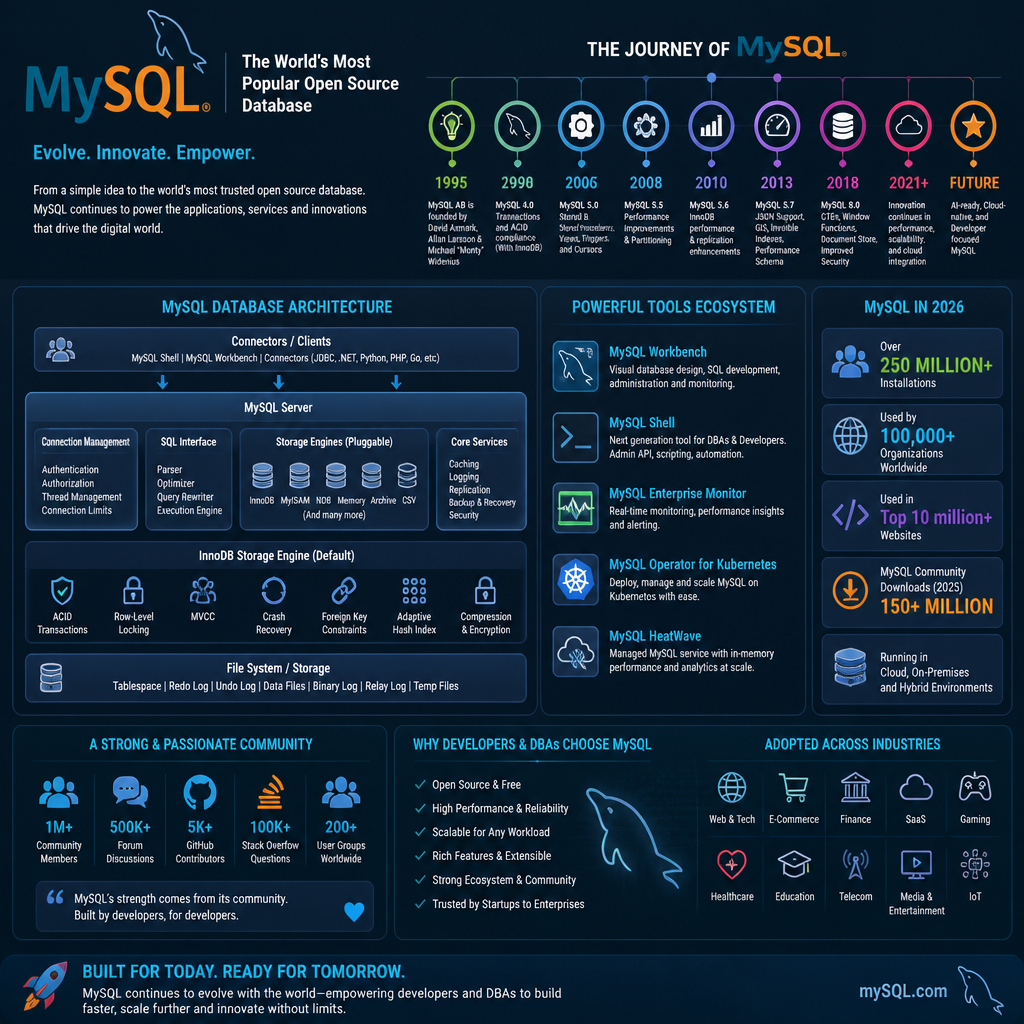
    MySQL in 2026 isn’t trying to become a totally different database. It’s tightening the bolts—performance, operability, and modern data types—so it keeps earning its spot in stacks that already run the internet.

    What’s changed is the environment around it. Cloud deployments are the default, teams expect sane observability, and JSON-ish data shows up everywhere (even when you swear you’re “relational only”). MySQL is responding to that pressure.

    What MySQL is Used For

    MySQL still fits best when you need predictable transactions, straightforward replication patterns, and a huge ecosystem of tools and hosting options.

    I keep seeing it in a few places:

    • E-commerce and payments: orders, carts, inventory, customer profiles. You want solid ACID behavior and simple indexing.
    • CMS platforms: WordPress, custom publishing systems, multi-tenant content apps. MySQL stays popular because the ecosystem is massive.
    • SaaS “core tables”: users, orgs, subscriptions, audit logs. Even if analytics lives elsewhere, MySQL often holds the source of truth.
    • Operational data stores: queues (yes, sometimes), feature flags, config, device state. Not glamorous, but it works.

    A real pattern I’ve dealt with: teams start with MySQL for the app, then bolt on Redis for caching, then push analytics to something columnar later. That separation keeps MySQL doing what it’s good at—fast transactional reads/writes—while other systems handle the “scan a billion rows” stuff.

    MySQL’s Growing Community Support

    The MySQL community is still one of its superpowers, even when people pretend they don’t care. Because when you’re stuck at 2 a.m. with replication lag or a query plan that makes no sense, you want real-world war stories, not marketing docs.

    Here’s what “community support” looks like in practice in 2026:

    • Better troubleshooting breadcrumbs: blog posts, gists, explain-plan examples, and config breakdowns that match modern workloads.
    • More forks and distributions in the conversation (and yes, that matters if you’re deploying at scale).
    • More practical tooling around backups, schema migrations, and performance diagnostics.

    That said, community support isn’t magic. I’ve watched teams copy-paste a “high performance” my.cnf from a random post, then wonder why their instance falls over under write load. So use the community like you’d use Stack Overflow: helpful hints, then verify with your workload.

    MySQL vs. PostgreSQL: A Shift in Popularity

    The MySQL vs PostgreSQL conversation got louder because developer sentiment shifted.

    According to the Stack Overflow Developer Survey 2025, PostgreSQL surpassed MySQL for the first time, which nudged a lot of teams into re-evaluating old decisions. And honestly, that’s fair—PostgreSQL has won mindshare with features, extensions, and a strong “developer-first” vibe.

    But here’s what I see on actual production teams: switching databases is rarely about ideology. It’s about risk and cost.

    • If you’re deep in LAMP, PHP tooling, and WordPress, MySQL is still the path of least resistance.
    • If you’re starting fresh with a data-heavy app and you want certain relational features out of the gate, PostgreSQL might feel cleaner.

    Still, MySQL isn’t standing still. It’s been picking up capabilities people used to cite as “reasons to leave,” like stronger JSON handling and better indexing options. So the decision in 2026 is less “which is better?” and more “which one matches our team’s operational comfort and failure modes?”

    A practical upgrade path I’d use

    If you’re already on MySQL and you’re wondering how to approach 2026, I’d do it like this (because I’ve seen the opposite go sideways):

    1. Inventory your features: replication type, storage engine, charset/collation, use of JSON columns, triggers, events.
    2. Baseline performance: capture query latency p95, slow query log volume, buffer pool hit rate, replication lag.
    3. Fix the worst 5 queries first: you’ll get more ROI than from almost any server tweak.
    4. Stage the upgrade: restore a recent backup into a staging environment, then replay production-like traffic if you can.
    5. Practice rollback: the best upgrade plan includes a realistic way back.

    Common mistake: teams “upgrade” by changing the database version, instance class, parameter group, and schema migrations all in one deploy. Then, when performance changes, nobody knows which change caused it.

    Understanding the Free and Open Source Nature of MySQL

    MySQL being “free” is both true and misunderstood. The nuance matters, because licensing confusion has wasted more engineering hours than most query optimizations ever will.

    Is MySQL Free?

    Yes—MySQL Community Edition is free to download and use. That’s the version a lot of developers learn on, and it’s what plenty of production workloads run too.

    Where people get tripped up is the split between:

    • Community: free software, broad usage, huge ecosystem.
    • Enterprise: paid offerings that bundle support, tooling, and certain advanced features.

    So, is MySQL not free anymore? No. You can still run the community edition for individual projects and for many business workloads.

    The part teams mess up

    I’ve watched founders assume “open source” means “zero cost forever.” Then they hit a compliance requirement, a security review, or a support need—and suddenly they’re scrambling.

    A realistic way to think about it:

    1. If you can self-support, community can be totally fine.
    2. If you need SLAs and vendor accountability, you may pay—either for MySQL enterprise support or a managed MySQL service.
    3. If you redistribute software, the licensing details matter a lot more, and you should get legal advice.

    That last one is the common landmine. It’s not a MySQL-only issue, either. But because MySQL is everywhere, teams bump into it sooner.

    A quick “persona” example

    One of the cleanest setups I’ve seen was a small SaaS team (three engineers) that stayed on community MySQL, but they wrote down two policies:

    • “We must be able to restore to a new region in under 60 minutes.”
    • “We keep a paid escalation path (managed service support) even if we don’t use enterprise features.”

    That’s a mature approach. It admits reality: databases fail, people go on vacation, and backups don’t magically test themselves.

    Exploring MySQL Features and Tools

    The headline features matter less than the day-to-day tools that keep your database fast, recoverable, and understandable. MySQL’s evolution is mostly about that: fewer sharp edges, better performance under real workloads, and more practical admin workflows.

    Key Features of MySQL 8.4

    In 2026, MySQL 8.4 is often discussed in terms of practical improvements rather than flashy rewrites. Here are the big buckets that actually show up in real projects:

    • Improved JSON support: Better ways to store, query, and index JSON-shaped data.
    • Enhanced performance optimization: Ongoing optimizer improvements that can reduce execution time for common query patterns.
    • MySQL Workbench: Still a mainstay for visual schema work, admin tasks, and performance inspection.

    Step-by-step: how I evaluate “new features” safely

    When someone tells me “8.4 is faster,” I don’t take it on faith. I run a small, boring process:

    1. Pick one representative workload (not a synthetic benchmark). For example: checkout flow, search, or reporting dashboard.
    2. Capture real queries from production logs—especially the slow ones and the top-frequency ones.
    3. Rebuild indexes in staging and compare query plans (EXPLAIN) before and after.
    4. Measure p95 latency under load, not just average response time.
    5. Watch for regressions: sometimes a “faster” optimizer change helps 90% of queries and hurts your most important one.

    That’s how you get confident without gambling your uptime.

    Common mistakes with JSON and indexing

    JSON support tempts people into using MySQL like a document store. Sometimes that’s fine. Often it’s a trap.

    Mistakes I keep seeing:

    • Dumping everything into one JSON column because it feels flexible, then trying to index it later.
    • Skipping generated columns (or an equivalent strategy) when you repeatedly query the same JSON paths.
    • Letting JSON become your schema because you don’t want to write migrations.

    If the data is genuinely structured and queried often, model it relationally. Use JSON for the messy edges—metadata, optional fields, integration payloads—not for your core entities.

    The MySQL Community Server

    The MySQL Community Server remains the workhorse for a lot of teams, especially when cost matters and you have enough operational maturity to support yourself.

  • Prepare Your WordPress Site for 2026 Changes

    Learn how to prepare your WordPress site for upcoming changes in 2026, including installation tips and best practices.

    Installing and Setting Up WordPress

    If you want your site to survive 2026 changes, start with a clean, current WordPress foundation. That means getting WordPress from the official source, setting up an environment you can reproduce, and testing updates somewhere that isn’t production.

    How to Download WordPress

    Always download WordPress from the official site. Yes, it sounds obvious, but I’ve seen people grab “WordPress bundles” from random tutorials and then wonder why their install shipped with sketchy extras.

    Here’s the workflow I use when I’m setting up a new site or rebuilding one that’s gotten messy:

    1. Download the WordPress zip file: Grab the current package from the WordPress download page. I keep that zip in a project folder with notes on what version I started from.
    2. Set up a local server: On Windows, XAMPP is common; on macOS, MAMP tends to be quick to spin up. The tool matters less than consistency—pick one and learn it.
    3. Create a database: Don’t skip this step or “borrow” an old database name. Use something clear like clientname_wp_dev.
    4. Upload WordPress to your server: For production, I prefer SFTP via a proper client (or a host file manager if that’s all you have). FTP still exists, but I avoid it unless I’m forced.
    5. Run the installer: Point your browser at the local URL, then set the admin user and strong password. If you’re building for a client, don’t leave the username as admin.

    A small but important habit: write down your starting versions (WordPress core, PHP, MySQL/MariaDB). Later, when an update causes a weird issue, those notes save time.

    Localhost WordPress Installation

    I do most risky work on localhost first because breaking a local site is cheap. Breaking production on a Tuesday afternoon is… not.

    Here’s a step-by-step setup that mirrors how I actually work:

    • Download MAMP (or your local server tool).
    • Install it, then confirm Apache/Nginx and MySQL are running.
    • Put the WordPress files into the server directory (MAMP usually uses htdocs).
    • Create a database in phpMyAdmin and note the DB name, user, and password.
    • Edit wp-config.php (or let the installer generate it), then connect WordPress to that database.
    • Log in, set permalinks, and install only the minimum plugins you need to start.

    Where people mess this up: they build locally, then they “just upload the folder” to production and hope it works. It often doesn’t, because URLs, file permissions, and database settings change.

    What I do instead is treat localhost as the place to validate changes:

    • Update plugins/themes locally.
    • Click through key pages (home, blog, contact, checkout if it’s eCommerce).
    • Run a quick speed check and watch for layout shifts.
    • Only then push changes to production.

    If you only take one thing from this section, take this: localhost is your sandbox, not your deployment strategy.

    Examples of WordPress Blogs

    If you need design or content structure ideas, these galleries can help you see what’s working in the real world (and what looks dated):

    When I review examples, I’m not just looking at “pretty.” I’m checking things like navigation clarity, how quickly I can find the email signup, and whether the typography feels readable on a phone.

    Understanding WordPress and Its Uses

    WordPress still wins because it can be simple when you need simple, and extensible when you need power. But you do have to understand what you’re building—because the way you set up a portfolio site should not look like the way you set up a membership platform.

    Why is WordPress Still Relevant?

    WordPress powers approximately 41.2% of all websites as of July 2026, making it the largest CMS on the internet (TechTide Solutions). That scale matters, because it means:

    • You’re rarely stuck without a solution.
    • Hosting providers optimize for WordPress.
    • There’s a huge pool of developers (good and bad—so you still need standards).

    What WordPress is used for now, in my day-to-day:

    • Content sites: blogs, media, niche publications.
    • Marketing sites: landing pages, lead gen, service businesses.
    • eCommerce: WooCommerce stores (great when configured carefully, painful when overloaded).
    • Internal docs / knowledge bases: especially when teams want non-technical editing.

    A real example: a small agency I worked with ran three sites on three different page builders, each with different “special” plugins. Updates were chaos. We standardized on one theme approach, removed duplicate functionality, and suddenly updates went from a monthly fire drill to a checklist.

    That’s why WordPress stays relevant—it’s flexible. But flexibility punishes sloppy setups.

    The Current Trends in WordPress Use

    The biggest trend I see is teams treating WordPress more like a software project and less like a one-time website install. That’s where CI/CD comes in—automating builds, tests, and deployments so updates don’t rely on someone remembering a 12-step ritual.

    Developers are adopting continuous integration/continuous deployment (CI/CD) to automate and simplify updates (WordPress Developer Blog). In practice, even a lightweight version helps:

    • Use staging before production.
    • Track changes (at least theme and custom code) in version control.
    • Make updates repeatable.

    If you’re not a developer, you can still borrow the mindset. Here’s a “normal person” version of the same workflow that I’ve put in place for clients who don’t want complicated tooling:

    1. Create a staging site with your host (many hosts offer one-click staging).
    2. Clone production to staging so you’re testing real content and real plugins.
    3. Update in staging first (plugins, theme, then core).
    4. Test a short script (home page, top 3 posts, contact form, checkout/cart if applicable).
    5. Deploy to production only after staging checks out.

    Common mistake: updating everything at once and then trying to figure out which change caused the bug. Instead, I batch updates intentionally—security fixes first, then the rest.

    WordPress Usage Trends and Future

    People keep asking, is WordPress still worth it in 2026? I think it is, but only if you take maintenance seriously.

    Two pressures are getting stronger:

    • Performance expectations: visitors bounce fast if pages feel heavy.
    • Security reality: WordPress is a big target because it’s popular.

    According to Patchstack, effective vulnerability management is essential, as WordPress sites face attacks on average every 32 minutes. Even if that number makes you roll your eyes, the practical takeaway is solid: assume attackers will find you eventually, because automated scans don’t care whether you’re famous.

    So what do I actually do to prep a WordPress site for the future?

    • Keep WordPress core and plugins updated on a schedule (weekly is realistic for most sites).
    • Delete plugins you don’t use. Deactivated isn’t the same as gone.
    • Use strong admin accounts and limit who gets admin privileges.
    • Backups that you’ve actually tested restoring. A backup you can’t restore is just a comforting story.

    I’ll add one more: don’t chase every shiny “optimization” plugin. Half the speed problems I fix come from people stacking caching plugins, image plugins, database plugins, and “booster” plugins until the site becomes unpredictable.

    My Experience With This

    I’m Mobeen Abdullah, a Founder & CEO with over a decade of experience in full-stack development, and WordPress has been part of my weekly work for most of that time.

    I’ve managed high-traffic sites, handled migrations, and cleaned up the kind of plugin sprawl that happens when a site has been “maintained” by five different freelancers over five years.

    One significant project involved migrating a complex blog to WordPress, which resulted in a 50% increase in traffic in just six months due to improved SEO practices and site speed optimization. That wasn’t magic. It came from fixing fundamentals that were quietly holding the site back.

    What I did, step by step

    Here’s what that migration looked like in the real world—no fairy dust:

    1. Content inventory: We exported everything, then categorized content into “keep,” “redirect,” and “kill.” Old thin posts got merged or removed.
    2. URL mapping: Before launch, we mapped old URLs to new ones. Redirects are boring, but losing search traffic is worse.
    3. Theme choice: We picked a lightweight theme approach and avoided heavy page builder lock-in because the client needed long-term flexibility.
    4. Plugin diet: We started with the minimum set, then added only what had a clear job. If two plugins overlapped, one got cut.
    5. Performance pass: Image compression, caching (one solution, not three), and basic front-end cleanup.
    6. Staging QA: We tested forms, search, category pages, and mobile layouts. Then we tested again after enabling caching.

    The part most people underestimate is the redirect + QA combo. You can build a beautiful new site and still torch your traffic if you don’t respect URLs and on-page structure.

    Mistakes I keep seeing

    Even in 2026, the same issues show up:

    • Updating directly on production “because it’s quicker.” It is—until it isn’t.
    • Too many plugins doing tiny things that could be handled by one solid tool or a small code snippet.
    • No rollback plan. If you can’t revert, you’re gambling every update.
    • Ignoring your own editor experience. If publishing is annoying, teams stop publishing, and then the site slowly dies.

    A quick persona anecdote: I once worked with a founder who hated WordPress because “it’s always breaking.” After one audit, we found three caching plugins fighting each other, a security plugin blocking legitimate admin actions, and a theme that hadn’t been updated in years. WordPress wasn’t the problem—maintenance was.

    Final Thoughts

    If you want to prepare your WordPress site for 2026 changes, build a workflow you trust: official downloads, localhost testing, staging updates, and fewer moving parts.

    Pick one improvement to make this week—set up staging, cut five unused plugins, or move updates to a schedule—and you’ll feel the difference fast.

    Stay proactive. Future-you will thank you when the next big update ships.

  • How to Get Started with Next.js in 2026

    How to Get Started with Next.js in 2026

    Learn how to get started with Next.js in 2026. Follow this comprehensive tutorial to build your first application and explore Next.js features.

    Featured image for How to Get Started with Next.js in 2026

    Getting Started with Next.js

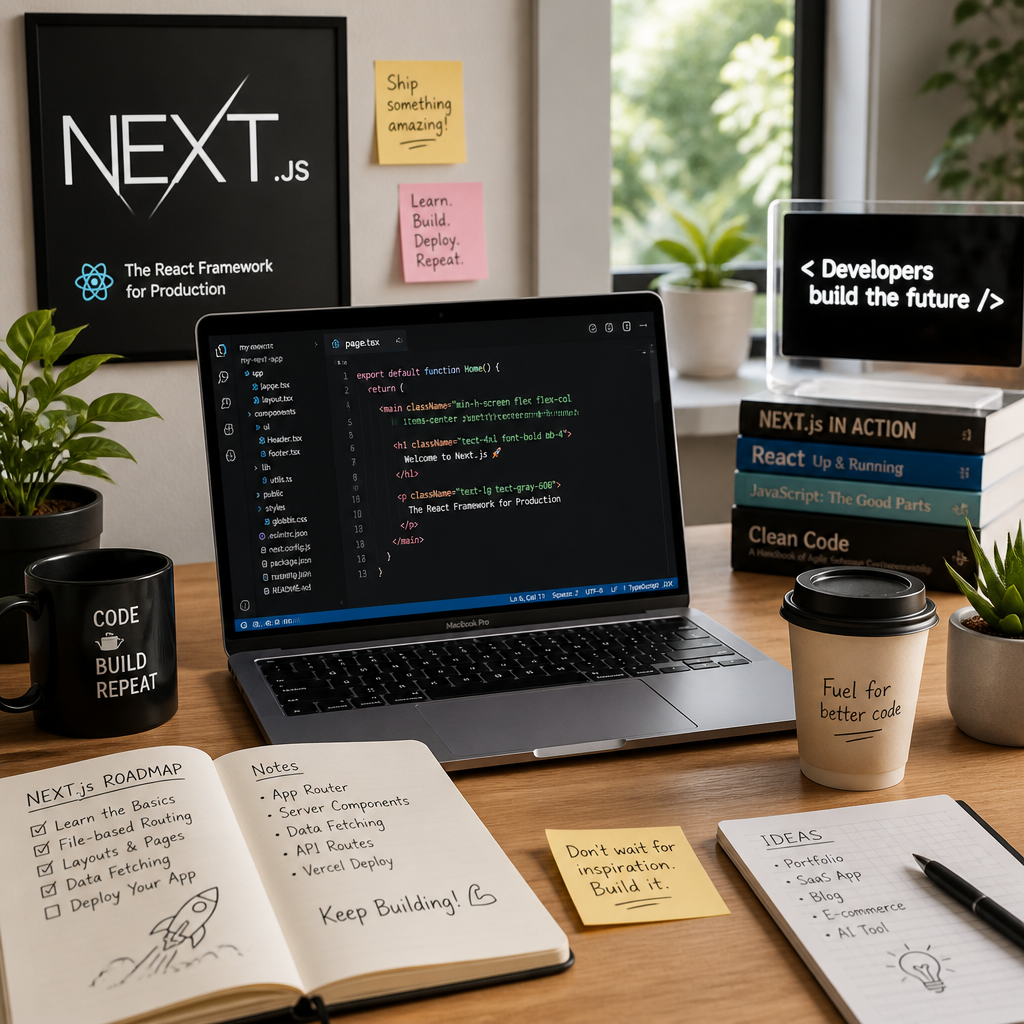
    Next.js is what I reach for when I want React plus the stuff production apps need: routing that doesn’t turn into spaghetti, multiple rendering modes, a build pipeline that’s already thought through, and a deployment story that isn’t “good luck.” It’s still React—you still write components—but Next.js wraps the boring parts in conventions that (mostly) make sense.

    Here’s the honest tradeoff: Next.js removes a lot of setup friction, but it also adds a framework “way” of doing things. You’ll move faster if you lean into it, and you’ll suffer if you fight it. The biggest mistake I see is people trying to treat Next.js like a thin wrapper around React Router + fetch calls. It’s not.

    A quick real-world example: I once inherited a Next.js codebase where every page fetched data on the client because the team was “keeping it simple.” The app looked fine on a warm laptop and a fast connection. On a throttled mobile device it was a parade of loading spinners. We moved three key pages to server-side rendering and static generation where it made sense, cut the time-to-content dramatically, and support tickets about “blank pages” basically disappeared. Same UI—different rendering choices.

    What is Next.js Exactly?

    Next.js is a React framework that helps you build apps with better performance defaults and a cleaner mental model for routing and rendering. You get:

    • File-based routing (you create files/folders, Next creates routes)
    • Pre-rendering options (static generation, server rendering, client rendering)
    • API routes for lightweight backend endpoints
    • Automatic code splitting so each route only ships what it needs

    That “automatic code splitting” bit sounds like marketing until you’ve dealt with a React app that ships one giant bundle to every page. Next.js will split by route automatically. You still can blow up your bundle (a single heavy dependency in a shared layout will do it), but the default is far better than the DIY approach.

    Also: Next.js nudges you toward patterns that are easier to deploy consistently. In practice, that means fewer bespoke build scripts and fewer “works on staging, breaks on prod” moments.

    Setup in 2026

    You don’t need a fancy setup, but you do need a modern Node install and a clean project start. Keep it boring.

    Install Node.js

    Make sure you have Node.js installed on your machine. The minimum version required for Next.js is 20.9. Grab it from the official website.

    My opinionated take: if you’re doing this for more than a weekend, use a Node version manager (nvm, fnm, Volta—pick one). Next.js projects have a habit of outliving your initial setup, and “it broke because Node changed” is a dumb way to lose a day.

    Create a new app

    Open your terminal and run:

    npx create-next-app@latest my-nextjs-app
    cd my-nextjs-app
    npm run dev
    

    That scaffolds a project that’s already wired with the usual essentials. npm run dev starts the dev server, typically at http://localhost:3000.

    One small workflow tip that saves time: after the first run, scan package.json and see what scripts you’ve got (dev, build, start, sometimes lint). Those scripts are the contract your CI/CD will use later. If you’re going to customize anything, do it intentionally.

    Explore the project structure

    The generator will give you a structure that depends on what options you chose. Historically, Next.js used a pages directory, and a lot of tutorials (and older repos) still do.

    • If you see a pages directory, routes are built from files in there.
    • If you see an app directory, you’re in the newer App Router world.

    Either way, the key idea is the same: your folder structure becomes your URL structure.

    What I do when I join a new Next.js codebase is open the routing folders and answer three questions:

    1. Where are the top-level routes defined?
    2. Where do layouts live (shared navigation, global wrappers)?
    3. Where does data fetching happen (server, client, or both)?

    If you can’t answer those quickly, you’re going to feel lost every time you add a feature.

    Build your first page

    If you’re using the pages router, edit pages/index.js:

    export default function Home() {
      return (
        <div>
          <h1>Welcome to Next.js!</h1>
        </div>
      );
    }
    

    Save, refresh http://localhost:3000, and you’ll see it.

    Now the part people skip: add a second route so you feel file-based routing.

    • Create pages/about.js
    • Put a simple component in it
    • Visit /about

    That tiny exercise teaches you more than reading three blog posts because it makes the routing model click.

    If you’re on the app router instead, your “page” is typically app/page.js and a second route looks like app/about/page.js. Same concept, different folder convention.

    Styling without pain

    Styling is where “hello world” projects often go off the rails. Next.js supports several approaches, but you should pick one early and stick to it.

    Next.js supports CSS modules and global styles. Create a CSS file and import it into your components to style your application:

    import styles from './styles.module.css';
    

    The biggest practical difference:

    • CSS Modules keep styles scoped. Great default for component-heavy UIs.
    • Global CSS is fine for resets, typography, design tokens—stuff that truly is global.

    If you’re building a small app, CSS Modules will keep you out of specificity wars. If you’re building a bigger design system, you’ll probably end up with a combination: a global layer for tokens/base styles, and modules (or a utility framework) for components.

    Next’s docs are clear here, and worth skimming once so you don’t fight the framework: official documentation.

    A mistake I’ve seen more than once: someone imports global CSS in random component files, the build complains (or the styles load in weird order), and suddenly “Next.js styling is broken.” It’s not broken—you just need to follow the entry-point rules.

    Rendering and data choices

    This is the part that actually matters in production: deciding where your data loads and when your HTML gets generated.

    At a high level you have a few patterns:

    • Static generation: great for marketing pages, docs, content that changes rarely.
    • Server rendering: great when the page must reflect fresh data on each request (dashboards, inventory, authenticated views).
    • Client rendering: fine for highly interactive parts after first load, but don’t default to it for everything.

    Here’s how I choose in practice:

    1. If the page can be static, make it static. It’s the cheapest performance win.
    2. If it can’t be static, render on the server so users see real content immediately.
    3. Use the client for interactivity, not for “because fetching is easy.”

    That ordering isn’t dogma—it’s just what tends to produce fast, stable apps with fewer edge-case bugs.

    A concrete example: a blog index page. I’d rather statically generate it and revalidate when new posts are published than fetch on every request. On the other hand, an account billing page should be server-rendered or server-fetched, because it’s user-specific and must be correct.

    Next.js Backend

    One common question is whether Next.js is a frontend or backend framework. The answer is that it’s both.

    Next.js is primarily about building the UI and routing for web apps, but it also lets you create API routes that act as backend endpoints. That’s perfect for:

    • small “glue” endpoints (forms, webhooks, tiny CRUD)
    • proxying requests to third-party services (so keys stay server-side)
    • lightweight auth callbacks

    Create a file in the pages/api directory like this:

    export default function handler(req, res) {
      res.status(200).json({ message: 'Hello from Next.js!' });
    }
    

    Then fetch it from your frontend.

    Two warnings from experience:

    1. Don’t turn API routes into a monolith by accident. They’re great until you’re running heavy jobs, long-running requests, or complex domain logic. At that point, split out a proper backend service or serverless functions with clearer boundaries.
    2. Treat them like real backend code. Validate input. Handle errors. Don’t log secrets. Rate limit if needed. The fact that it lives next to your components doesn’t make it “safe.”

    I once had to clean up a Next.js API route that was quietly timing out under load because it was doing three sequential third-party calls with no caching and no timeouts. In dev it worked every time. In prod, it failed just often enough to be a nightmare. We fixed it by adding request timeouts, parallelizing calls where possible, and caching the slowest response. Boring fixes. Big impact.

    A practical learning path

    If you want to get good at Next.js (not just “I followed a tutorial”), focus on these skills in order:

    1. Routing + layouts: create routes, nested routes, shared UI.
    2. Data fetching: pick the right rendering strategy for the page.
    3. Caching and revalidation: understand why your data is stale (or why it’s not).
    4. Forms + mutations: creating/updating data without a pile of client state bugs.
    5. Deployment: build, start, environment variables, observability.

    Then go build something slightly annoying. A tiny dashboard, a blog with search, a pricing page with A/B variants—anything that forces you to deal with routing, data, and edge cases.

    For structured learning, I recommend hands-on material like ByteGrad because projects force you to glue concepts together, which is where people usually stall.

    If you prefer a full-stack walkthrough with a more “build a real app” vibe, this is another solid option: Tech Insider.

    My bias: don’t binge-watch. Build in parallel. Every 20 minutes of video should buy you at least 40 minutes of typing and breaking things.

    Common mistakes to avoid

    These are the rakes I’ve stepped on (or watched teammates step on) often enough that they’re basically predictable:

    • Putting everything on the client. It feels simpler, but you pay with slower initial loads and more flicker.
    • Ignoring the build output. Run a production build early in a project. Dev mode hides problems.
    • Letting dependencies bloat. One UI library plus three date libraries plus a charting library can balloon bundles fast.
    • No environment discipline. Treat .env files seriously; keep secrets out of the browser and out of Git.

    If you only take one thing from this section: do a npm run build in the first day of a project, not the last week.

    Next step

    Get your app running, create two routes, add one styled component, and add one API route that returns real data (even mocked). That little loop teaches you 80% of what you’ll actually do on a real Next.js project.

    When you’re ready, start here and follow the official install flow end-to-end: official website.

  • How AI Will Change Our Lives in 2026

    How AI Will Change Our Lives in 2026

    Explore how AI will change our lives by 2026, its applications, and benefits across various domains.

    Featured image for How AI Will Change Our Lives in 2026

    How AI Will Change Our Lives in 2026

    As we approach 2026, it’s crucial to understand the profound impact artificial intelligence (AI) will have on various aspects of our lives. The change won’t come as one big reveal; instead, it’ll come as a steady drip of features that quietly remove friction.

    In terms of workplace productivity, 44% of U.S. adults believe AI tools increase their productivity (Ipsos). That number matches what I see in the real world: when a team finds a safe, repeatable AI workflow, the “busy work” shrinks fast.

    How AI Works

    At its core, AI mimics human intelligence through algorithms that enable machines to perform tasks that typically require human thinking. This includes learning from experiences (machine learning), understanding natural language, and recognizing patterns (National University). But the part people miss is where the value actually comes from: AI doesn’t “think” like a person—it predicts what’s likely next, based on a lot of examples.

    So, picture your inbox. In 2026, an AI layer won’t just draft replies; it’ll read the thread, notice you’re being asked for a decision, pull the relevant doc link, and propose a short answer in your tone. Meanwhile, it’ll flag two risks: “This customer is asking for a discount you can’t approve,” and “This date conflicts with your existing timeline.” That sounds fancy, but it’s basically pattern recognition plus a clean interface.

    The messy part is reliability. AI works great in the “center” of what it has seen—common tasks, typical phrasing, mainstream situations. But it can get weird on edge cases: unusual legal wording, niche medical history, or your company’s internal acronyms. Because of that, the winning products in 2026 will be the ones that treat AI like a co-pilot with guardrails, not an all-knowing autopilot.

    Another under-discussed piece is latency and cost. If an AI feature takes 12 seconds to respond, people stop using it. If it’s instant, it becomes muscle memory. By 2026, a lot of AI will run in smaller, faster models (sometimes on-device) for speed and privacy, while heavy-duty requests will still go to the cloud.

    AI as a Helpful Tool

    The helpfulness of AI cannot be overstated—if you aim it at the right problems. It’s already making significant strides in sectors like healthcare, where AI-assisted diagnostics are improving patient outcomes. Even outside hospitals, AI is creeping into the “boring” parts: appointment scheduling, symptom checkers that ask better follow-ups, and clinical note drafting.

    A stat that lines up with what teams report: 62% of workers across various countries have reported that AI has saved them time at work (Ipsos). The key phrase there is “saved them time,” not “replaced them.” In practice, the biggest wins come from compressing tiny tasks—rewriting a paragraph, summarizing a call, turning bullet points into a slide, extracting action items from a meeting transcript.

    Here’s a real-feeling example I’ve seen in multiple orgs. A customer support lead starts using AI to draft first responses. At first, it’s clunky, because the AI doesn’t know policy. Then they feed it the help center and a handful of “gold standard” replies, and suddenly new agents ramp in days instead of weeks. Because of that, escalation volume drops, managers get fewer pings, and customers get answers faster. Nobody’s job disappears overnight, but the workflow changes.

    Education will get the same treatment. In 2026, AI-powered tutoring won’t just answer questions; it’ll watch where a student hesitates, then adjust the next explanation. It’ll also give teachers something they rarely get today: a quick map of who’s stuck, on what concept, and since when.

    That said, helpful AI also creates new work. Somebody has to verify outputs, handle exceptions, and decide what “good” looks like. If your organization pretends that part is optional, you’ll feel it in mistakes—wrong orders, mixed-up patient notes, or confidently incorrect emails that burn trust.

    Making AI Helpful

    For AI to be truly helpful, we need to ensure it is designed with users in mind. That sounds obvious, but lots of “AI features” ship because they demo well, not because they reduce real pain.

    In professional settings, AI is expected to evolve into collaborative tools that enhance decision-making rather than replace human roles. Practically, that means three things: (1) it has to show its work (where the info came from), (2) it has to be easy to correct, and (3) it must fail gracefully when it doesn’t know.

    Organizations can use AI to sift through data rapidly, providing insights that would be painful for humans to gather alone. For example, a sales ops team can ask, “Which deals slipped this quarter because of security review delays?” and get a ranked list, plus common blockers. Then they can actually fix the process instead of guessing.

    The adoption curve is already visible: 50% of employed Americans have reported seeing AI tools like ChatGPT in their workplaces (Ipsos). By 2026, the differentiator won’t be “do you have AI?” It’ll be whether your workplace has norms around it.

    If you want AI to help instead of harm, I’d start with rules that feel a little boring:

    • Decide what data must never go into AI tools (client PII, unreleased financials, patient details). Put it in writing.
    • Pick two or three approved tools. Otherwise, you’ll get shadow AI everywhere.
    • Require a human owner for every AI-assisted workflow. When something goes sideways—and it will—you need someone accountable.
    • Measure outcomes, not hype. Time saved is good, but error rates and rework matter more.

    One mistake I’ve watched teams make: they roll out an AI writing tool, then they judge success by “how many people used it.” That’s the wrong metric. Usage goes up even if quality goes down, because it’s novel. The better measurement is: did cycle time drop, did customer satisfaction hold, and did editors spend less time cleaning up?

    Understanding Artificial Intelligence

    Understanding artificial intelligence involves demystifying what it can and cannot do. Plenty of people swing between extremes—either AI is a looming threat, or it’s a miracle machine. The truth sits in the middle, and it’s much more practical.

    In 2026, you’ll get the most out of AI if you treat it like a very fast junior assistant: excellent at first drafts and pattern matching, shaky at judgment, and occasionally overconfident.

    What Exactly Is an AI?

    Artificial Intelligence refers to systems that can perform tasks that typically require human intelligence. This includes problem-solving, understanding language, and even emotional recognition. But it helps to split “AI” into buckets, because they behave differently.

    • Generative AI creates text, images, code, audio. It’s great for drafts, summaries, and transformations (turn this messy note into a clean email).
    • Predictive AI scores likelihood (fraud risk, churn risk, demand forecasting). It’s often less flashy, yet it’s where companies quietly make a lot of money.
    • Perception AI identifies things in the world (speech-to-text, object detection, medical imaging).

    Essentially, AI can look like a human brain on the surface, but it operates through statistical and computational processes rather than biology. That difference matters, because it explains why AI can be eloquent and still wrong.

    Also, “emotional recognition” is a loaded claim in the real world. Systems can detect patterns—tone, word choice, facial movement—but that’s not the same as understanding how you feel. If someone sells you AI that “knows” emotions with certainty, be skeptical.

    By 2026, a lot of consumer AI will feel personal because it remembers preferences: how you write, what you buy, what you watch, when you commute. That kind of personalization can be genuinely useful. It can also feel creepy, especially when the data trail isn’t obvious.

    Human Intelligence vs. AI

    While AI is designed to simulate human thought processes, it is fundamentally different from human intelligence. Humans carry context that never appears in the dataset: social nuance, lived experience, ethics, and responsibility.

    Humans possess emotional reasoning, social understanding, and ethical considerations that AI cannot replicate. This distinction is crucial when discussing the limitations of AI. For instance, while AI can provide recommendations based on data patterns, it cannot engage in moral reasoning or empathy (National University).

    Here’s where this lands in daily life.

    If an AI assistant helps a manager write performance feedback, it might produce something “professional-sounding” that’s emotionally tone-deaf. A person has to notice that, soften it, and decide what the employee actually needs to hear. Similarly, if AI suggests a healthcare next step (“follow up in two weeks”), a clinician has to weigh the human reality: the patient’s support system, anxiety, and ability to get back to the clinic.

    In 2026, you’ll also see more AI “agents” that can take actions—book travel, file tickets, reorder supplies. That’s powerful, but it increases the blast radius of mistakes. A chatbot hallucinating a sentence is annoying. An agent sending the wrong email to the wrong client is an incident.

    So, the practical stance I take is this: let AI generate, propose, and summarize. Keep humans on the hook for decisions, approvals, and anything that touches money, health, or legal exposure.

    Performing Tasks with AI

    The tasks AI performs can range from simple operations, like scheduling appointments, to complex processes like fraud detection in banking. The key takeaway isn’t just that AI can perform these tasks—it’s how it changes the cost and speed of doing them.

    AI systems analyze massive amounts of data at speeds faster than any human could. For example, businesses utilizing AI for marketing analysis can personalize advertisements to cater specifically to individual consumers, boosting conversion rates and customer satisfaction (Kanerika). But personalization has tradeoffs: it can narrow what you see, reinforce habits, and make it harder to “browse” outside your usual bubble.

    By 2026, I expect the biggest task-level shifts to show up in five places:

    1. Writing and rewriting everywhere. Not just marketing—HR policies, internal docs, procurement emails, project updates. People who can clearly instruct an AI (“shorter, friendlier, keep the key details, don’t promise timelines”) will look like better communicators.
    2. Meetings get compressed. AI will auto-generate agendas, capture decisions, and assign tasks. The win isn’t the transcript; it’s fewer follow-up meetings because the next steps are actually written down.
    3. Customer support triage. AI will route tickets, detect urgency, and propose replies based on policy. Good teams will keep a human QA loop and track when AI suggestions get edited—those edits become training data.
    4. Front-line data cleanup. The unglamorous stuff: matching duplicate records, fixing address formats, tagging documents, extracting fields from PDFs. This is where time disappears today, so it’s where AI can give it back.
    5. Personal life logistics. Meal planning with your dietary constraints, shopping lists that adapt to your budget, travel planning that accounts for layovers you hate. Helpful when it works; frustrating when it doesn’t.

    One more mini story, because it’s the kind of thing that’s about to be normal. A friend of mine runs a small professional services firm. They used to spend Sunday nights assembling weekly client updates—status, blockers, next steps. After adding an AI step that summarizes work logs and drafts the email, the owner now spends 20 minutes editing instead of two hours writing. Because of that, they do the update every week, not “when things are on fire.” The client experience improves, and the team gets fewer random check-in calls.

    None of this removes the need for human taste. If you don’t know what a good client update looks like, AI won’t save you. It’ll just produce a longer bad update.

    In conclusion, as we move toward 2026, AI will play an increasingly critical role in our lives. It will help us be more productive, enhance decision-making, and lead to new opportunities across various sectors.

    Still, the expectation shouldn’t be that AI makes everything better by default. The teams and individuals who win will be the ones who set boundaries, learn how to prompt and review, and keep humans responsible for the high-stakes calls. If you want a next step: pick one repetitive task you do weekly, run it through an AI assistant for two weeks, and track time saved and mistakes—then decide if it deserves a permanent place in your workflow.

  • Effective Time Management Strategies for Project Managers

    Effective Time Management Strategies for Project Managers

    Discover essential time management strategies tailored for project managers in 2026. Enhance your project management skills and productivity.

    Featured image for Effective Time Management Strategies for Project Managers in 2026

    Essential Project Management Skills for Success

    Time management gets all the attention, but it only works if the “core PM muscles” around it are solid. Otherwise, you’ll just become an efficient person moving the wrong work forward.

    What Does a Project Manager Actually Do?

    A project manager is responsible for overseeing the planning, execution, and completion of a project. This includes defining project goals, developing plans to meet those goals, coordinating project teams, and managing budgets to ensure projects are completed within scope and on time. Effective project managers also need to possess strong communication skills to liaise between stakeholders and team members effectively.

    Some of the key skills identified by experts for 2026 include:
    Leadership: Effectively leading teams to achieve project goals.
    Communication: Ensuring all team members are aligned with project objectives.
    Time Management: Prioritizing tasks and managing time to meet deadlines.
    Risk Management: Identifying potential risks and developing mitigation strategies.

    According to a 2026 Project Management in 2026 report, the demand for skilled project managers is expected to grow significantly, with the industry facing a talent gap that is pushing companies to seek out qualified professionals rapidly (Refonte Learning).

    The skill stack that actually saves time

    Here’s the unpopular truth: “time management” is mostly a side-effect of a few other skills done well.

    1) Scope control (a.k.a. saying no without drama).
    If you can’t control scope, your schedule is fiction. That said, I don’t mean being rigid—I mean making tradeoffs explicit.

    A line I use a lot: “We can add that, but what are we removing, or what date are we moving?” It forces reality into the room.

    2) Ruthless prioritization with a single source of truth.
    When tasks live in five places (email, chats, docs, someone’s head, and your board), you’ll waste hours just reconciling reality. Pick one system to be the “truth”—Jira, Asana, Monday, a spreadsheet—doesn’t matter as much as consistency.

    3) Facilitation that ends in decisions.
    Meetings aren’t the enemy. Meetings that don’t produce decisions are.

    If you consistently walk out with owners + due dates + a written decision, your team stops spinning.

    A real week: how I keep projects from eating my calendar

    When I’m running a delivery-heavy project (lots of dependencies, tight deadline), I plan my week in layers:

    Layer 1: Fixed blocks (non-negotiable).
    – 2–3 deep-work blocks (60–90 minutes) for planning, risk review, stakeholder updates
    – 1 block for “hard calls” (vendor escalation, scope conversations, budget surprises)

    Layer 2: Cadence meetings (kept small).
    – Standup or async check-in
    – Two short decision meetings per week (15–25 minutes)
    – A weekly stakeholder checkpoint (30 minutes)

    Layer 3: Slack/email containment.
    I don’t leave notifications on all day. I batch comms 3–5 times daily, because otherwise the day becomes a reaction loop.

    That setup sounds basic, but it works because it protects the two things PMs lose first: focus and follow-through.

    Step-by-step: a practical prioritization flow

    If you want a repeatable way to decide what gets your time, run this every morning (10 minutes) and every Friday (30 minutes).

    1) List the top 10 open items (not 50). Pull from your system of record.
    2) Mark the critical path movers. If finishing the item doesn’t change the finish date, it’s probably not your first priority.
    3) Find the “waiting” items (blocked by someone else). Then write the unblock message immediately.
    4) Pick three outcomes for today. Not tasks—outcomes (e.g., “sign-off on API approach,” “UAT start date confirmed”).
    5) Time-box the rest. Give yourself permission to stop.

    I learned this after watching a project drift for three weeks because everyone worked on “busy” tasks while a single architecture decision sat unresolved. Once we forced decisions into 24–48 hour windows, the schedule stopped bleeding.

    Common mistakes I see (and how to avoid them)

    Mistake: treating the plan like a contract.
    Plans are hypotheses. Update them aggressively when reality changes, because stale plans waste more time than no plan.

    Mistake: letting stakeholders bypass the system.
    If requests come through side channels, you’ll miss dependencies and double-book people. So, funnel them back into the same intake path—even if it’s just, “Cool, add it to the board and tag me.”

    Mistake: confusing urgency with importance.
    The loudest message isn’t always the most schedule-critical. If you’re unsure, ask one question: “What breaks if this waits until tomorrow?” The answer usually clarifies priority.

    Effective time management strategies for project managers in 2026 shown as a weekly calendar with deep-work blocks, stakeholder meetings, and buffer time

    Project Management Training Resources

    Training only helps if it changes how you run next week’s project. So I’m going to separate “career signaling” (certs) from “performance improvement” (skills you can apply immediately).

    Project Management Certification

    Obtaining a certification can validate your skills and enhance your employability. The Project Management Professional (PMP) certification is highly regarded in the industry, highlighting your competence in guiding and directing projects. According to the Project Management Institute (PMI), the average salary for PMP-certified professionals is around $100,750 in 2026 (PMI). Other certifications worth considering include:
    PRINCE2®: A structured project management method used worldwide.
    Agile Certified Practitioner (PMI-ACP): Focused on Agile project management techniques.

    Project Management Course

    Various institutions offer comprehensive courses that cover foundational to advanced project management skills. Notable platforms include:
    Coursera – Offering a variety of courses from leading universities.
    Firebrand Training – Top-rated project management courses.

    Project Management Books

    Investing time in reading key texts can also bolster your knowledge base. Recommended reads include:
    The Art of Project Management by Scott Berkun.
    Scrum: The Art of Doing Twice the Work in Half the Time by Jeff Sutherland.

    How I’d choose training (without wasting money)

    I’ve seen people collect certificates and still struggle to run a clean kickoff. So, before you commit time (and usually a chunk of cash), decide what problem you’re solving.

    If you need a job switch or promotion: certifications help because recruiters filter on them. It’s signaling, and that’s not a dirty word.

    If you need to stop drowning on the job: pick training that fixes your workflow—estimation, facilitation, stakeholder management, or risk.

    A rule I like: if a course doesn’t force you to produce artifacts you’d use at work (a real RAID log, a real comms plan, a real schedule), it’s probably too theoretical.

    Step-by-step: a 6-week upskilling plan for busy PMs

    This is what I recommend when someone tells me, “I can’t study—I’m slammed.” You don’t need heroic hours. You need consistency.

    Week 1: Baseline your time leaks.
    – Track your work for five days (even rough notes)
    – Label time as: planning, decision-making, follow-ups, meetings, admin, firefighting
    – Pick the biggest leak to fix first

    Week 2: Meetings overhaul.
    – Rewrite agendas to be decision-first
    – Cut one recurring meeting or shorten it by 10 minutes
    – Add a standard notes template: decision, owner, due date, risks

    Week 3: Estimation and commitments.
    – Practice “three-point estimates” with your leads (best/likely/worst)
    – Build schedule buffer intentionally for high-uncertainty work

    Week 4: Risk muscle.
    – Start a living risk log (not a one-time doc)
    – Run a 20-minute risk review weekly

    Week 5: Stakeholder comms.
    – Create a one-page status format
    – Define escalation triggers (e.g., any slip >3 days gets called out)

    Week 6: Tie it to a credential (optional).
    – If you’re aiming at PMP/PRINCE2, now the material maps to your lived experience

    This approach works because you’re not “learning PM”—you’re tightening your operating system.

    A quick story: training that paid off (and what didn’t)

    One PM I coached bought a pricey bootcamp, took immaculate notes, and still had projects sliding. The issue wasn’t knowledge—it was that every request arrived via DM, and she tried to be helpful in the moment.

    So we implemented one rule: no work starts until it’s on the board with an owner and date. For the first week it felt awkward, because people hate process when they’re used to shortcuts.

    By week three, stakeholder pings dropped, because expectations were visible. That’s the kind of “training” that sticks.

    Common mistakes with PM training

    Mistake: studying frameworks while ignoring your real constraints.
    If your org can’t do “pure Agile” (most can’t), learn hybrid delivery and change control. You’ll use it tomorrow.

    Mistake: trying to learn everything at once.
    Pick one skill per month. Otherwise, you’ll half-apply five ideas and none will land.

    Mistake: treating books as instructions.
    Books are patterns, not recipes. Test small, measure results, and keep what works.

    Understanding Project Management Careers

    If you’re thinking about your next move, don’t just chase titles. Chase environments where good project management is valued—because that’s where you’ll grow fast.

    Project Management Jobs

    Project managers can be found in various fields including IT, construction, healthcare, and finance. The skills required may vary by industry, but the core competencies remain largely consistent. In 2026, the job outlook for project management specialists shows a growth rate of approximately 6% over the next decade (U.S. Bureau of Labor Statistics).

    Project Management Salary

    In terms of compensation, project managers can expect a competitive salary that reflects their skills and experience. As of 2026, the average salary for a project manager in the United States was reported to be around $100,750 (Coursera). Additionally, project managers in high-demand areas such as San Jose can earn as much as $183,843 (Rippling).

    The career ladder (what changes at each level)

    A lot of people ask, “How do I go from PM to senior PM to program manager?” The simplest answer is: the scope of ambiguity you can handle.

    Entry / Associate PM:
    You run well-defined projects with clear stakeholders. Your superpower is follow-through.

    Project Manager:
    You manage cross-team dependencies and negotiate tradeoffs. You keep the plan honest.

    Senior PM:
    You handle messy projects—unclear requirements, political stakeholders, real risk. You don’t just track work; you shape it.

    Program Manager:
    You align multiple projects to a business outcome. You manage interlocks, budgets, and timing across teams that don’t report to you.

    Portfolio / PMO leadership:
    You optimize which work gets funded at all. That’s strategy, governance, and sometimes being the bad guy.

    That progression isn’t about being “more organized.” It’s about being able to drive decisions when everyone has competing incentives.

    Step-by-step: how I’d evaluate a PM job posting

    Job descriptions can be fantasy. So I screen for signals that the company will let me succeed.

    1) Look for ownership clarity.
    If the role says “accountable for delivery” but doesn’t mention authority to manage scope, budget, or priorities, that’s a red flag.

    2) Check whether they value planning artifacts.
    If they mock documentation entirely, you’ll fight uphill when things go wrong. On the other hand, if they demand a 40-page plan for a 6-week effort, you’ll drown.

    3) Ask about stakeholder behavior.
    In interviews I’ll ask: “When priorities change mid-sprint, what happens?” The answer tells you if they do tradeoffs—or just dump work on the team.

    4) Probe for delivery maturity.
    Do they have a roadmap? Do they track dependencies? Do they do post-mortems? If they don’t, you’ll spend half your time building basic hygiene.

    5) Clarify what success is in 90 days.
    A serious team can answer this. Vague answers usually mean the role is a catch-all.

    Persona anecdote: the “accidental PM” path (and the trap)

    I’ve worked with a bunch of accidental PMs—people who started as analysts, coordinators, or engineers, then got handed a project because they were reliable.

    That’s a legitimate path, but it has a trap: you can become the person who “handles everything,” which feels like job security until you realize you’re stuck doing task-chasing.

    The way out is to level up two things:
    Decision leadership: turning debates into calls
    System building: making work visible and predictable

    Once you do that, your value shifts from “organizer” to “delivery leader,” and salaries usually follow.

    Common career mistakes (I’ve made some of these)

    Mistake: staying too long in chaos.
    A little chaos teaches you a lot. Years of chaos will burn you out. If every project is an emergency, it’s not a you problem.

    Mistake: chasing tools over fundamentals.
    New software won’t fix unclear scope or weak stakeholder alignment. Tools amplify processes—you need the processes first.

    Mistake: ignoring industry fit.
    Healthcare, finance, and government can be slower but stable and process-heavy. Startups move fast but can be wild. Pick what matches your temperament.

    In conclusion, as project management continues to evolve, focusing on honing your project management skills and taking advantage of available resources can set you apart in a competitive job market. Start building your expertise today, and you may find yourself leading significant projects in no time!

    Top Project Management & Leadership Skills You Need in 2026
    Project Manager Salary Guide 2026

  • How AI Will Change Our Lives in 2026

    How AI Will Change Our Lives in 2026

    Discover how AI will change our lives by 2026. Learn about key trends, applications, and the future of technology in everyday life.

    Featured image for How AI Will Change Our Lives in 2026

    How AI Will Change Our Lives in 2026

    By 2026, AI won’t feel “special.” It’ll feel like Wi‑Fi: you only notice it when it’s missing, wrong, or expensive. Meanwhile, the best implementations will quietly remove friction—drafting, summarizing, routing requests, catching anomalies, and predicting outcomes.

    The 2026 AI Index Report frames 2026 as a point where AI capability and adoption collide: more usable models, more deployment, more measurable productivity impact. I buy that, but with a caveat—most of the value will come from boring integration work, not model magic.

    How AI will change our lives in 2026 – AI assistants embedded in everyday apps

    How AI Works

    AI “works” because it learns patterns from data, then applies those patterns to new inputs. That sounds obvious, but the messy part is that patterns aren’t understanding. So, AI can look smart while still being wrong in surprisingly confident ways.

    Here’s the practical breakdown I use when explaining AI systems to non-ML teammates:

    1. You collect inputs (customer chats, documents, transaction logs, images, sensor readings). But you also decide what not to collect—because privacy and cost are real constraints.
    2. You clean and shape the data so the system can learn from it. This step is where most timelines slip, since teams underestimate edge cases.
    3. A model trains or gets selected (sometimes you fine-tune, often you don’t). Then you measure basic metrics—accuracy, latency, cost per request.
    4. You wrap it in a product workflow (approvals, fallbacks, guardrails, human-in-the-loop). Without this, AI stays a toy.
    5. You monitor drift and failure modes because inputs change. Users change. The business changes. AI systems need babysitting.

    That last point is why “set it and forget it” AI usually turns into a quiet incident later. I’ve seen a support bot get steadily worse over six weeks simply because the product UI changed and customers started describing the same actions with new words.

    What Exactly is an AI?

    An AI (artificial intelligence) is software that imitates parts of intelligent human behavior—recognizing patterns, generating text, making predictions, and choosing actions inside a defined environment. The key phrase there is defined environment.

    The What is an AI Overview article gets at an important reality: modern AI systems don’t just “retrieve information.” They generate responses that sound contextually relevant, which means they can be helpful and misleading in the same breath.

    So, in practice, I separate AI into two buckets:

    • Predictive AI: “Given history, what happens next?” (fraud detection, demand forecasting, medical risk scoring).
    • Generative AI: “Given a prompt, produce content.” (draft emails, code suggestions, summaries, designs).

    Both are useful, but generative AI is where people get sloppy, because it produces fluent output. Fluency is not correctness.

    Artificial Intelligence in Daily Life

    In daily life, AI will show up less as “a chatbot” and more as invisible decisions being made for you—sometimes correctly, sometimes not.

    A few places you’ll feel it by 2026:

    • Personal health: apps that flag sleep, heart rate anomalies, nutrition gaps, and then nudge you. Helpful, but you’ll need to understand when it’s guessing.
    • Smart homes: devices that learn routines and optimize energy use. Convenient, although misconfigured automation can be a security headache.
    • Education: tutoring and feedback loops that adjust in real time. Great for practice, but it can also create dependency if students never learn to reason without prompts.
    • Payments and banking: more real-time fraud controls and personalized financial advice. The tradeoff is more false positives—your card gets blocked “for your safety.”

    A real example: I watched a friend’s elderly parent get locked out of online banking for two days after an “unusual pattern” alert. AI did its job, but the bank’s escalation path was slow, so the human cost was high. That’s the theme—AI’s decisions are only as good as the human process around them.

    Google AI and Its Transformations

    Google AI is already reshaping how people find answers. AI Overviews change the search journey because users can get a synthesized response without clicking through multiple sources.

    Google explains this direction in their documentation on AI Overviews as part of the Search Generative Experience. That shift matters for two reasons:

    • For users: faster “good enough” answers, less time digging.
    • For publishers and businesses: fewer clicks, more pressure to be the cited source (and to build brands people seek out directly).

    If you run a site, a store, or even an internal knowledge base, you’ll need to adapt. You can’t just publish generic content and hope SEO carries you. You’ll have to earn trust, show firsthand experience, and write the kind of material AI systems want to reference.

    Future Job Implications: Which Roles Will Remain?

    AI will automate tasks, not entire humans—at least at first. Still, if your job is mostly “moving information from one place to another,” expect pressure.

    Roles that tend to hold up better:

    • High-context communication: therapists, negotiators, senior account managers.
    • Hands-on physical work: trades, repair, clinical procedures, field operations.
    • Creative direction: not “make a logo,” but “decide what the brand should feel like and why.”
    • Accountability-heavy roles: compliance owners, safety leads, people who sign off.

    People also worry about the environmental costs of AI, and that concern is fair. At the same time, adoption keeps climbing. One data point that sticks with me: 49% of people believe AI’s potential benefits for society outweigh the environmental costs (Ipsos). That doesn’t make the tradeoff disappear, but it does explain why organizations keep pushing forward.

    Understanding AI Technology

    If you want to make sane decisions about AI in 2026, you need a working mental model—capabilities, limits, and what usually goes wrong. Otherwise, you’ll either overtrust it or dismiss it, and both are expensive mistakes.

    Making AI Helpful

    “Helpful AI” isn’t about a clever prompt. It’s about designing a system that behaves predictably inside a real workflow.

    When we embed AI into a product or internal tool, I think in layers:

    1. Define the job: one narrow outcome (summarize a ticket, classify a lead, draft a reply). If you start with “do everything,” you’ll ship nothing.
    2. Decide the acceptable error: is 90% correct okay, or does one mistake create legal risk? This single decision changes the whole architecture.
    3. Add guardrails: banned actions, red-flag topics, citations, and “I don’t know” behaviors. Without guardrails, the model improvises.
    4. Build a fallback: if AI confidence is low, route to a human or to a deterministic rule engine.
    5. Instrument it: track cost per task, time saved, correction rate, and user satisfaction.

    A common mistake: teams obsess over model choice and ignore workflow fit. I’ve seen an AI assistant generate gorgeous responses that agents still had to rewrite because the company’s tone, policies, and refund rules weren’t encoded anywhere.

    This is also where platforms like mobeen-workspace matter—owning your stack, controlling your integrations, and putting AI inside your governance, not the other way around. If you can’t audit inputs/outputs and control access, you’re building on sand.

    AI in Business

    Businesses adopt AI for three reasons: reduce cost, increase throughput, or unlock something they couldn’t do before (like real-time personalization). The best projects start with one of those and measure it.

    The IBM 2026 CEO Study points to AI as a major driver for executing strategy and delivering consistent results. That matches what I see: companies that operationalize AI—meaning they integrate it into repeatable processes—tend to outperform the ones that only experiment.

    Here’s a step-by-step rollout plan I’ve used that doesn’t implode:

    • Week 1–2: Pick a single workflow (support triage, invoice extraction, lead qualification). Tie it to a KPI.
    • Week 3–4: Build a small pilot with real data, plus basic logging. Don’t hide the AI; label it.
    • Week 5–6: Add human-in-the-loop for the risky parts (approvals, escalations). Measure edits.
    • Week 7–8: Harden it (rate limits, permissions, prompt injection defenses, retries, fallbacks).
    • Month 3: Decide: scale, pause, or kill. Killing is a win if you learned cheaply.

    Most failed AI initiatives skip the “kill decision.” They drift into production half-supported, then everyone quietly hates them.

    The Future of AI

    By 2026, the conversation will shift from “Can AI do this?” to “Should we let it?” and “Who’s accountable when it fails?” Capability will keep rising, but so will the blast radius.

    A few changes I expect to be mainstream:

    • More on-device or hybrid AI for privacy and latency (especially health and personal assistants).
    • Stronger demand for provenance: where did this answer come from, and can I verify it?
    • AI governance as normal ops: approvals, audits, retention policies, incident response.

    The 2026 AI Index Report is useful here because it tracks the growth curve and adoption pressure. Still, the organizations that win won’t be the ones with the fanciest demos. They’ll be the ones with disciplined processes—testing, monitoring, and clear ownership.

    Conclusion

    AI will change our lives in 2026, but not because every app becomes a robot. It’ll change life because decision-making, content creation, and routine work will get partially automated everywhere.

    If you treat AI like a junior teammate—fast, sometimes brilliant, occasionally wrong, always needing oversight—you’ll get the upside without wrecking trust. Build the guardrails now, because cleaning up later costs more.

    My Experience With This

    I’m Mobeen Abdullah, Founder & CEO of Revnix, and I’ve spent over a decade building cloud-native systems and AI platforms that have to run in the real world—deadlines, constraints, and users who don’t care about your architecture diagrams.

    One of the earliest lessons I learned: AI projects fail less from “bad models” and more from bad plumbing. You can have a strong model and still ship a useless product if you don’t handle permissions, logging, data quality, and feedback loops.

    Here’s a real pattern I’ve seen with clients and internal builds. Someone says, “Let’s add an AI assistant to support.” The first prototype looks amazing because it’s tested on clean examples. Then production hits:

    • Customers paste screenshots, broken English, and half a story.
    • Internal policy docs contradict each other.
    • Edge cases show up (refund exceptions, compliance rules, regional constraints).

    So we fix it the hard way—by tightening scope and adding controls. We’ll start with triage (classify issue, suggest category, pull relevant policy snippets), not full auto-replies. Then, once we can measure correction rates and reduce handle time, we expand.

    The most painful mistake I’ve watched teams make is letting AI speak “as the company” too early. If it hallucinates a policy, you don’t just lose accuracy—you lose trust. After you lose trust, adoption dies, and then leadership blames “AI” instead of the rushed rollout.

    What I’m biased toward is boring reliability: narrow tasks, measurable impact, and auditability. If you want a next step, pick one workflow you touch weekly, write down what “better” means (minutes saved, fewer errors, faster response), and pilot AI there with a human backstop. That’s how you get real progress without betting the house.

  • 10 Email Marketing Tips for 2026 Success

    10 Email Marketing Tips for 2026 Success

    Discover 10 essential tips for successful email marketing in 2026. Learn how to enhance engagement and boost conversions today!

    Featured image for 10 Essential Email Marketing Tips for 2026 Success

    10 Essential Email Marketing Tips for Success in 2026

    digital marketing

    Email marketing still prints money in 2026—if you treat it like a system, not a one-off campaign. The common thread behind the tips below: relevance (to the reader) and reliability (for inbox placement).

    1. Focus on Personalization

    new img

    Personalization isn’t just sprinkling in a first name. It’s matching message, timing, and offer to what someone actually did (or didn’t do) and what they’re likely to need next.

    Emails that are personalized can see significantly higher open and click-through rates. According to recent statistics, personalized email campaigns generate 6x higher transaction rates than non-personalized ones (Digital Applied). That lines up with what I see in real accounts: when the email feels “meant for me,” people click without thinking.

    A simple way to level up fast:

    • Behavior-based recommendations: “You bought X, so here’s the accessory people usually grab next.”
    • Category interest: track what they browse and send one focused email per category, not a department-store flyer.
    • Local/context personalization: time zone, store location, seasonality.

    One mistake I’ve had to clean up more than once: a brand merges lists, maps fields incorrectly, and suddenly half the list gets “Hi ,” or the wrong product recommendations. So, before you go wild, audit your merge tags and test with real records.

    To dive deeper into personalization strategies, check out how to personalize your emails for better engagement in 2026.

    2. Segment Your Email List

    Segmentation is where “email marketing” turns into “email sales.” Instead of one message for everyone, you create a few lanes—and you stop annoying people who were never going to buy that thing.

    By segmenting your email list based on demographics, past purchases, or engagement level, you can send targeted messages that are much more relevant to the recipient. This strategy has been shown to drive 760% more revenue than non-segmented blasts (Digital Applied).

    If you’re not sure how to segment without overthinking it, start with four practical buckets:

    • New (0–14 days since signup): education + one clear “next step” offer.
    • Active (opens/clicks in last 30–60 days): your core promos and product drops.
    • At-risk (no engagement 60–120 days): lighter cadence, more “why stay” value.
    • VIP (repeat buyers/high AOV): early access, bundles, and human-sounding check-ins.

    Segmentation also protects deliverability. Since disengaged recipients drag down reputation, keeping them out of your main sends often lifts results across the board.

    3. Leverage AI for Better Performance

    AI is useful when it reduces busywork and improves decisions. It’s not magic, and it’s definitely not a license to ship bland, auto-written copy.

    Artificial Intelligence is transforming email marketing by enhancing personalization, optimizing send times, and automating responses. Tools that utilize AI can help you create effective subject lines and improve your email content. Leveraging AI can lead to a 26% increase in open rates compared to traditional methods (Digital Applied).

    Where I’d use AI in 2026:

    • Subject line and preheader variations: generate 10, pick 3, then A/B test.
    • Send-time optimization: especially for global lists where “9am” means nothing.
    • Routing + tagging: auto-label intent (pricing-page clickers, webinar watchers).

    Where I’m cautious:

    • Fully AI-written “brand voice”. It often reads like warmed-over oatmeal, and people feel that.

    If you want the bigger picture, this piece on AI email transformation is a solid jump-off.

    4. Monitor Performance Metrics

    Open rate is increasingly fuzzy, so you need a broader dashboard that ties back to real outcomes.

    In 2026, traditional metrics like open rates are losing relevance. Instead, focus on metrics such as inbox placement rates, click-through rates, and revenue per recipient. Understanding these metrics provides a clearer view of your campaign’s effectiveness and guides necessary adjustments.

    Here’s what I actually look at when diagnosing a struggling program:

    • Inbox placement rate: if this drops, nothing else matters.
    • Click-to-open rate (CTOR): tells you if the content matches the promise.
    • Revenue per recipient: keeps you honest, especially during promo-heavy months.
    • Unsub + complaint rate by segment: often the “problem” is one segment getting the wrong email.

    A quick mini-story: I once saw a team celebrate a high open rate spike—then refunds spiked too. The subject line overpromised, the landing page underdelivered, and support got crushed. So, track revenue and downstream pain.

    5. Prioritize Mobile Email Optimization

    Mobile optimization is not optional; it’s the default state of email consumption now.

    With approximately 60% of emails being opened on mobile devices, ensuring that your emails are mobile-friendly is essential (Digital Applied).

    Practical mobile rules I follow:

    • Single-column layout and generous line spacing.
    • One primary CTA above the fold (two max, if you must).
    • Big tap targets (thumb-friendly buttons, not tiny text links).
    • Shorter subject lines: many phones cut after ~35–45 characters.

    Also, test on a real device. I’ve seen “responsive” templates that technically shrink, yet the CTA ends up below three screens of text. On desktop it looked beautiful; on an iPhone it died.

    6. Invest in Quality Content

    If your emails are all promos, you’re training people to ignore you until there’s a discount. So, mix value and selling on purpose.

    Your content should provide value to your audience. Whether you are sharing tips, promotional offers, or news, ensure that it is relevant and engaging. High-quality content fosters customer loyalty and encourages subscribers to stay engaged with your emails.

    A few content formats that consistently earn clicks:

    • “One problem, one fix” emails: quick wins convert.
    • Behind-the-scenes: how the product is made, why you changed a feature, what’s coming.
    • Customer examples: a short story + what they did + the result (keep it believable).

    For instance, a well-written newsletter can keep your audience informed and interested in your brand, driving repeat visits to your site. For more on content strategies, explore the top content generation strategies for 2026.

    7. Implement Lifecycle Marketing

    Lifecycle marketing is how you stop relying on constant promotions. You set up emails that show up at the right moments, then you refine them over time.

    Lifecycle marketing involves sending timely emails based on consumer interactions and milestones. For example, welcome emails, anniversary promotions, and re-engagement campaigns can significantly boost customer retention.

    A lifecycle setup I like for most small businesses:

    • Welcome series (3–5 emails): set expectations, tell your “why,” then make a focused offer.
    • Post-purchase series: how to use it, how to avoid common mistakes, and what to buy next.
    • Browse/cart abandon: keep it short, add friction-reducers (shipping, returns, sizing).
    • Reactivation: one “we miss you,” then a preference center or a clean unsubscribe.

    This approach ensures that your communications are timely and relevant, enhancing customer experience. Also, it makes your weekly calendar less chaotic because revenue isn’t only coming from “whatever we send on Friday.”

    8. Be Compliant with Privacy Regulations

    Compliance is boring until it isn’t—then it’s expensive and stressful.

    As privacy laws become more stringent, ensuring compliance is paramount. This includes obtaining explicit consent before sending emails and providing easy opt-out options. Failure to comply can lead to damaging consequences for your brand’s reputation. Familiarize yourself with regulations such as GDPR and CAN-SPAM to stay compliant.

    Two practical habits that save headaches:

    • Keep proof of consent (source, timestamp, form version). You’ll thank yourself later.
    • Use double opt-in when list quality matters more than list size (it usually does).

    And don’t hide the unsubscribe. Besides being required, a clean opt-out is better than spam complaints—which can damage inboxing for everyone.

    9. Optimize Sending Times

    Sending time is a lever, but it’s not the lever. Relevance beats timing almost every time.

    Understanding when your audience is most likely to engage with your emails can improve your open rates. Experiment with different sending times and analyze which times yield the best results. Tools that provide insights into user behavior can help determine optimal sending windows.

    How I’d test this without making it a science project:

    • Pick two time windows (for example, Tue 10am vs Thu 3pm).
    • Run the test for at least 4–6 sends, because one email is noise.
    • Measure clicks and revenue per recipient, not just opens.

    If you sell B2B, mornings often work because people triage email early. If you’re ecom, evenings and weekends can surprise you—especially for hobby or lifestyle products. But again, it depends on your audience, so test and keep receipts.

    10. Utilize Email Marketing Tools

    Good tools won’t fix a bad strategy, but they absolutely make a good strategy easier to execute.

    To maximize your email marketing success, using reliable tools is essential. Platforms that offer automation, analytics, and A/B testing options help streamline your campaigns. Check out the best email marketing tools of 2026 to find the right fit for your business.

    When I’m evaluating a platform, I look for:

    • Automation builder that doesn’t feel like wiring a spaceship.
    • Deliverability controls (domain authentication prompts, suppression lists).
    • Segmentation that’s actually usable (behavior + purchase + engagement).
    • A/B testing that supports more than subject lines.

    If you’re still shopping, compare options in top email marketing platforms for 2026, and then sanity-check features in this email marketing platforms comparison. I also keep this shortlist bookmarked: top email marketing platforms 2026.


    Understanding Email Marketing: Types, Costs, and Careers

    If you understand the “why” behind each email type—and what it costs to run the channel—you’ll make better decisions than someone chasing random tactics.

    What Are the 4 Types of Email Marketing?

    1. Newsletter Emails: Regular updates that offer valuable content to subscribers, maintaining engagement.

    A newsletter works best when it has a repeatable structure. For example: one insight, one link, one offer. Since consistency matters, I’d rather see a monthly newsletter shipped on time than a weekly one that collapses after three weeks.

    1. Promotional Emails: Emails aimed at driving sales through special offers, discounts, or events.

    Promos aren’t the enemy. The problem is constant promos with no differentiation. So, rotate angles—new arrivals, bundles, limited inventory, seasonal use-cases—then keep the CTA obvious.

    1. Transactional Emails: Automated emails triggered by specific actions, such as purchase confirmations or shipping notifications.

    These get insane engagement, which means they’re a great place to add helpful info: setup instructions, support links, referral prompts, and a soft cross-sell that doesn’t derail the main purpose.

    1. Lifecycle Emails: Emails tailored to specific stages in the customer journey, enhancing engagement based on user behavior.

    Lifecycle is where strategy lives. It’s also where you can support a bigger plan, like a winning digital marketing strategy for 2026—email should amplify the rest of your marketing, not operate on an island.

    How Much Is a 1000 Email List Worth?

    The value of your email list can vary based on your industry and how effectively you engage with subscribers. On average, an email subscriber is worth approximately $36 to $42 per dollar spent on email marketing (Digital Applied). This means a list of 1,000 engaged subscribers could potentially generate significant revenue.

    The key word is engaged. A list of 1,000 people who never open is basically dead weight (and can even hurt deliverability). Meanwhile, 1,000 buyers who opted in at checkout can outperform a bigger list of giveaway entrants.

  • 10 Email Marketing Tips for 2026 Success

    10 Email Marketing Tips for 2026 Success

    Discover 10 essential tips for successful email marketing in 2026. Learn how to enhance engagement and boost conversions today!

    Featured image for 10 Essential Email Marketing Tips for 2026 Success

    10 Essential Email Marketing Tips for Success in 2026

    digital marketing

    Email marketing still prints money in 2026—if you treat it like a system, not a one-off campaign. The common thread behind the tips below: relevance (to the reader) and reliability (for inbox placement).

    1. Focus on Personalization

    new img

    Personalization isn’t just sprinkling in a first name. It’s matching message, timing, and offer to what someone actually did (or didn’t do) and what they’re likely to need next.

    Emails that are personalized can see significantly higher open and click-through rates. According to recent statistics, personalized email campaigns generate 6x higher transaction rates than non-personalized ones (Digital Applied). That lines up with what I see in real accounts: when the email feels “meant for me,” people click without thinking.

    A simple way to level up fast:

    • Behavior-based recommendations: “You bought X, so here’s the accessory people usually grab next.”
    • Category interest: track what they browse and send one focused email per category, not a department-store flyer.
    • Local/context personalization: time zone, store location, seasonality.

    One mistake I’ve had to clean up more than once: a brand merges lists, maps fields incorrectly, and suddenly half the list gets “Hi ,” or the wrong product recommendations. So, before you go wild, audit your merge tags and test with real records.

    To dive deeper into personalization strategies, check out how to personalize your emails for better engagement in 2026.

    2. Segment Your Email List

    Segmentation is where “email marketing” turns into “email sales.” Instead of one message for everyone, you create a few lanes—and you stop annoying people who were never going to buy that thing.

    By segmenting your email list based on demographics, past purchases, or engagement level, you can send targeted messages that are much more relevant to the recipient. This strategy has been shown to drive 760% more revenue than non-segmented blasts (Digital Applied).

    If you’re not sure how to segment without overthinking it, start with four practical buckets:

    • New (0–14 days since signup): education + one clear “next step” offer.
    • Active (opens/clicks in last 30–60 days): your core promos and product drops.
    • At-risk (no engagement 60–120 days): lighter cadence, more “why stay” value.
    • VIP (repeat buyers/high AOV): early access, bundles, and human-sounding check-ins.

    Segmentation also protects deliverability. Since disengaged recipients drag down reputation, keeping them out of your main sends often lifts results across the board.

    3. Leverage AI for Better Performance

    AI is useful when it reduces busywork and improves decisions. It’s not magic, and it’s definitely not a license to ship bland, auto-written copy.

    Artificial Intelligence is transforming email marketing by enhancing personalization, optimizing send times, and automating responses. Tools that utilize AI can help you create effective subject lines and improve your email content. Leveraging AI can lead to a 26% increase in open rates compared to traditional methods (Digital Applied).

    Where I’d use AI in 2026:

    • Subject line and preheader variations: generate 10, pick 3, then A/B test.
    • Send-time optimization: especially for global lists where “9am” means nothing.
    • Routing + tagging: auto-label intent (pricing-page clickers, webinar watchers).

    Where I’m cautious:

    • Fully AI-written “brand voice”. It often reads like warmed-over oatmeal, and people feel that.

    If you want the bigger picture, this piece on AI email transformation is a solid jump-off.

    4. Monitor Performance Metrics

    Open rate is increasingly fuzzy, so you need a broader dashboard that ties back to real outcomes.

    In 2026, traditional metrics like open rates are losing relevance. Instead, focus on metrics such as inbox placement rates, click-through rates, and revenue per recipient. Understanding these metrics provides a clearer view of your campaign’s effectiveness and guides necessary adjustments.

    Here’s what I actually look at when diagnosing a struggling program:

    • Inbox placement rate: if this drops, nothing else matters.
    • Click-to-open rate (CTOR): tells you if the content matches the promise.
    • Revenue per recipient: keeps you honest, especially during promo-heavy months.
    • Unsub + complaint rate by segment: often the “problem” is one segment getting the wrong email.

    A quick mini-story: I once saw a team celebrate a high open rate spike—then refunds spiked too. The subject line overpromised, the landing page underdelivered, and support got crushed. So, track revenue and downstream pain.

    5. Prioritize Mobile Email Optimization

    Mobile optimization is not optional; it’s the default state of email consumption now.

    With approximately 60% of emails being opened on mobile devices, ensuring that your emails are mobile-friendly is essential (Digital Applied).

    Practical mobile rules I follow:

    • Single-column layout and generous line spacing.
    • One primary CTA above the fold (two max, if you must).
    • Big tap targets (thumb-friendly buttons, not tiny text links).
    • Shorter subject lines: many phones cut after ~35–45 characters.

    Also, test on a real device. I’ve seen “responsive” templates that technically shrink, yet the CTA ends up below three screens of text. On desktop it looked beautiful; on an iPhone it died.

    6. Invest in Quality Content

    If your emails are all promos, you’re training people to ignore you until there’s a discount. So, mix value and selling on purpose.

    Your content should provide value to your audience. Whether you are sharing tips, promotional offers, or news, ensure that it is relevant and engaging. High-quality content fosters customer loyalty and encourages subscribers to stay engaged with your emails.

    A few content formats that consistently earn clicks:

    • “One problem, one fix” emails: quick wins convert.
    • Behind-the-scenes: how the product is made, why you changed a feature, what’s coming.
    • Customer examples: a short story + what they did + the result (keep it believable).

    For instance, a well-written newsletter can keep your audience informed and interested in your brand, driving repeat visits to your site. For more on content strategies, explore the top content generation strategies for 2026.

    7. Implement Lifecycle Marketing

    Lifecycle marketing is how you stop relying on constant promotions. You set up emails that show up at the right moments, then you refine them over time.

    Lifecycle marketing involves sending timely emails based on consumer interactions and milestones. For example, welcome emails, anniversary promotions, and re-engagement campaigns can significantly boost customer retention.

    A lifecycle setup I like for most small businesses:

    • Welcome series (3–5 emails): set expectations, tell your “why,” then make a focused offer.
    • Post-purchase series: how to use it, how to avoid common mistakes, and what to buy next.
    • Browse/cart abandon: keep it short, add friction-reducers (shipping, returns, sizing).
    • Reactivation: one “we miss you,” then a preference center or a clean unsubscribe.

    This approach ensures that your communications are timely and relevant, enhancing customer experience. Also, it makes your weekly calendar less chaotic because revenue isn’t only coming from “whatever we send on Friday.”

    8. Be Compliant with Privacy Regulations

    Compliance is boring until it isn’t—then it’s expensive and stressful.

    As privacy laws become more stringent, ensuring compliance is paramount. This includes obtaining explicit consent before sending emails and providing easy opt-out options. Failure to comply can lead to damaging consequences for your brand’s reputation. Familiarize yourself with regulations such as GDPR and CAN-SPAM to stay compliant.

    Two practical habits that save headaches:

    • Keep proof of consent (source, timestamp, form version). You’ll thank yourself later.
    • Use double opt-in when list quality matters more than list size (it usually does).

    And don’t hide the unsubscribe. Besides being required, a clean opt-out is better than spam complaints—which can damage inboxing for everyone.

    9. Optimize Sending Times

    Sending time is a lever, but it’s not the lever. Relevance beats timing almost every time.

    Understanding when your audience is most likely to engage with your emails can improve your open rates. Experiment with different sending times and analyze which times yield the best results. Tools that provide insights into user behavior can help determine optimal sending windows.

    How I’d test this without making it a science project:

    • Pick two time windows (for example, Tue 10am vs Thu 3pm).
    • Run the test for at least 4–6 sends, because one email is noise.
    • Measure clicks and revenue per recipient, not just opens.

    If you sell B2B, mornings often work because people triage email early. If you’re ecom, evenings and weekends can surprise you—especially for hobby or lifestyle products. But again, it depends on your audience, so test and keep receipts.

    10. Utilize Email Marketing Tools

    Good tools won’t fix a bad strategy, but they absolutely make a good strategy easier to execute.

    To maximize your email marketing success, using reliable tools is essential. Platforms that offer automation, analytics, and A/B testing options help streamline your campaigns. Check out the best email marketing tools of 2026 to find the right fit for your business.

    When I’m evaluating a platform, I look for:

    • Automation builder that doesn’t feel like wiring a spaceship.
    • Deliverability controls (domain authentication prompts, suppression lists).
    • Segmentation that’s actually usable (behavior + purchase + engagement).
    • A/B testing that supports more than subject lines.

    If you’re still shopping, compare options in top email marketing platforms for 2026, and then sanity-check features in this email marketing platforms comparison. I also keep this shortlist bookmarked: top email marketing platforms 2026.


    Understanding Email Marketing: Types, Costs, and Careers

    If you understand the “why” behind each email type—and what it costs to run the channel—you’ll make better decisions than someone chasing random tactics.

    What Are the 4 Types of Email Marketing?

    1. Newsletter Emails: Regular updates that offer valuable content to subscribers, maintaining engagement.

    A newsletter works best when it has a repeatable structure. For example: one insight, one link, one offer. Since consistency matters, I’d rather see a monthly newsletter shipped on time than a weekly one that collapses after three weeks.

    1. Promotional Emails: Emails aimed at driving sales through special offers, discounts, or events.

    Promos aren’t the enemy. The problem is constant promos with no differentiation. So, rotate angles—new arrivals, bundles, limited inventory, seasonal use-cases—then keep the CTA obvious.

    1. Transactional Emails: Automated emails triggered by specific actions, such as purchase confirmations or shipping notifications.

    These get insane engagement, which means they’re a great place to add helpful info: setup instructions, support links, referral prompts, and a soft cross-sell that doesn’t derail the main purpose.

    1. Lifecycle Emails: Emails tailored to specific stages in the customer journey, enhancing engagement based on user behavior.

    Lifecycle is where strategy lives. It’s also where you can support a bigger plan, like a winning digital marketing strategy for 2026—email should amplify the rest of your marketing, not operate on an island.

    How Much Is a 1000 Email List Worth?

    The value of your email list can vary based on your industry and how effectively you engage with subscribers. On average, an email subscriber is worth approximately $36 to $42 per dollar spent on email marketing (Digital Applied). This means a list of 1,000 engaged subscribers could potentially generate significant revenue.

    The key word is engaged. A list of 1,000 people who never open is basically dead weight (and can even hurt deliverability). Meanwhile, 1,000 buyers who opted in at checkout can outperform a bigger list of giveaway entrants.