Explore the top writing ideas for blog posts today! Delve into creative prompts and exercises to ignite your writing journey.
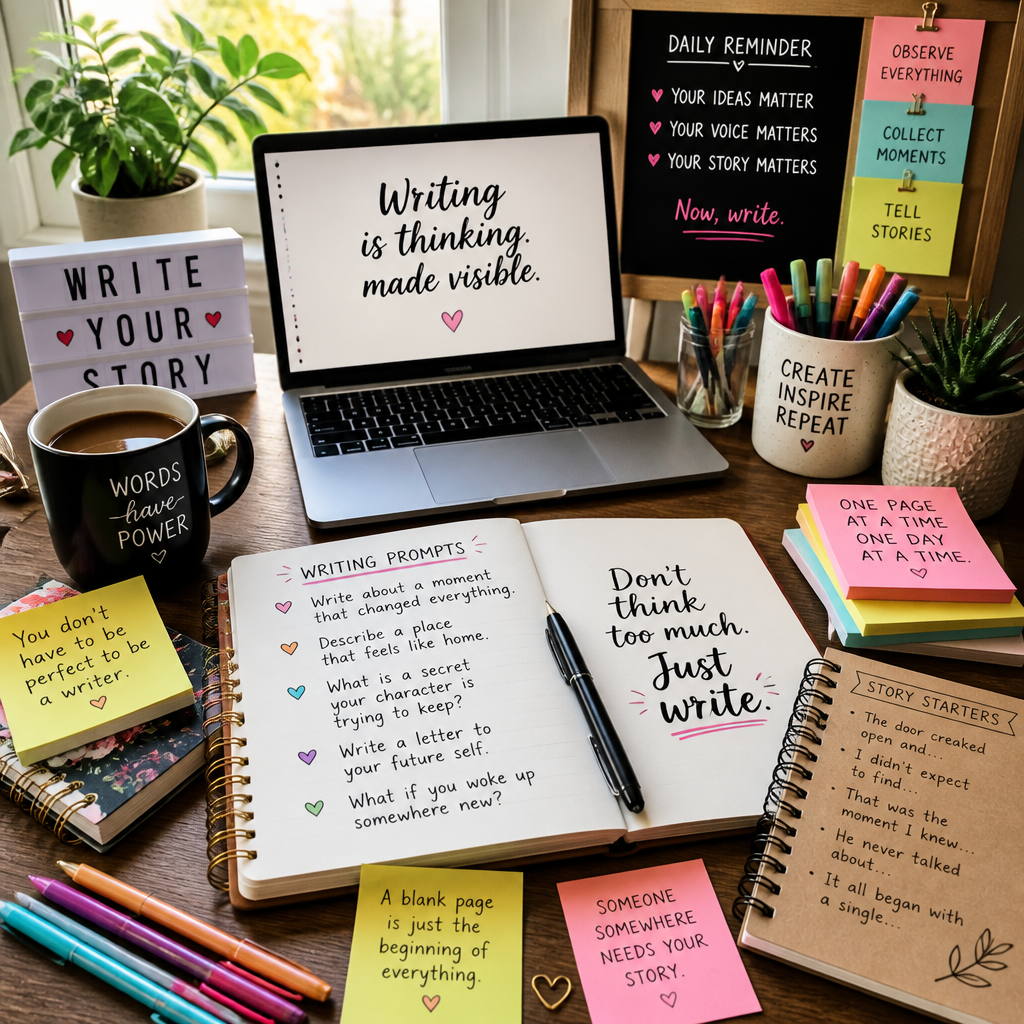
Daily Writing Ideas and Prompts
Daily writing ideas are only useful if they get you to a first draft without drama. Prompts aren’t magic, but they’re a reliable shove—especially when you’re staring at a blank doc, refreshing your coffee, and pretending you’re “researching.”
Engaging Writing Exercises
Here are ten blog-ready writing ideas (with prompts) that don’t require you to reinvent yourself every morning.
-
Reflective journaling (then mine it for posts).
Set a 10-minute timer and write what’s currently taking up mental space—wins, annoyances, weird observations. Then, underline 1–2 sentences that have energy. Those underlined lines are usually your post hooks. -
Themed prompts with a constraint.
Seasonal themes work, but constraints make them publishable. Try: “Spring cleaning, but for my inbox,” or “Winter routines that kept me sane.” The constraint forces specificity, so you don’t end up writing a vague motivational cloud. -
Flash fiction for clarity.
Write a complete story in under 500 words about one moment: a mistake, a surprise, a decision. Even if you never publish it, you’ll practice clean beginnings and endings—which is half the battle in blog writing. -
Collaborative writing to break your patterns.
Swap paragraphs with another writer for a week. You’ll notice your habits fast (over-explaining, hedging, dragging intros). Also, you’ll get “plot turns” you’d never come up with alone. -
The “I was wrong about…” post.
Prompt: “I used to believe ___, but here’s what changed my mind.” This format is honest, useful, and naturally structured. People read it because it signals you learned something the hard way. -
The checklist post from a real task.
Open your calendar. Pick something you actually did this week—pitch a client, apply for a job, outline a project, study for an exam. Prompt: “If I had to do this again tomorrow, what would I do first?” Turn that into a checklist. -
The tiny case study.
Prompt: “I tried ___ for 7 days. Here’s what happened.” Use small numbers on purpose: 3, 5, 7, 14 days. You’re not running a clinical trial; you’re sharing a credible experiment. -
The ‘tools I use’ post (with tradeoffs).
Don’t just list apps. Write what you use, why you picked it, and what you dislike about it. Readers trust you more when you admit friction. -
Answer one real question from your DMs/comments.
Prompt: “Someone asked me ___. Here’s the answer I wish I’d heard earlier.” It stays grounded because you’re responding to an actual human, not an imaginary persona. -
Rewrite a hot take into a helpful guide.
If you feel yourself wanting to rant, turn it into a “do this instead” post. Prompt: “If you’re doing ___, here’s the safer/easier alternative.” The edge stays, but it becomes actionable.
Daily Writing Challenges
Challenges work when they reduce decision fatigue. That’s the point: you show up, you write, you’re done. NaNoWriMo is the famous example, but you can also pick a smaller, more realistic container if you publish blog posts.
The 2026 Get Started Right Writing Challenge is useful because it gives you a framework and guidelines, so you’re not negotiating with yourself every day.
Here’s the step-by-step I use when I’m running a “daily writing” sprint for blog content (and yes, I’ve done this between product calls and deadline weeks):
- Pick one format for the whole week. Lists, mini case studies, or Q&A. Don’t mix formats yet, because switching formats costs energy.
- Set a tiny output target. I aim for 300–500 messy words, not a finished masterpiece.
- Write first, research second. Otherwise you’ll “research” for 90 minutes and ship nothing.
- End each session with a note to future-you. One line: “Next time, open with ___ and explain ___.” It makes tomorrow easier.
- Do a 10-minute edit, max. If it needs more, publish it later. Keep the streak alive.
A real example: I once tried doing “perfect” daily posts for a week—full editing, polished intros, fancy transitions. By day three, I was behind, irritated, and ready to quit. Next week I changed the rule: ugly drafts only, publishable later. I finished seven drafts in seven days, and two became top-performing posts after light edits.
Common mistakes I see (and have made):
- Making the prompt too broad (“write about productivity”). Broad prompts create blank-page paralysis.
- Editing while drafting. That’s just anxiety wearing an editor costume.
- Chasing novelty every day. Repetition is fine; your audience didn’t read your old post as intensely as you did.
Understanding Writing in Today’s Context
Writing today is less about “being a writer” and more about being understood. You’re competing with feeds, notifications, meetings, and people skimming on a phone at a red light (not ideal, but it’s real).
The Importance of Writing Today
Writing is still one of the highest-leverage skills you can build, but not because it’s romantic. It’s because writing clarifies thinking, and clarity travels—into school, into your career, into your relationships, into your bank account.
Morehouse College frames it well: effective writing plays a critical role in how we perceive ourselves and is essential for success in many fields. I’ve seen that firsthand hiring people and pitching partnerships—two candidates can have equal skills, but the one who writes clearly is easier to trust.
That said, “good writing” online doesn’t always mean fancy writing. In fact, the internet punishes fluff. People want clean ideas, real examples, and a point of view.
What is Writing Used For Today?
Writing serves multiple functions now, and the mix matters because it changes what you should publish.
- Professional communication. Emails, reports, proposals, docs, presentations. If your writing is sloppy, your work feels sloppy—even when it isn’t.
- Creative expression. Stories, essays, poetry, personal blogging. This is where your voice gets stronger, because you’re practicing honesty and rhythm.
- Social connection. Posts, comments, newsletters, community updates. Writing is how you show up when you’re not physically in the room.
Here’s a practical way to map your blog posts to modern writing “jobs,” so you don’t drift:
- Decide the job of the post. Teach? Persuade? Entertain? Document?
- Pick one reader scenario. “They’re stuck,” “they’re choosing,” or “they’re comparing.”
- Choose the proof style. Example, checklist, mini case study, or argument.
- Write the first paragraph as a promise. What will they be able to do after reading?
- Add one human moment. A mistake, a surprise, a quick story. It’s the glue.
A persona anecdote I see a lot: the “capable-but-invisible” professional. They’re great at their job, but their updates sound like they were written by a printer manual. When they start writing short internal posts—what they shipped, what broke, what they learned—suddenly leadership understands their value. Same work, different visibility.
Starting Your Writing Journey
Consistency beats inspiration, but consistency needs structure. So instead of telling yourself “I’ll write more,” build a tiny routine you can do on a bad day.
Try this daily setup for two weeks:
- Same time, same place (if possible). Even 20 minutes helps. Habits like predictability.
- One document for everything. A messy “idea landfill” note where you dump titles, hooks, and questions.
- A three-part draft template. Hook → 3 bullets → takeaway. You can expand later.
- A weekly review. Every Sunday, pick the best two drafts and polish them.
Community events can help, too, because you feel less alone doing it. National Writing Day is one of those moments to participate publicly. This year, it falls on October 20, 2026.
If you want a simple way to use that day: publish something small on purpose. A short reflection. A list of lessons. A “what I’m learning” post. Then reply to anyone who comments. That interaction trains you to write for people, not for a grade.
Common mistakes when starting out:
- Waiting until you “find your voice.” Your voice shows up after reps, not before.
- Trying to sound smart instead of being useful. Useful writing gets shared; “smart” writing gets skimmed.
- Quitting because early posts feel cringe. They will. That’s the entry fee.
Conclusion
Writing isn’t just an essential skill—it’s a daily advantage if you treat it like one. And the quickest way to get that advantage is to stop relying on inspiration and start relying on prompts, formats, and a schedule you can actually keep.
Here’s the simplest next step I’d recommend if you’re overwhelmed: pick one idea from the “Daily Writing Ideas and Prompts” section and commit to three drafts this week. Not ten. Not thirty. Three.
Use this step-by-step to close the loop:
- Day 1: Draft ugly. 300–500 words, no editing, timer on.
- Day 2: Add structure. Insert subheadings, turn rambles into bullets, cut the slow parts.
- Day 3: Publish or share. Post it on your blog, LinkedIn, a newsletter, or even send it to one friend.
A real example from my own workflow: when I’m juggling CEO work, I keep a “shipping log.” Every Friday I write five bullets—what shipped, what broke, what I learned, what I’d do differently, what I’m doing next. When I’m out of blog ideas, I grab one bullet and turn it into a post. That single habit has saved me from more dead weeks than any fancy content strategy.
If you take anything from this guide, take this: you don’t need more talent—you need a better starting line. Pick a prompt, write the messy draft, and earn the clean version later.
Leave a Reply